
Skills
About
Started nationwide payment systems in 2001 and we focus on technology and payments to improve the cash flow at businesses. Also the host of B2B Vault the biz to biz podcast where there are real conversations about Busienss - sales - Ai - operations and more

Allen Kopelman
Published content

expert panel
Stablecoins promise faster payments, improved liquidity and more efficient cross-border transactions, but their potential extends beyond transaction speed. Members of the Senior Executive FinTech Think Tank explain what leaders misunderstand about stablecoin adoption, including redemption access, payment infrastructure, liquidity and the importance of solving real business problems.Stablecoins are gaining attention as fintech companies, financial institutions and businesses explore new ways to move money, manage liquidity and facilitate cross-border payments. Yet the technology's potential is often discussed in terms of transaction speed and digital currency adoption, overlooking the operational infrastructure required to make stablecoins useful in everyday business transactions.Members of the Senior Executive FinTech Think Tank, a curated group of financial technology experts, identify several misconceptions that could prevent companies from realizing the full value of stablecoins. They explain why redemption access, liquidity, compliance and integration with existing payment systems matter just as much as the underlying technology.

expert panel
Rapid experimentation can help fintech companies uncover unmet customer needs, improve financial products and create measurable business value. Members of the Senior Executive FinTech Think Tank explain where targeted testing can make the greatest difference.Fintech companies operate in a financial environment where customer expectations, payment behaviors and access to financial services continue to evolve. Yet developing new products and features does not necessarily translate into meaningful innovation. Companies must understand which problems customers need solved, where existing financial services fall short and which improvements deliver measurable results.Rapid experimentation gives fintech leaders a practical way to answer those questions before committing significant resources to a full-scale launch. By testing assumptions, gathering customer feedback and evaluating real-world results, companies can identify opportunities to improve products, streamline operations and reach underserved markets.Members of the Senior Executive FinTech Think Tank, a curated group of financial technology professionals and business leaders, share where experimentation can create the greatest value. Their insights point to four particularly promising areas: understanding changing consumer needs, improving payment operations, reducing friction in customer communications and expanding access to credit through more personalized financial solutions.

expert panel
As cryptocurrency and stablecoins become more common in money movement, members of the Senior Executive FinTech Think Tank explain how fintech companies can improve payment reliability, reduce transaction risks, strengthen compliance and integrate digital assets into familiar financial workflows.Cryptocurrency is moving beyond trading and investment into practical financial applications, including cross-border transfers, business payments and settlement. For fintech companies, this shift presents an opportunity to improve how money moves. Yet making digital assets useful in everyday commerce requires more than adding another payment option. Companies must address volatility, transaction failures, compliance and the customer experience.Stablecoins, which are designed to maintain a relatively stable value against an asset such as the U.S. dollar, have particular potential in payments. Federal Reserve researchers have identified opportunities for payment stablecoins to reduce some of the costs associated with traditional cross-border payment arrangements. However, the benefits depend on how the payment ecosystem is structured, including the roles of financial institutions and stablecoin issuers. Research on payment stablecoins and cross-border payments highlights both the potential efficiencies and the financial considerations fintechs must evaluate.Members of the Senior Executive FinTech Think Tank, a curated group of financial technology experts, offer a practical perspective on this transition. Drawing on experience in payment processing, cryptocurrency infrastructure and financial services, they explain why fintechs should prioritize commercial utility, design for failed transactions and make digital assets work seamlessly alongside traditional financial systems.

expert panel
AI can analyze financial data, automate processes and improve customer experiences, but it still struggles with incomplete information, contextual judgment, trust and human relationships. Members of the FinTech Think Tank explain where human oversight remains essential and how financial services leaders can deploy AI responsibly.Artificial intelligence is changing how financial services companies analyze data, serve customers and move money. From conversational banking tools to automated payment systems and AI-assisted financial management, the technology offers opportunities to improve speed, efficiency and access. But when a decision affects someone's financial security, a fast answer is not necessarily a reliable one.The challenge is determining where AI adds value and where its limitations require human judgment. Members of the Senior Executive FinTech Think Tank bring perspectives from payments infrastructure, AI product development, cryptocurrency and consumer finance. Their insights point to four areas where financial services leaders should proceed thoughtfully: interpreting incomplete information, earning customer trust, building commercial relationships and responding to people facing financial hardship.
expert panel
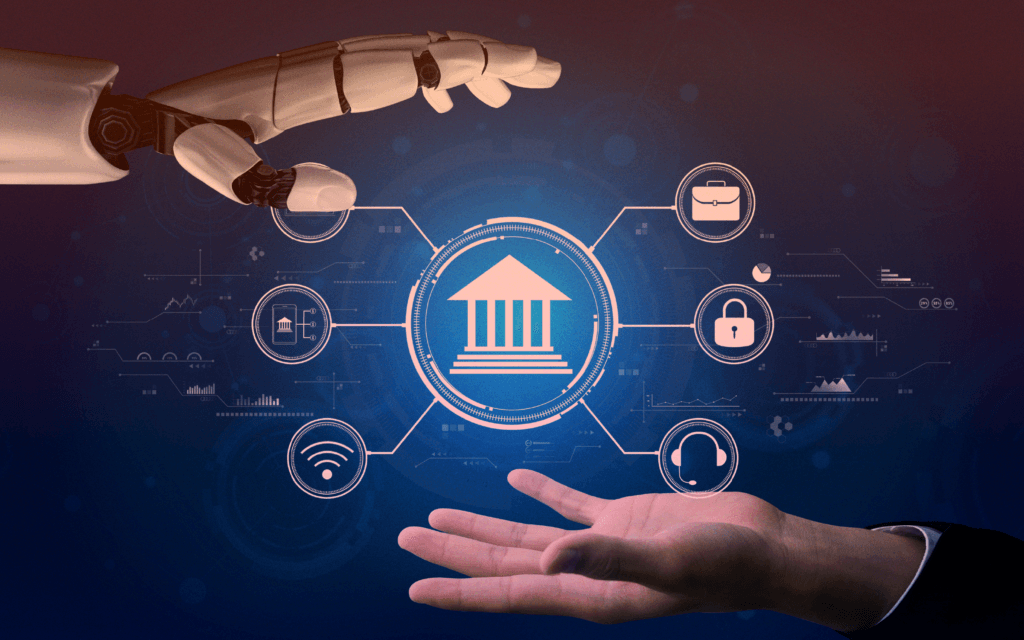
Banks once viewed fintech as an existential threat. Now fintechs are pursuing banking licenses while traditional institutions adopt fintech-style technology and customer experiences. Members of the Senior Executive FinTech Think Tank explain why the real winners may be the companies that combine financial trust, regulatory strength, technology and customer focus.For years, fintechs challenged traditional banks with faster technology, simpler digital products and better customer experiences. Now, the lines are blurring as fintechs pursue banking capabilities and established financial institutions adopt the technology that helped their challengers gain ground.This convergence reflects a broader shift in financial services. Global fintech investment reached $103.1 billion in the first half of 2026, even as deal volume declined, signaling greater investor selectivity and a focus on scalable business models, according to KPMG. Members of the Senior Executive FinTech Think Tank examine what this changing landscape means for financial institutions competing on technology, trust and customer value.The question is no longer simply whether fintechs can become banks or banks can become more like fintechs. It is which companies can combine the strongest capabilities of both to deliver better financial products and experiences.

expert panel
A fintech platform can simplify banking for solopreneurs, but convenience alone is not enough. FinTech Think Tank members explain how to evaluate deposit insurance, security controls, data practices, reliability, customer support and backup banking options before putting an entire business on one platform.For a solopreneur, putting banking, payments, payroll, taxes and cash management in one app can make running a business dramatically easier. It can also concentrate the consequences of an outage, frozen account, fraud incident or platform failure in a single place.Members of the Senior Executive FinTech Think Tank share their expertise across fintech, payments, banking technology and financial infrastructure to answer a question that goes beyond whether an app looks secure: What is actually underneath it, and can the business keep operating if something goes wrong?The answer is not necessarily to choose a traditional bank over fintech, or fintech over a bank. Instead, solopreneurs should evaluate the infrastructure behind the product, understand how their money and data are handled and build enough redundancy to keep one technology failure from becoming a business crisis.




Company details
Nationwide Payment Systems Inc
Company bio
Nationwide Payment Systems serves businesses across the United States, including retail, restaurants and hospitality, B2B and wholesale, e-commerce, SaaS platforms, and regulated or complex payment environments. Founded in 2001, NPS combines modern payment technology with relationship-based support to help businesses improve cash flow, reduce operational friction, and scale with confidence.