

Skills
About
Trusted leadership advisor to CEOs and CHROs, known for one core shift: turning technical experts into influential leaders whose work gets backed, not stalled. After 19 years inside Fortune 500 digital transformation, I saw the same pattern repeat at every level: the most technically brilliant leaders were often the least funded, the least followed, and the first to burn out. Not because their thinking was weak. Because their influence was. Today, through DevelUpLeaders, he works with Directors, VPs, and C-suite executives to close that gap: replacing the instinct to prove, control, and execute with the discipline to inspire, clarify vision, and enable teams. The result is leaders who stop defending their expertise and start commanding the room.

Aurelien Mangano
Published content

expert panel
Customers increasingly expect companies to anticipate their needs and make interactions seamless. Members of the HR Think Tank explain how employers can apply those principles to the employee experience while preserving human connection, autonomy, trust and belonging.Consumers have become accustomed to experiences that anticipate their needs, remove unnecessary friction and adapt to individual preferences. That expectation is increasingly finding its way into the workplace, where employees encounter everything from personalized learning recommendations to flexible benefits and technology-enabled HR services.But applying customer experience principles to employees has an important limit: Employees are not simply consumers of an internal service. They are participants in an ongoing relationship with their organizations.That distinction is central to the advice from members of the Senior Executive HR Think Tank, a curated group of HR leaders, consultants and workplace experts. Their perspectives suggest that the best employee experiences borrow the principles of customer experience, such as clarity, responsiveness, personalization and ease, without adopting a transactional mindset.Deloitte's 2025 Global Human Capital Trends research supports that balance. The report found that 67% of leaders consider customizing work and workforce practices around employees' skills, motivations, passions and work styles important. Yet only 5% said their organizations were leading in using technology to hyper-personalize how they influence workers. Deloitte also emphasizes that personalization must be balanced with employee autonomy and responsible data practices.
expert panel
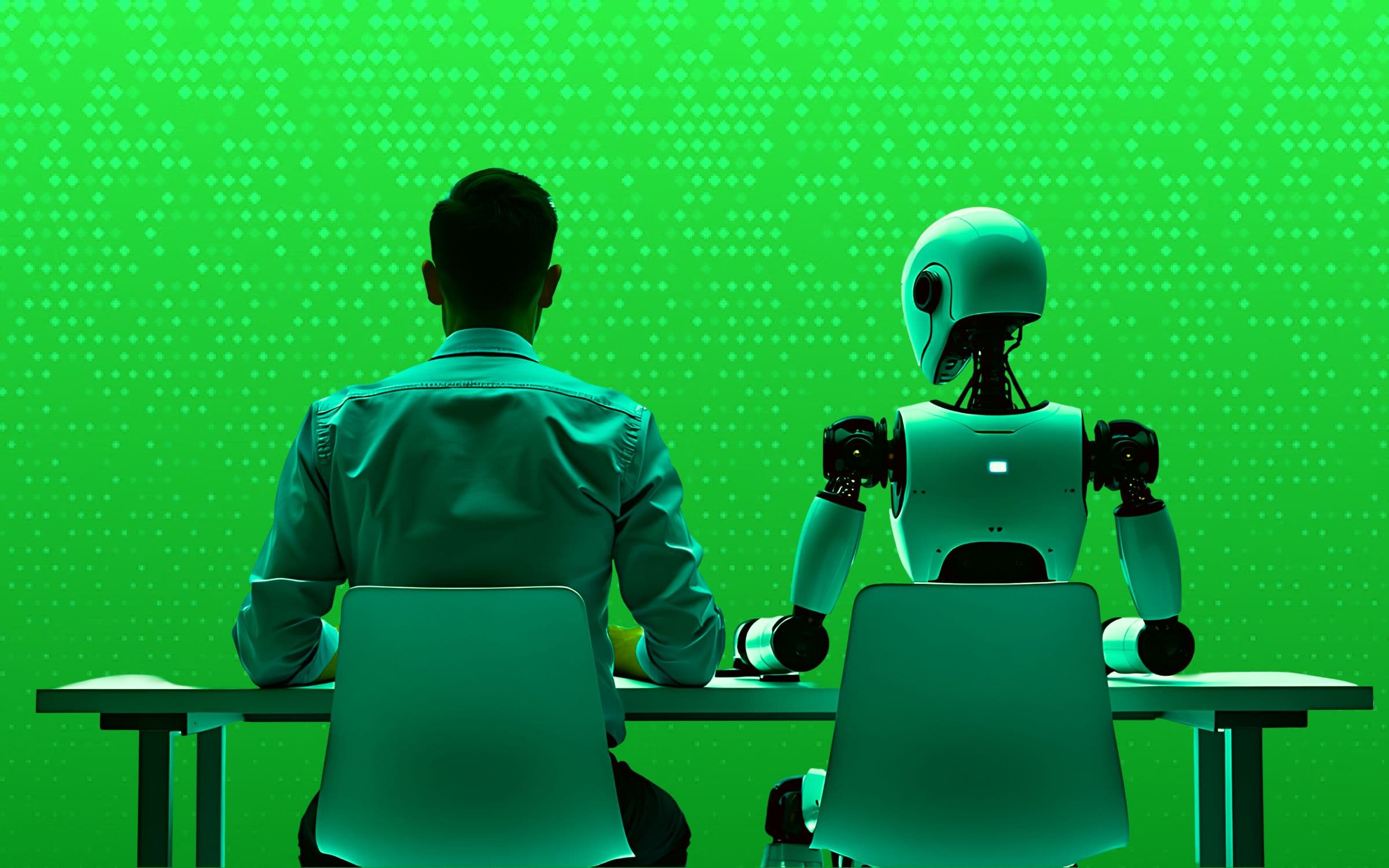
As AI and automation take on more work, leaders face a new challenge: creating efficiency without crowding out human judgment, creativity and connection. Members of the Senior Executive HR Think Tank share how to determine what should remain human, protect time for creative thinking and redesign AI-enabled work around better human outcomes.With AI and automation becoming part of everyday work, the leadership challenge is no longer simply deciding what can be automated. It’s deciding what should be. The more capable these systems become, the easier it is to automate work that once required significant human effort.But efficiency alone does not guarantee better thinking, stronger decisions or more innovative outcomes. In fact, the organizations that benefit most from AI may be those that use it not simply to increase output but to create more capacity for distinctly human work.That decision is becoming increasingly important as AI adoption accelerates. Gallup's 2025 research on AI use at work found that the share of U.S. employees using AI at work at least a few times a year had nearly doubled in two years, rising from 21% in 2023 to 40% in early 2025. As adoption expands, however, leaders must consider how to use technology in ways that strengthen rather than diminish human capabilities.That distinction is at the center of the insights shared by members of the Senior Executive HR Think Tank. Their experiences across leadership development, HR, organizational psychology, human performance and business transformation suggest that the strongest human-AI models are not built around a fixed division between people and technology. Instead, they are designed around the different strengths each brings to the work.The opportunity, then, is to use automation to create capacity and deliberately reinvest that capacity in judgment, creativity, relationships and the kinds of thinking that give work its strategic value.

expert panel
Aug 21, 2026
New employees quickly learn what an organization truly values by watching what happens around them. Members of the Senior Executive HR Think Tank identify everyday workplace behaviors that can quietly undermine trust, engagement and retention—and explain how leaders can make those signals work in their favor.A new employee's first impression of an organization rarely comes from the employee handbook. It comes from what happens around them: whether leaders show up on time, whether promised meetings actually happen, whether every request is treated as urgent and whether the culture's stated values match everyday behavior.That matters because onboarding is not simply an administrative process. SHRM describes it as an ongoing integration of employees into an organization's culture, role and workplace, noting that the first days and months are particularly important for retention.Members of the Senior Executive HR Think Tank see the same dynamic from different angles. Their advice points to a common lesson: New hires are constantly interpreting small behaviors as evidence of what it really means to work at an organization. The everyday habits leaders overlook may become the signals employees remember.
Company details
DevelUpLeaders
Company bio
DevelUpLeaders works with organizations that have a specific, expensive problem: their most technically capable leaders can't get their ideas backed. Brilliant strategy, models, and roadmaps stall in the room because the person presenting them was trained to prove and execute, not to influence. Founded by Aurelien Mangano after 19 years inside Fortune 500 digital transformation, DevelUpLeaders was built on a simple observation. Technical mastery and leadership influence are not the same skill, and most development programs still treat them as if they were. The firm closes that gap using a methodology grounded in vertical development, the same research base behind how adult leaders actually mature under pressure, paired with the practical stakeholder and influence work that gets initiatives funded. Clients span IT, energy, healthcare, and aerospace, industries where technical credibility is table stakes and influence is the differentiator. Engagements run from individual executive development to multi-year leadership partnerships, always built around the same outcome: leaders whose thinking moves the organization instead of getting stuck in it. DevelUpLeaders doesn't build better communicators. It builds leaders that boards, CEOs, and CHROs trust with the next decision.