
Skills
About
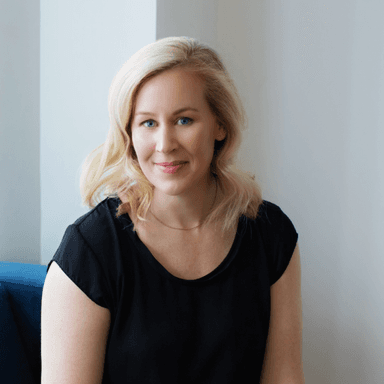
erys Goodall is an operator, marketer, and advisor who has spent her career helping organizations solve complex problems. Her work has helped millions of people read more, take better care of themselves and their pets, and helped keep soldiers safe. She's even seen astronauts into space. Today, she leads The Goods, where she helps founders and CEOs bring clarity to strategy, discipline to operations, and momentum to growth.

Cerys Goodall
Published content

expert panel
Marketing leaders are often urged to let data drive their decisions, particularly when budgets are tight and the stakes are high. But a new Journal of Business Research paper suggests there’s another variable that dashboards can’t capture: What’s happening in a CMO’s personal life may affect the way they approach marketing strategy, from planning and product development to communications and channel management.That doesn’t make data-driven leadership less valuable. It does, however, underscore its limits. Data still has to be interpreted, trade-offs still have to be weighed and decisions still have to be made by people whose judgment, energy and perspective don’t exist separately from the rest of their lives. Stress combined with time pressure can impair decision-making, affecting attention and making people more likely to overlook beneficial options. That makes the support surrounding senior leaders more than a matter of workplace well-being. What should companies be doing to help CMOs make sound decisions when personal pressures inevitably arise? Below, members of the Senior Executive CMO Think Tank share their perspectives on the human limits of data-driven leadership, how organizations can build stronger support around the people making high-stakes marketing decisions, and how life experiences can expand a marketing leader’s creativity and impact.

expert panel

expert panel
Companies increasingly look to their CMOs for more than brand awareness, campaign performance and lead generation. Today’s marketing leaders are often expected to influence revenue, customer loyalty and long-term growth, even as research has found that many CMOs believe their roles as designed hinder their ability to maximize marketing performance outcomes.Part of the challenge is that CMOs and their executive colleagues may define growth—and marketing’s contribution to it—differently. For example, McKinsey found that 70% of CEOs measure marketing’s impact through year-over-year revenue growth and margins, while only 35% of CMOs consider those to be top metrics. CMOs may also take a longer view of brand building and customer relationships, while CEOs and CFOs face pressure to demonstrate more immediate financial returns. But even when there’s little to no C-suite agreement on priorities, timelines and measures of success, a CMO is often held responsible for delivering growth—without the necessary shared framework.Closing that gap requires more than expanding the CMO’s job description. Members of the Senior Executive CMO Think Tank are a curated group of experts with years of experience in marketing, including brand storytelling, digital advertising and customer engagement. Here, several of them explore the mindsets and strategies that need to change if CMOs are to have the influence, alignment and operating support needed to achieve what today’s organizations expect of them.
expert panel
The modern marketing calendar can feel like an airline flight board—constantly updated, rerouted and in need of attention. When a trending conversation erupts, a platform changes its algorithm or a competitor jumps on the meme of the moment, sitting out can feel like falling behind. But a brand that’s always changing course may never give its customers a clear sense of where it stands.Timely marketing certainly has value, but speed and effectiveness aren’t the same thing. Maintaining a coherent identity across channels helps strengthen recognition, trust and loyalty. Constantly shifting a brand’s messaging, voice or presentation in response to external events can make that invaluable customer bond much harder to build.At the same time, brands can’t afford to tune out cultural shifts or emerging conversations altogether. Trends can reveal changing customer interests, new expectations and opportunities to participate in moments that matter to an audience. Brands today have many ways to engage with culture as it unfolds, but doing so effectively requires speed paired with sensitivity and sound judgment. The challenge for marketing leaders, then, isn’t to ignore what’s happening around them. It’s to recognize which moments can strengthen the brand—and which will merely pull the team off course. Below, members of the Senior Executive CMO Think Tank draw on their expertise in brand storytelling and customer engagement to examine the mistakes leaders make when immediacy takes priority over long-term brand-building and explain what teams should do instead.
expert panel
Marketing teams have never had more data, automation or channels to work with. Yet the problems that stall growth, weaken trust or drain a team’s energy often aren’t technical at all. They’re rooted in people: how customers feel, how teams collaborate, how leaders handle uncertainty, and how organizations respond when old assumptions stop working.That tension is becoming harder to ignore as AI changes both the volume and nature of brand communication. Americans remain cautious about AI’s broader impact, and recent industry conversations have pointed to a related marketing reality: As AI-generated content and commerce tools multiply, brands still need real trust, relevance and direct human connection to stand out.A marketing problem may look like a messaging issue, a measurement issue or a channel issue, but to resolve it, leaders often need to look deeper. Because no matter how many campaigns launch or what dashboards say, marketing is only effective if it reaches and connects with the audience—and that requires both inward and outward focus on the humans who write and receive the story.Below, members of the Senior Executive CMO Think Tank, a curated group with expertise in brand storytelling, customer engagement and the rise of AI in marketing, share and discuss examples of the human challenges that will always impact marketing and how teams can adjust their strategies once they adopt a human-centered viewpoint.
Company details
The Goods
Company bio
The Goods helps founders and CEOs accelerate growth by bringing together strategy, operations, marketing, and execution. Led by Cerys Goodall, a former startup COO and growth leader, The Goods acts as a trusted advisor and right-hand to leadership teams navigating growth, change, and complexity. Whether it's refining strategy, building a go-to-market plan, solving operational challenges, developing thought leadership, leading critical initiatives, or simply helping founders cut through the noise, The Goods provides practical, hands-on support grounded in real operating experience. The focus is always the same: identifying the highest-value opportunities in the business and creating the momentum to capture them. When additional expertise is needed, The Goods draws on a trusted network of senior operators, marketers, creatives, and specialists to complement the work. This gives founders access to the right talent at the right time, without the overhead of building a larger team before the business is ready. The result is a flexible model that evolves alongside the company, helping leaders move faster, make better decisions, and build businesses that last.