

Evan White
Founder, Evan White PR | Fractional CMO | Creator of the Market Memory FrameworkERIN
Skills
About
Most companies don't have a product problem. They have a Market Memory problem. Buyers can't buy companies they don't remember. For nearly twenty years I've helped founders, startups, enterprise software companies, and HR technology leaders create the narratives that shape markets—not just marketing campaigns. Today I help companies build Market Memory through Fractional CMO leadership, executive visibility, thought leadership, public relations, conference strategy, podcasts, and category positioning. Whether launching a new product, preparing for funding, or redefining an industry, my goal is simple: Help companies become the names buyers remember.

Evan White
Published content


expert panel
Not long ago, creating polished marketing imagery often required professional photo shoots, extensive design work and multiple rounds of revisions. Today, generative AI allows brands to produce sophisticated visuals faster and more affordably than ever. The shift is already well underway: A January 2026 Interactive Advertising Bureau survey found that 83% of U.S. advertising executives said their companies had already deployed AI in the creative process.But creating more eye-catching content doesn’t guarantee that anyone will remember the brand it came from.In a global analysis of more than 12,000 brand assets, Ipsos awarded only 15% “gold status,” meaning the assets, in isolation, were instantly and uniquely associated with the correct brand. If even established brand creative rarely achieves that level of recognition, it’s clear that professional-looking content isn’t the same thing as distinctive content that signals a brand in a unique, fast, intuitive way. And the stakes are significant: Ipsos found that brands with an extended portfolio of strong assets are 31% more likely to be considered by consumers and 38% more likely to be chosen.CMOs now face a creative challenge that technology alone can’t resolve: producing impactful visual content that feels unmistakably connected to a brand while taking advantage of AI’s expanding capabilities, cost savings and productivity boosts. Below, members of the Senior Executive CMO Think Tank share insights on what makes visual content not only professional and memorable but unmistakably a brand’s own, as well as how to apply those principles as AI reshapes the creative process.

expert panel
For marketers, reach, engagement and clicks have long been useful measures of social media success. But those numbers don’t always show how people use social media to form opinions or decide what to buy—and that gap matters more as social becomes a primary place where consumers discover brands. In fact, research reported by eMarketer found that social media is the top product discovery channel for 73% of Gen-Z consumers and 67% of millennials.That growing influence is unfolding alongside a digital content credibility problem. A recent Gartner survey found that 35% of U.S. consumers rely less on influencers for product information due to AI use, while 57% of U.S. consumers say AI-generated marketing material has made them less trusting of brand messaging. When reach is easy to buy but trust is hard to earn, even a campaign that looks successful on paper may not deliver the results marketers expect. For CMOs, that raises important questions about where to invest, which metrics matter and whether established social media strategies are keeping pace with changing audience behavior.The challenge isn’t simply identifying the next big platform or trend. It’s recognizing the less obvious changes that could have a significant impact on marketing performance. Below, members of the Senior Executive CMO Think Tank, a curated group of experts in brand storytelling, digital advertising, customer engagement and emerging marketing technologies, highlight overlooked social media shifts that deserve executive attention and share practical guidance for responding.

expert panel
A brand’s most compelling stories may be the ones it didn’t create. Customers are increasingly connecting with brands not just through the products they buy but also through the interests, experiences and passions they share—a shift that’s making participation and belonging central to brand fandom. As customer- and fan-created content moves from social media into brand-owned experiences, marketers have an opportunity to turn those shared connections into deeper, more lasting relationships.That enthusiasm has real marketing value, particularly when it comes from people speaking in their own voices. Research suggests consumers perceive user-generated content as more authentic and trustworthy than brand-created messaging, giving it a persuasive quality traditional promotions can struggle to match. But when brands bring those voices into spaces they control, too much corporate influence can undermine the authenticity that makes fan contributions valuable in the first place.So how can marketing teams build meaningful opportunities for co-creation without making contributors feel like extensions of the advertising department? Below, members of the Senior Executive CMO Think Tank share how marketers can make room for communities to shape the brand experience without turning participation into just another marketing campaign.

expert panel
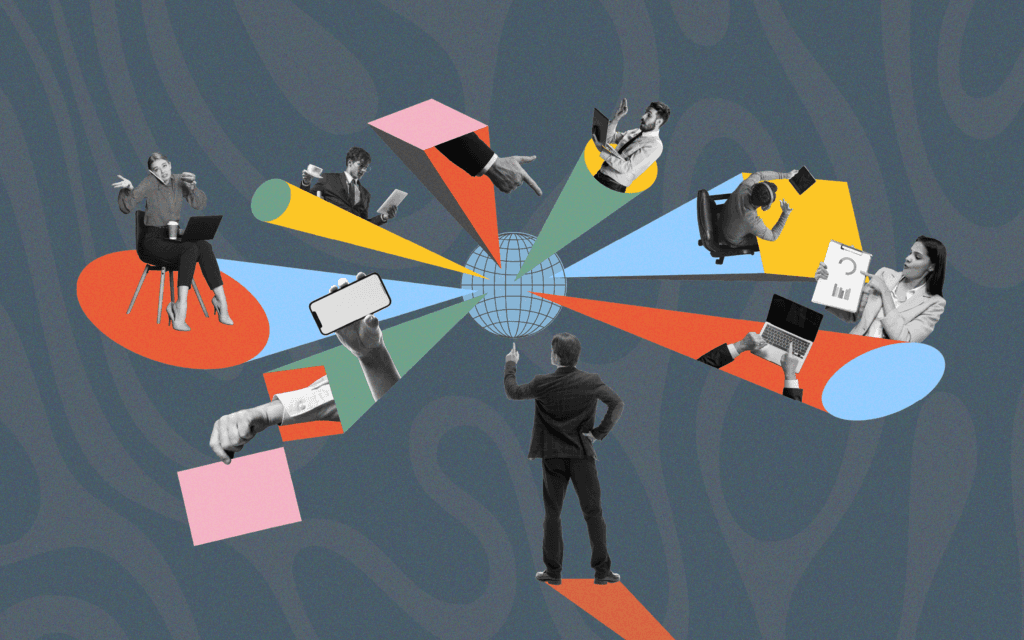
For years, search strategy largely revolved around earning a prominent place in a list of links. AI-generated answers are changing the front door to search: A 2026 Pew Research Center survey found that 60% of U.S. adults say they read the AI summaries at the top of search results, and about four in 10 say they use AI chatbots to search for information. For CMOs, that shift raises a bigger question than where a brand ranks: What will people learn about the company when an AI system assembles the answer for them?That question sits at the center of answer engine optimization, or AEO, the practice of making a brand’s information easy for AI systems to find, trust and cite. These systems rarely rely on a single page. Google explains that AI Overviews and AI Mode can run multiple related searches across subtopics and data sources, identifying supporting web pages as they build a response. As a result, an answer about a company may draw not only on its website but also on news coverage, analyst commentary, reviews and other third-party sources. A polished corporate website establishes what a company says about itself, but in an AI-driven search environment, that story has to be corroborated elsewhere.That puts owned media (the channels a company controls) and earned media (the coverage and endorsements it has to win) on the same team. The challenge for CMOs is to keep core facts, claims and positioning consistent across both so AI systems encounter a coherent picture without forcing every channel to sound exactly the same. Below, members of the Senior Executive CMO Think Tank, a curated group of leaders with expertise in brand storytelling, digital advertising and the rise of AI in marketing, explore how to bring owned and earned media together to strengthen the authority, consistency and trust brands need in an answer-driven search environment.
expert panel
Internal communication is easy to treat as a housekeeping function—something that happens after leadership has made the real decisions. But the way those decisions are explained can shape whether employees understand the direction, trust the people setting it and know what their own role is. According to a spring 2026 survey by Gallup, employees who strongly agree they trust their organization’s leadership are 3.7 times as likely to be engaged, yet just 20% of U.S. employees place themselves in that group.Those numbers suggest that successful internal communication is about more than just getting information out in a timely fashion. And there’s evidence leadership teams in many organizations are struggling to convey their plans and perceptions about the current environment and their vision of the path forward. The American Psychological Association’s 2025 Work in America survey found that upper management consistently reported more positive views of organizational change and their work experience than frontline workers and individual contributors did. Bridging that gap requires leaders to understand how employees are actually experiencing change, then frame their messages so they’re received and understood as intended.Marketing leaders spend their days translating complex ideas into messages that work for distinct audiences, so they’re well positioned to spot communication problems inside the business, too. Below, members of the Senior Executive CMO Think Tank, with expertise spanning brand storytelling, customer engagement, digital marketing and more, share internal communication mistakes business leaders should address and how marketing expertise can help.














Company details
ERIN
Company bio
At ERIN, we're helping organizations rethink one of the oldest, and still most effective, growth channels in talent acquisition: employee referrals. Our platform modernizes referral programs with AI, automation, and seamless integrations, enabling employers to improve hiring quality, increase employee participation, and reduce recruiting costs. As AI changes how companies source and evaluate talent, we believe trusted human relationships are becoming even more valuable, not less.