Skills
About
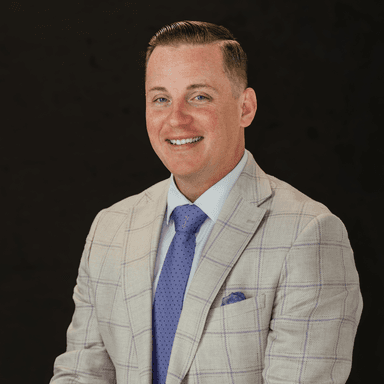
James Dismond serves as the Chief Executive Officer of MiraSol Health, a nonprofit hospice, palliative, and grief care organization that has supported the Lowcountry community for more than 40 years. Under his leadership, MiraSol Health has expanded access to compassionate, patient-centered care while strengthening its regional presence and operational impact. In 2025 alone, MiraSol Health served more than 4,300 individuals, delivered over $212,000 in unfunded care to uninsured and underinsured patients, and significantly broadened its reach by expanding palliative and grief care services across additional counties. James has led transformative organizational initiatives focused on innovation, strategic growth, and sustainable community impact. Recognized as one of the youngest CEOs in the hospice and nonprofit healthcare sector, James has successfully guided MiraSol Health through a major rebrand and modernization effort that elevated the organization’s visibility, community engagement, and mission alignment. With more than a decade of nonprofit leadership experience, he is known for driving high-performance culture, operational excellence, and forward-thinking healthcare solutions. Beyond his executive leadership role, James is an active voice in healthcare advocacy and nonprofit advancement. He serves on the Board of the Greater Bluffton Chamber of Commerce, and represents the Lowcountry region on the Board of the South Carolina Home Care & Hospice Association. James is also a sought-after speaker on topics including: The future of hospice and palliative care Community-driven healthcare innovation Nonprofit leadership and organizational growth Healthcare policy and advocacy Rebranding and strategic positioning for nonprofits His leadership and community impact have earned multiple recognitions, including the Community Leader Award from WHHI-TV, the Community Philanthropist Award from the Greater Bluffton Chamber of Commerce, and the John Calamari Humanitarian Award from the Italian American Club of Hilton Head Island. Through visionary leadership and a strong commitment to service, James continues to position MiraSol Health at the forefront of compassionate healthcare delivery and nonprofit innovation.

James Dismond
Published content

expert panel
When the COVID-19 pandemic accelerated virtual care adoption almost overnight, healthcare organizations did what they had to do: keep patients connected while protecting them from unnecessary exposure. Video platforms were deployed in weeks instead of years, regulations temporarily relaxed and health systems invested billions of dollars building digital front doors that could sustain care during an unprecedented crisis.Five years later, the conversation has changed. Rather than asking how quickly healthcare can deploy telehealth, leaders are asking whether those investments produced sustainable improvements in patient outcomes, clinician experience and operational performance.Members of the Senior Executive Healthcare Think Tank, a curated community of executives and innovators spanning patient experience, healthcare technology, AI, policy, workforce strategy and care delivery, believe the industry's next chapter depends less on expanding virtual visits and more on redesigning how care is delivered. Below, they discuss where they think the industry overinvested and underinvested in telehealth, and what they’d do differently if they had the opportunity to build it again from scratch.

expert panel
When healthcare CEOs face financial pressure, the traditional playbook often points to the same solutions: reduce costs, slow spending and protect margins. But in an industry where every operational decision can affect a patient’s experience, a clinician’s workload or a community’s access to care, the most obvious financial moves are not always the most strategic ones.Members of the Senior Executive Healthcare Think Tank bring expertise across patient experience, workforce strategy, healthcare technology, quality, policy and organizational transformation. They believe the first step for CEOs facing financial pressure is not simply deciding what to eliminate, but determining where the organization can operate smarter, create more value and strengthen long-term resilience.Their perspectives come at a time when healthcare organizations continue to face mounting financial challenges. The American Hospital Association’s 2025 Cost of Caring report highlights how hospitals and health systems are navigating persistent cost growth, workforce shortages, supply chain pressures and reimbursement challenges that are reshaping how leaders approach long-term sustainability.In this article, Think Tank members outline the strategic decisions they would prioritize if advising a healthcare CEO on finances today—and how to uphold the same standard of care no matter the choices made.

expert panel
Patients today have more healthcare information at their fingertips than ever before. Online reviews, provider ratings, quality scores, patient experience surveys and publicly reported outcomes all offer new ways to evaluate healthcare organizations. At the same time, healthcare providers are investing heavily in branding, digital engagement and reputation management as competition for patients continues to intensify.This evolution raises an important question for healthcare leaders: When patients choose where to receive care, what matters more—a trusted brand or measurable quality and outcomes? While transparency initiatives have made performance data more accessible, many patients still begin their search with recommendations, online reviews and existing perceptions of an organization. In fact, according to a 2025 Press Ganey study, 86% of consumers say brand reputation influences their choice of healthcare organization, while roughly 60% rely on online reviews and recommendations when evaluating providers.Members of the Senior Executive Healthcare Think Tank, whose expertise spans patient experience, healthcare technology, quality improvement, operations, AI and policy, largely agree that reputation remains a powerful driver of patient choice. However, they also emphasize that reputation alone is no longer enough. As patients gain access to more information and healthcare becomes increasingly consumer-driven, organizations must ensure their brand promise is supported by consistent experiences and measurable results.Below, they explore how healthcare organizations can strike the right balance between reputation and performance. Because while reputation may earn a patient's attention, long-term trust is built through transparency, exceptional experiences and outcomes that consistently deliver on the brand's promise.

expert panel
Not long ago, healthcare leaders could reasonably expect periods of stability between major disruptions. Today, those periods are becoming increasingly rare. One week brings new reimbursement concerns. The next brings staffing challenges, evolving regulations or another breakthrough technology promising to transform care delivery. For many organizations, uncertainty is no longer a temporary condition but the environment in which they operate every day.The organizations that navigate these challenges most successfully aren't necessarily the ones with the biggest budgets or the most sophisticated technology. More often, they're the ones that have built resilience into the fabric of their operations and leadership culture. They communicate openly when circumstances change, empower employees to make decisions and create systems that can adapt when the unexpected inevitably happens.The need for that kind of resilience has never been greater. According to the American Hospital Association, hospitals continue to face mounting financial pressures driven by rising labor, supply and pharmaceutical costs, even as reimbursement challenges persist. At the same time, rapid advances in artificial intelligence, analytics and digital health are reshaping how healthcare organizations operate and compete.To explore what resilience looks like in practice, we turned to members of the Senior Executive Healthcare Think Tank, whose expertise spans patient care, workforce strategy, healthcare technology, AI governance and organizational transformation. Their insights reveal how healthcare leaders can build adaptability into their teams, operations and decision-making processes—creating organizations that are better equipped to withstand disruption, embrace change and thrive in an increasingly unpredictable healthcare landscape.
Company details
MiraSol Health
Company bio
MiraSol Health is a nonprofit 501(c)(3) healthcare organization providing chronic/serious illness management, end-of-life care, and grief care services to patients and families in Beaufort, Jasper, Colleton and Hampton Counties. For over 40 years, MiraSol Health, formerly Hospice Care of the Lowcountry, has delivered compassionate care and support to those facing serious illness, end-of-life, and grief, regardless of their financial situation.