
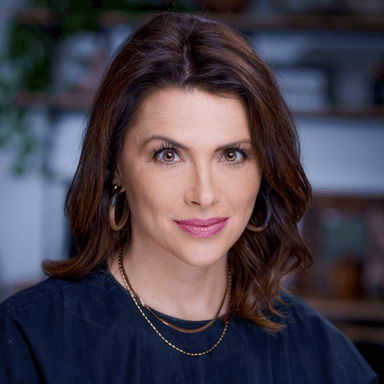
Kelly Weber
Founder & CEO, Wander | Executive Advisor & Leadership Architect to C-Suite & Partners | Certified B Corp | 1% for the PlanetThe Wander Project
Skills
About
I’m the Founder and CEO of The Wander Project, a woman-owned, Certified B Corp executive advisory firm grounded in the long view. Over the past 20 years, my work has spanned management consulting, executive advisory, and leadership development, including formative experience at IBM and leadership of the West Coast Strategy and Organizational Change practice at West Monroe Partners. Today, I advise founders, C-suite leaders, and executive partners responsible for creating value in high-consequence environments. When the stakes are high, the timeline is compressed, and every decision carries weight, leadership becomes the differentiator. My work strengthens the leadership architecture behind value creation: helping leaders sharpen judgment, elevate decision quality, build trust, and lead through complexity, transformation, and growth. By developing both the inner and outer dimensions of leadership, I help create the conditions where performance and value compound over time. Wander partners with a select group of senior leaders across financial services, healthcare, technology, and global consulting through long-term advisory relationships. I’m a member of the Forbes Coaches Council and hold certifications from the International Coaching Federation, Co-Active Training Institute, Leadership Circle, and the Functional Medicine Coaching Academy. I’m also a graduate of Yale University’s Executive Leadership program. As a Certified B Corp and member of 1% for the Planet, The Wander Project is part of a global community using business as a force for good. Leadership, oriented. Go ahead, Wander.

Kelly Weber
Published content

expert panel
Aug 21, 2026
New employees quickly learn what an organization truly values by watching what happens around them. Members of the Senior Executive HR Think Tank identify everyday workplace behaviors that can quietly undermine trust, engagement and retention—and explain how leaders can make those signals work in their favor.A new employee's first impression of an organization rarely comes from the employee handbook. It comes from what happens around them: whether leaders show up on time, whether promised meetings actually happen, whether every request is treated as urgent and whether the culture's stated values match everyday behavior.That matters because onboarding is not simply an administrative process. SHRM describes it as an ongoing integration of employees into an organization's culture, role and workplace, noting that the first days and months are particularly important for retention.Members of the Senior Executive HR Think Tank see the same dynamic from different angles. Their advice points to a common lesson: New hires are constantly interpreting small behaviors as evidence of what it really means to work at an organization. The everyday habits leaders overlook may become the signals employees remember.

expert panel
Mental health at work cannot be addressed through benefits alone. Members of the Senior Executive HR Think Tank explain how leaders can design workloads, management practices, autonomy, psychological safety and workplace systems to support sustainable performance.Workplace mental health is increasingly recognized as a business and organizational design issue—not simply an employee benefit. SHRM's 2026 research found that stress and anxiety remain significant concerns among U.S. workers, while companies continue to wrestle with employee burnout and the underuse of mental health benefits.That raises a more fundamental question: What if organizations stopped asking employees to cope better with unhealthy conditions and instead examined the conditions themselves? Members of the Senior Executive HR Think Tank bring expertise in psychology, HR, organizational design, leadership, culture and workforce strategy to that question.Their answers point toward a common idea: A mentally healthy workplace is not created by adding another program to the benefits portfolio. It is created by deliberately designing work so people can perform without continually sacrificing their psychological well-being.

expert panel
As AI reshapes daily work and engagement hits historic lows, members of the Senior Executive HR Think Tank explain why purpose—not perks or productivity alone—is emerging as the defining competitive advantage for organizations competing to attract, retain and inspire talent.Work is changing faster than most organizations can keep up with. Roles are shifting, AI is taking over entire categories of tasks, and employee engagement is stuck near record lows. Amid all this, one quieter question is emerging as the key difference-maker between organizations that keep their best people and those that lose them: Why does this work matter?Members of the Senior Executive HR Think Tank, a curated group of experts specializing in human resources, agree that purpose is no longer a soft concern to address after salary negotiations. It is becoming the new point of distinction once pay, benefits and flexibility become table stakes.The numbers back them up. Only 31% of employees in the U.S. and Canada region were actively engaged as of early 2026, according to Gallup’s State of the Global Workplace report. While engagement has many causes, leaders increasingly point to a lack of connection between day-to-day work and organizational purpose as one of the biggest contributors.
Company details
The Wander Project
Company bio
Wander is a woman-owned, Certified B Corp executive advisory firm grounded in the long view. We partner with founders, C-suite leaders, and senior executives operating across complex global organizations. Not to optimize performance. To ensure what they build and lead can actually hold. Our work sits at the level of orientation. How leaders perceive what matters. How they regulate pace. How they make decisions they can stand behind as conditions shift. And how those decisions shape the systems they lead. Because the leaders who endure aren’t the ones who move fastest. They’re the ones who can see clearly and act with precision when it matters. This isn’t about the role. It’s about the person inside it, and the systems they are responsible for shaping. Leadership, as we understand it, is a way of orienting, living, and deciding. It shapes people, organizations, and futures long after individual tenures end. As a proud Certified B Corp and member of 1% for the Planet, we are part of a global community using business as a force for good. We exist to co-create more meaningful lives, healthier organizations, and a happier planet.