About
Over my 25-year career as a Recruiting Strategist and Talent Acquisition Partner, I have founded and built three recruitment agencies and successfully facilitated over 10,000 placements. In 2017, I launched my third such venture – Mulberry Talent Partners – to recruit and place top talent throughout the greater Portland area. At Mulberry, we set ourselves apart by providing the highest level of customer service to both clients and candidates. We take great care in listening to the needs of our candidates to identify where they will fit and thrive. We save time for our hiring managers by providing thoughtful referrals to meet the staffing needs of their organization. Our specialties for direct-hire, temp-to-hire, temporary/contract roles include: Human Resources at all levels | Professional Office: Reception/Clerical, Administrative and Executive Assistants, Office Managers | Customer Service | Accounting, Finance, and Payroll | Operations and Logistics | Project Management

Lauren Francis
Published content
expert panel
When a merger or acquisition closes, the financial model is set—but the real work is just beginning. Members of the Senior Executive HR Think Tank share their strategies for protecting culture, retaining critical talent and building something stronger than either organization had before, from clinical talent audits and listening sessions to organizational network mapping and the deliberate design of a third culture.The deal closes. The press release goes out. The board is satisfied. And then, quietly, the talent begins to leave. According to EY research, 47% of employees depart within the first year of an acquisition and 75% are gone within three years; running at more than three times the normal voluntary turnover rate. The employees most likely to exit are the high performers with options—precisely the people the acquiring organization paid a premium to access. Culture and people, not financial models or operational synergies, are where most mergers either deliver their value or quietly forfeit it.Members of the Senior Executive HR Think Tank, a curated group of human resources leaders, executives and organizational strategists, have navigated acquisitions across industries and company sizes. Their strategies converge on a shared conviction: Integration cannot be an afterthought. The people decisions made in the first weeks of a transition determine whether the combined organization retains what made the deal valuable—or spends years rebuilding it.A study by Instill found that up to 60% of M&A failures after closing can be traced to cultural misalignment, and Bain & Company's research puts the proportion of acquirers facing significant cultural challenges at 75%. The financial cost is measurable too: Replacing a key employee can run between 50% and 200% of their annual salary, and that is before factoring in lost institutional knowledge, disrupted client relationships and the cascade of departures that often follows the first high-profile exit.
expert panel
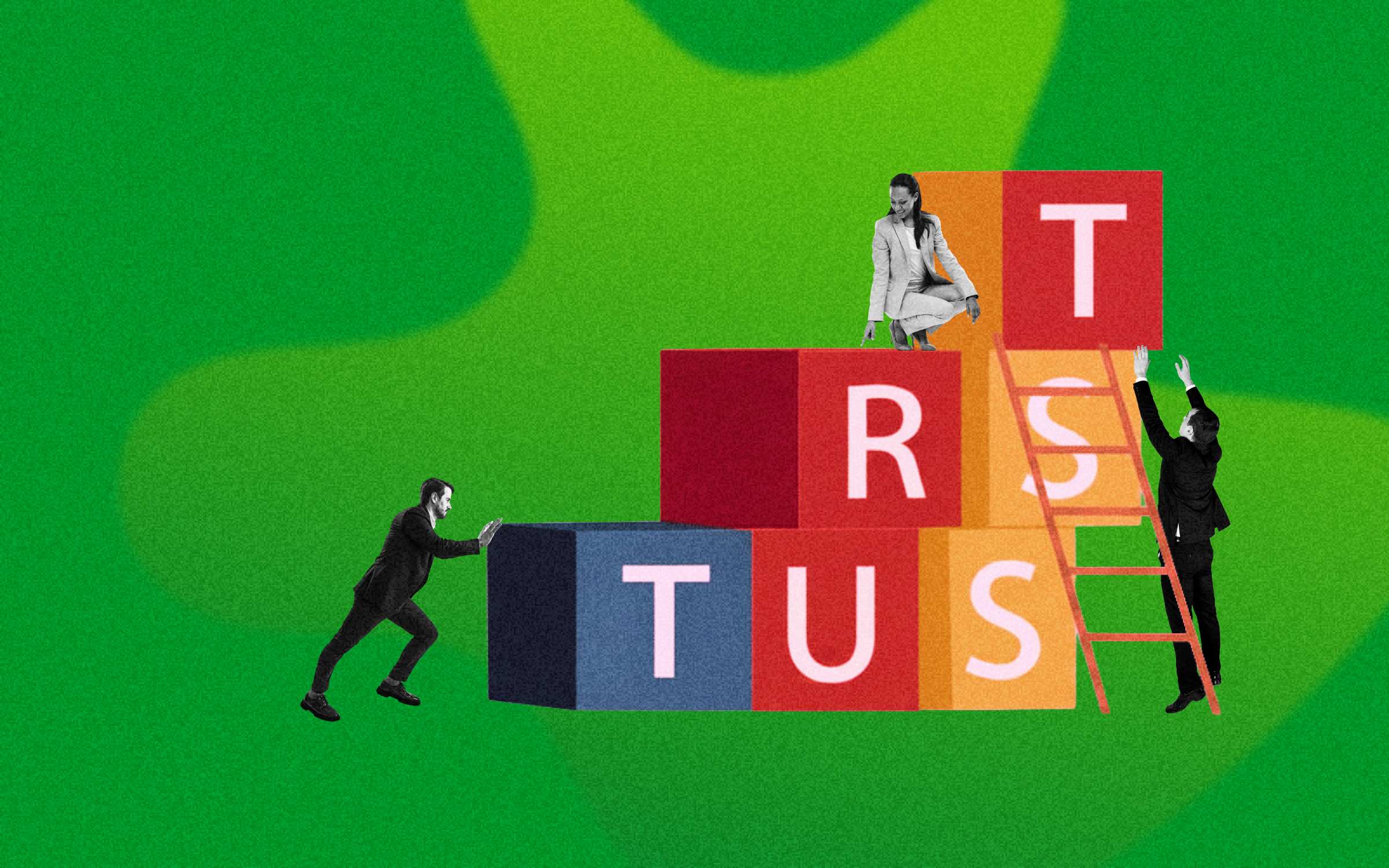
Trust doesn't return through perks or culture campaigns. After years of layoffs and restructuring, members of the Senior Executive HR Think Tank—HR professionals, talent strategists and executive advisors—share why rebuilding a skeptical, stretched workforce requires honest communication, restored agency and consistent follow-through, and offer a practical blueprint for leaders ready to do the hard work of recovery.Something has quietly broken in the manager-employee relationship—and the data is catching up to it. Gallup's State of the Global Workplace: 2026 Report finds that global employee engagement fell to 20% in 2025—its lowest level since the pandemic and the first back-to-back annual decline in the survey's history—carrying an estimated $10 trillion productivity price tag. The sharpest drop belongs to managers themselves, whose engagement fell five points in a single year. For organizations navigating the compounded toll of repeated layoffs, restructuring and economic turbulence, these figures capture what employees have felt for years: that the people tasked with leading them are as disengaged, overwhelmed and skeptical as they are. The 2026 Edelman Trust Barometer adds a sharper edge: Approximately 75% of employees say CEOs are obligated to bridge trust divides, yet only 44% say they actually do—a leadership credibility gap hiding in plain sight.Understanding what it takes to close that gap is the focus of the Senior Executive HR Think Tank, a curated group of human resources leaders, talent strategists and executive advisors who bring decades of combined experience helping organizations navigate these challenges precisely. Their perspectives challenge easy answers and surface the specific, often uncomfortable actions that actually move the needle—from how layoffs are communicated in the first place to what leaders must do differently in the months and years that follow.What emerges is both a reality check and a road map. Trust, they agree, is not rebuilt through all-hands announcements, perks rollouts or rebranded culture initiatives. It is rebuilt through sustained, transparent, behavior-consistent leadership—one honest conversation and one kept commitment at a time.

expert panel
The question of who owns an employee's career sounds simple. In practice, it has fractured countless workplace relationships, stalled promising careers and quietly cost organizations some of their best people. As labor markets shift and employee expectations evolve, the stakes of getting it wrong have never been higher. Research from Gallup's 2025 American Job Quality Study, which surveyed more than 18,000 U.S. workers, found that one in four American employees report lacking opportunities for career advancement at work—a gap that drives disengagement, job searching and turnover.Members of the Senior Executive HR Think Tank, a curated group of human resources leaders, recruiters, strategists and organizational consultants, have spent years working at the intersection of this tension. Their consensus: Career ownership is not a binary choice between employee and employer. It is a shared responsibility—but one in which each party plays a distinct, non-negotiable role. When either side fails to show up, the whole system breaks down.The following insights explore where those lines should fall, what happens when they blur and what leaders can do to build a workplace culture where careers, and the people in them, actually thrive.

expert panel
Members of the HR Think Tank explain what recent waves of executive turnover reveal about culture, accountability, leadership fit and organizational alignment—and what today’s C-suite leaders must do differently to build trust, resilience and long-term performance.Executive turnover has become one of the defining business stories of recent years. Across industries, organizations are replacing senior leaders at a pace that reflects more than market volatility or economic uncertainty. Increasingly, these departures point to deeper issues involving culture, leadership fit, accountability and organizational trust.A recent HR Executive report on record CEO turnover notes that boards are reevaluating not only who earns top leadership roles but also which leadership traits matter most during periods of uncertainty and transformation. Adaptability, cultural leadership and long-term organizational trust are taking priority alongside traditional executive credentials.For many organizations, the definition of effective leadership has evolved. Technical expertise and past performance still matter, but leaders are now also expected to navigate complexity, align teams around strategy and model values-based leadership under pressure. As companies navigate ongoing workplace transformation, executive turnover is becoming less about isolated leadership failures and more about broader organizational alignment and resilience.Members of the Senior Executive HR Think Tank bring firsthand experience to this conversation. These HR, leadership and culture experts work closely with organizations navigating executive transitions, talent strategy and workplace change. Their insights point to a clear conclusion: executive turnover is no longer just a governance issue. It is a leadership diagnostic.

expert panel
May 22, 2026
Members of the HR Think Tank share what they would eliminate if work could be rebuilt from scratch—from performative meetings and outdated performance reviews to rigid schedules and bureaucracy—and explain how organizations can design more productive, human-centered workplaces for the future.For decades, organizations have modernized technology faster than they have modernized work itself. Many companies now operate with advanced collaboration tools, AI-enabled systems and global talent networks, yet employees still navigate processes and expectations built for a far different era. Meetings dominate calendars. Email drives fragmented communication. Performance reviews often feel disconnected from development. Productivity is frequently measured by visibility rather than outcomes.That disconnect is becoming harder to ignore as leaders confront burnout, disengagement and shifting workforce expectations. Deloitte’s Global Human Capital Trends report highlights that organizations are increasingly being forced to rethink how work is designed as employees demand greater flexibility, purpose, sustainability and trust in the workplace.Members of the Senior Executive HR Think Tank, a collective of experienced HR leaders, strategists and workplace experts, realize the future of work will not be shaped merely by adding new tools to old systems. Instead, they believe organizations must eliminate outdated structures that quietly drain performance, trust and creativity. Their insights reveal a common theme: Many of the practices companies defend most aggressively may be the very ones holding people back.

expert panel
As healthcare costs climb, members of the HR Think Tank share actionable strategies for HR leaders to balance financial pressures with employee-centered benefits by leveraging prevention, analytics and intentional design. Rising healthcare costs remain one of the most persistent and complex challenges facing HR leaders today. According to the Kaiser Family Foundation’s 2025 Employer Health Benefits Survey, average employer-sponsored family premiums reached $26,993, with employees contributing nearly $7,000. Meanwhile, broader U.S. healthcare spending grew 7.5% to $4.9 trillion, outpacing overall economic growth, according to the American Medical Association. For organizations navigating talent shortages and evolving workforce expectations, maintaining competitive benefits without overwhelming budgets has never been more urgent. Members of the Senior Executive HR Think Tank bring a nuanced perspective: cost management is no longer just about premiums or deductibles. It requires rethinking how benefits are designed, communicated and aligned with organizational culture. From prevention-focused care models to AI-driven analytics and collaborative purchasing strategies, these experts outline actionable approaches that prioritize both financial sustainability and employee well-being.