

Skills
About
As an expert communicator and fractional marketing leader, I empower organizations to thrive by translating business goals into actionable that drive measurable growth. At Venturesome Strategies, I deliver hands-on leadership, strategic vision, and operational support without the overhead of a full-time executive or big agency price tag. With a proven history guiding integrated campaigns, managing multi-million-dollar budgets, and building remote, high-performance teams, I help businesses harness communications as a lever for change. My industry portfolio spans nonprofit, agency, corporate, education, edtech, SaaS, agriculture, environmental advocacy, clean energy, manufacturing, health care, and more.

Rachel Perkins
Published content

expert panel
Trust is hard to earn and easy to lose; the same is true of brand authority. It can't be purchased with a bigger ad budget or manufactured through a clever campaign. The brands that earn it do so by being consistently useful, credible and clear about what they stand for. Buyers today are flooded with claims for their attention, and they’re savvy. They’ll simply tune out generic, promotional brand messaging that shows no understanding of their real needs. Conversely, a coherent narrative backed by genuine expertise and validated by real outcomes becomes something customers actively seek out. A brand that masters that kind of messaging shifts from just another seller to a trusted resource and, eventually, to the obvious choice.So what questions do businesses need to ask and answer about themselves, and how can they build brand authority systematically rather than accidentally? And how do the pieces—narrative clarity, a distinctive value proposition, subject matter expertise and proof points—fit together into a winning strategy that compounds over time? Below, members of the Senior Executive CMO Think Tank discuss what this kind of disciplined approach to brand building looks like in practice, sharing their expertise in establishing the kind of authority that customers trust and actively seek out.

expert panel
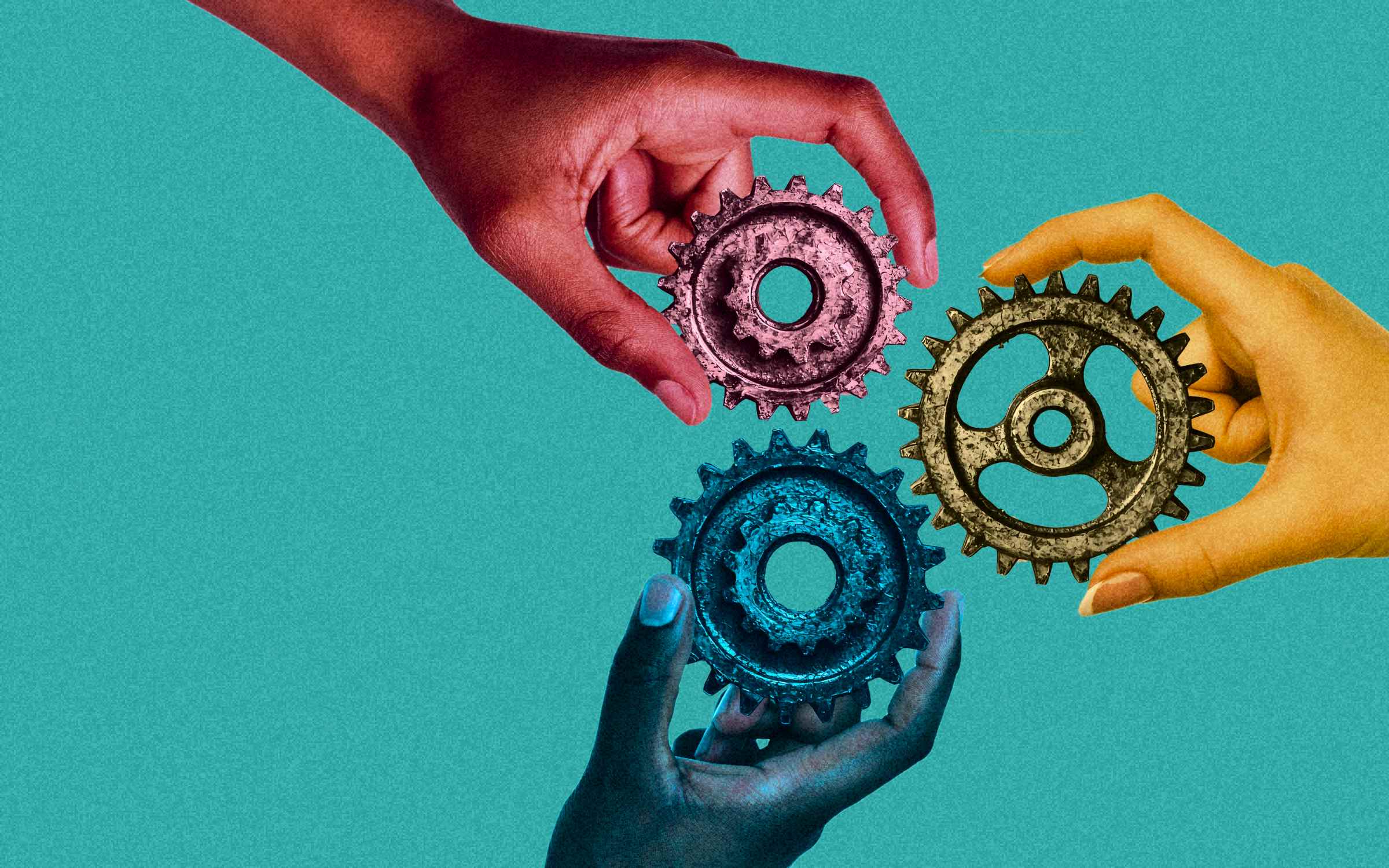
A CFO scanning a marketing report sees it through a completely different lens than a CIO or a CCO. And if a CMO doesn’t address each C-suite member’s priorities and perspective when reporting results, it’s unlikely they’ll effectively pitch their vision for ongoing marketing strategy. For a CMO, building trust across C-suite relationships isn’t just a soft skill; it’s a core competency that separates leaders who drive brand momentum and bottom-line growth from those who simply draft and schedule routine marketing content. A CMO who falls back on industry jargon and data points instead of learning the language of finance, technology or customer operations undercuts and undersells their team’s impact. Marketing comes to be seen as a cost center rather than a strategic driver: perpetually on defense, justifying spend instead of shaping decisions. But CMOs who learn to translate their work into terms that resonate with their C-suite peers don’t just earn goodwill; they earn a seat at the table when it matters most. That balancing act is especially important in a digital age, when CMOs need input from peers and cross-functional collaboration to optimize customer experience and trust. So what does effective C-suite relationship management actually look like in practice, and where do well-intentioned CMOs most often get it wrong? Below, members of the Senior Executive CMO Think Tank weigh in. With deep expertise spanning brand strategy, digital marketing, customer engagement and executive leadership, these industry leaders offer hard-won perspective on how CMOs can translate marketing’s business value in terms the whole C-suite understands and build the cross-functional trust that turns alignment from aspiration into advantage.
expert panel
Automation has a way of making marketing systems look busy—and therefore, healthy. Dashboards fill up, campaigns launch on schedule and follow-up happens at machine speed, creating the impression that marketing teams are becoming more efficient and effective. But activity isn’t the same as results. For a growing number of marketing organizations, automation has become a way to run faster in the wrong direction. Automation doesn’t fix fuzzy underlying strategies, scattered data or poorly defined handoffs between marketing, sales and product teams. It just moves them out of sight. A workflow that runs smoothly isn’t necessarily a workflow that works. Further, tool sprawl can leave teams struggling to manage and achieve ROI from an ever-growing, unchecked tech stack. That’s the uncomfortable reality many CMOs are grappling with right now. The proliferation of martech tools has made it easier than ever to automate nearly every touchpoint in the customer journey, yet in too many cases, revenue stalls, churn climbs and teams struggle to explain how—or if—automation is making a positive difference. The real job, then, isn’t just adopting better tools. It’s figuring out what the underlying problem is and whether technology will merely simply help a flawed process fail more elegantly. Members of the Senior Executive CMO Think Tank—a curated group of marketing leaders with deep expertise in digital advertising and technology’s growing role in marketing—have been at the forefront of the AI revolution. Here, they break down the process flaws automation most commonly conceals and share practical diagnostics to help CMOs build on solid ground before adding more speed.

expert panel
Marketing has always been part science, part art. Increasingly, AI is bringing the science: It can process data at a speed and scale no human analyst can match, instantly spotting patterns across channels and audiences. AI is proving its value by helping teams process more data, identify patterns faster and move from raw information to action with far less manual effort. But effective marketing demands more—context, empathy and the kind of nuanced decision-making that comes from lived human experience. The question CMOs are wrestling with isn’t whether to adopt AI; most already have or are planning to do so. It’s how to deploy it in ways that genuinely sharpen performance without hollowing out the human judgment that makes marketing resonate. CMOs who get the division of labor right won’t be those who automate the most. Rather, they’ll be the ones who design teams and workflows that leverage the unique strengths of both technology teams and human beings. The members of the Senior Executive CMO Think Tank share deep expertise in brand storytelling, digital advertising, customer engagement and the rise of AI in marketing. Below, several of them share their perspectives on where AI delivers its greatest value and where human judgment remains irreplaceable—and how CMOs can architect ways of working that bring out the best of both.

expert panel
Today’s CMOs are tasked with far more than crafting marketing campaigns and boosting growth metrics. They’re customer champions, executive partners, culture carriers, data translators and creative visionaries. Dealing with these omnidirectional challenges—all while producing creative content and shepherding their team—has a name: 360-degree leadership. CMOs must understand how marketing connects to business strategy, how decisions affect the people doing the work, and how cross-functional relationships shape what’s actually possible. It’s not an easy remit, and they often butt heads with their fellow executive leaders who aren’t fully versed in modern marketing’s role and impact. At the same time, they and their teams are often asked to do more with less while navigating shifting executive priorities, worries about how technology could impact their work, and the relentless pace of the always-on digital marketplace. If a CMO can’t hold the line on focus, culture or strategic clarity, burnout spreads, morale erodes and the work suffers. A CMO who thrives under that kind of pressure knows when and how to push back, when and how to align, and when and how to protect their team from unreasonable or unfocused demands. They don’t just keep work moving—they create focus, set boundaries and ensure expectations are realistic, protecting both performance and morale. The members of the Senior Executive CMO Think Tank have hard-won expertise in brand storytelling, digital advertising, customer engagement and the integration of AI into modern marketing strategy. Below, four of them share what 360-degree leadership really looks like in practice and what they’ve learned about successfully balancing influence, accountability, creativity and team well-being.

expert panel
Content marketing is supposed to be the engine that drives brand authority and demand generation long before a sales call. On average, B2B buyers engage with 13 pieces of content at the beginning of the purchasing journey, highlighting the importance of high-quality, authentic and authoritative content. However, many marketing teams continue to crank out blogs, videos, white papers and posts to feed algorithms and fill calendars, hoping something will spark engagement. The result? Often, it’s a lot more noise with a lot less bottom-line impact. Research consistently shows that consumers value trust as highly as price and quality when making purchasing decisions—especially in B2B, where stakes for buyers can be high and strong relationships matter. With content playing an outsized role in discovery and credibility in AI-driven search, it can’t remain a supporting tactic measured by impressions and downloads. It has to connect directly to pipeline velocity, deal progression and long-term customer trust. The members of the Senior Executive CMO Think Tank are experts in brand storytelling, digital advertising and customer engagement. Below, a group of them shares practical insights on how CMOs can transform content into a true strategic asset—one that compounds over time to drive revenue, strengthen pipeline and build durable trust.










Company details
Venturesome Strategies
Company bio
Venturesome Strategies is a marketing and communications consultancy built for small businesses, startups, nonprofits and entrepreneurs.