
About
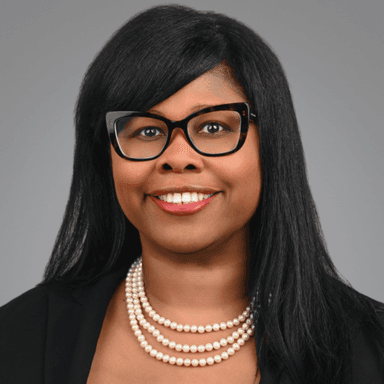
Sharifah Masten is an executive leader, former Chief Human Resources Officer, and Founder and Principal Advisor of Counterpoint Collective, a strategic advisory firm that helps organizations align people, leadership, technology, and communications to drive sustainable growth and organizational effectiveness. Drawing on more than two decades of experience across the military, nonprofit, and corporate sectors, she advises executives, founders, and boards on workforce strategy, leadership development, organizational transformation, governance, and the future of work. A former Non-Commissioned Officer in the United States Army, Sharifah brings a disciplined, mission-focused approach to leadership grounded in operational rigor, strategic empathy, and the intentional development of talent. Throughout her career, she has helped organizations navigate growth, transformation, and operational complexity by strengthening leadership systems, aligning workforce strategies, mitigating risk, and positioning organizations for long-term value creation. Her experience spans highly regulated and mission-critical environments where performance, trust, and sound governance are essential. In addition to leading Counterpoint Collective, Sharifah serves as Executive Director of Mission 2 Change, a nonprofit dedicated to workforce development and community empowerment. A sought-after speaker, published thought leader, and author, she is known for bringing practical insight and principled leadership to conversations on organizational effectiveness, workforce strategy, leadership, and the future of work. At the heart of her work is a simple belief: organizations do not rise by chance. They rise when leaders intentionally shape the systems, relationships, and conditions that enable people, performance, and purpose to reinforce one another. For Sharifah, leadership is ultimately about creating environments where human potential and organizational success grow together.

Sharifah Masten
Published content

expert panel
Skills-based hiring promised to make the labor market more accessible by shifting attention from where candidates went to school to what they can actually do. Yet changing a job description is much easier than changing the systems and habits that determine who ultimately gets an offer.Reports suggest a real gap between changing job requirements and changing hiring outcomes. In 2025, Harvard Business School conducted research with the Burning Glass Institute. The study found that companies that removed degree requirements saw only modest increases in hiring workers without degrees, with fewer than one in 700 new hires benefiting from the reforms overall. At the same time, the trend has not disappeared: Indeed reported in January 2026 that 19.3% of U.S. job postings required a bachelor’s degree or higher in November 2025, up from 16.6% two years earlier.Members of the Senior Executive HR Think Tank say the question is therefore bigger than whether a degree appears in a job posting. The real test is whether employers have changed how they define qualified, evaluate candidates and recognize capability.

expert panel
Aug 10, 2026
Every summer, millions of working parents face the same logistical puzzle: school is out, camps fill quickly and reliable childcare becomes both harder to find and more expensive. For employers, the resulting strain often shows up as higher absenteeism, dipped productivity, disrupted schedules and, eventually, turnover.The scale of that strain is well documented. A Bright Horizons Modern Family Index survey of more than 2,000 U.S. adults found that 87% of working parents report challenges or disruptions when their children are home during the summer, and 76% say their focus at work depends directly on how reliable their kids' summer schedules are. Employers have reason to care beyond goodwill: a study from Boston Consulting Group and Moms First found that companies investing in childcare benefits saw returns ranging from 90% to 425%, with retaining as few as 1% of eligible employees covering the cost of the benefit for everyone who qualifies.To find out which benefit delivers the greatest return, we turned to members of the Senior Executive HR Think Tank, a curated group of human resources leaders and advisors. Their answers point to a nuanced truth: the benefit that pays off is the one employees can actually use.

expert panel
Members of the Senior Executive HR Think Tank share practical strategies for creating leadership pipelines that uncover overlooked talent, reduce bias and develop future leaders through intentional systems rather than chance.Organizations have spent years discussing diversity in leadership, yet many continue to see the same patterns at the executive level. A McKinsey & Company Women in the Workplace study shows that progress remains uneven, with women and other underrepresented groups still facing barriers to advancement and career-building opportunities.Too often, succession planning begins only after leadership vacancies arise, limiting organizations to candidates who have already received the greatest visibility and access. Members of the Senior Executive HR Think Tank say stronger leadership pipelines require a different approach: examining the systems that identify, develop and advance talent long before promotion decisions are made. Their insights show that equitable pipelines are not about lowering standards, but about creating fairer pathways for talented people to demonstrate their potential.

expert panel
As AI reshapes daily work and engagement hits historic lows, members of the Senior Executive HR Think Tank explain why purpose—not perks or productivity alone—is emerging as the defining competitive advantage for organizations competing to attract, retain and inspire talent.Work is changing faster than most organizations can keep up with. Roles are shifting, AI is taking over entire categories of tasks, and employee engagement is stuck near record lows. Amid all this, one quieter question is emerging as the key difference-maker between organizations that keep their best people and those that lose them: Why does this work matter?Members of the Senior Executive HR Think Tank, a curated group of experts specializing in human resources, agree that purpose is no longer a soft concern to address after salary negotiations. It is becoming the new point of distinction once pay, benefits and flexibility become table stakes.The numbers back them up. Only 31% of employees in the U.S. and Canada region were actively engaged as of early 2026, according to Gallup’s State of the Global Workplace report. While engagement has many causes, leaders increasingly point to a lack of connection between day-to-day work and organizational purpose as one of the biggest contributors.

expert panel
Summer doesn't lower the bar—it reveals which leadership behaviors were already undermining morale and productivity all year. Members of the Senior Executive HR Think Tank share the one thing leaders should stop doing this summer: from micromanaging and overloading capacity to holding back vacation boundaries, running back-to-back meetings and waiting for the right season to fix what is already broken.Summer is supposed to be the season when things slow down a little. Longer days, lighter calendars, well-earned vacations. But for many employees, the experience is the opposite: the same meeting cadence, the same deadlines, the same expectations—delivered on top of school schedules, family commitments and the cumulative exhaustion of a year that never quite paused. The result is predictable. According to Eagle Hill Consulting's 2025 Workforce Burnout Survey, 55% of the U.S. workforce is currently experiencing burnout, while Gallup data puts global disengagement at levels that cost the world economy an estimated $8.8 trillion in lost productivity annually. Summer does not cause this. But it exposes it.Members of the Senior Executive HR Think Tank, a curated group of human resources leaders, executives and organizational strategists, were asked a deceptively simple question: What is the one thing leaders should stop doing during the summer if they want to improve employee morale and productivity? Their answers cut across micromanagement, capacity overload, meeting culture, performance surveillance and the leadership habit of waiting for the right moment to fix what is already not working.Taken together, their recommendations reveal something important: summer is not a special case that requires a seasonal workaround. It is an opportunity to practice the kind of leadership that should be standard year-round—and to stop the habits that erode trust, morale and performance regardless of the month.

expert panel
Members of the Senior Executive HR Think Tank explain why organizations that embed neuroinclusion into workplace design, leadership practices and operational systems will gain a long-term advantage in retention, engagement and performance.Neuroinclusion is quickly moving from an emerging workplace conversation to a defining leadership priority. As organizations compete for talent in an increasingly complex labor market, many are discovering that traditional workplace systems were designed around narrow assumptions about communication styles, productivity and collaboration.That reality is creating both a challenge and an opportunity. Companies that continue treating neurodiversity as an accommodation issue may struggle to attract and retain talent. However, organizations that redesign work itself around broader cognitive needs are likely to outperform peers in innovation, engagement and adaptability.Members of the Senior Executive HR Think Tank, a network of HR and workplace experts, say the organizations that succeed in neuroinclusion will not simply launch more initiatives or awareness campaigns. Instead, they will fundamentally rethink how work is designed, managed and measured.
Company details
Counterpoint Collective
Company bio
Counterpoint Collective is a strategic advisory firm that helps organizations align people, leadership, technology, and communications to strengthen performance and support sustainable growth. We partner with companies, government contractors, nonprofits, and emerging organizations to advance workforce readiness, leadership continuity, talent strategy, organizational effectiveness, and operational execution. Our approach extends beyond traditional HR consulting. We believe organizations achieve stronger results when workforce strategy is fully integrated with business strategy, creating systems that unlock potential, reduce risk, improve retention, and enable long-term success. Through executive advisory services, workforce planning, leadership development, recruiting strategy, organizational transformation, and technology optimization, we help leaders build resilient organizations equipped for the future of work. Founded by executive advisor and former Chief Human Resources Officer, Sharifah Masten, Counterpoint Collective draws on decades of experience across corporate, government, nonprofit, and military environments. The firm is grounded in a people-centric philosophy that recognizes the connection between business success and human potential. By combining practical execution with strategic vision, Counterpoint helps leaders move beyond transactional workforce practices to build environments where people and organizations can thrive together. Counterpoint Collective’s mission is clear: to change perspectives, drive impact, and help organizations shape the future of work.