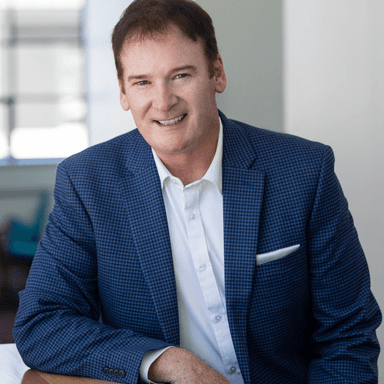
Steve Degnan
Advisor, Board Member, Former CHROAdvisor, Board Member, Former CHRO
Skills
About
Steve is an experienced C Level executive with a broad perspective based on 20 years experience as a Chief HR Officer with the World’s leading food and pet food company. Steve also serves on multiple non-profit boards out of a sense of obligation to help others. Steve is available for advice and consulting. Steve began his next chapter in 2023 and is currently writing a book intended to help professionals navigate the craziness of organizations, bosses, hierarchies and many other topics with a mix of sage advice and sometimes biting humor. Meanwhile you can book Steve for speaking engagements where he’s sure to meet the moment with great stories, good humor and recommendations on how to be your best as a professional.

Steve Degnan
Published content

expert panel
Solopreneurs can replace the accountability of a traditional workplace with measurable goals, outside support, regular reviews and systems designed to make commitments harder to ignore. Insights from members of the Senior Executive HR Think Tank show how independent professionals can stay focused without becoming their own worst boss.Working without a manager offers greater freedom, but it also removes many of the structures that make follow-through easier. No supervisor is checking deadlines, no colleague is flagging a missed commitment and no team meeting is prompting a progress update.That makes self-accountability less about having extraordinary discipline and more about deliberately building the structures that a workplace would normally provide. Members of the Senior Executive HR Think Tank bring perspectives spanning organizational psychology, leadership, recruiting, culture and career development to the question of how independent professionals can create those structures for themselves.Recent Gallup research reinforces the importance of the issue: In a survey, creating accountability ranked as the lowest-rated of seven leadership competencies, with just 46% of leaders rating themselves "exceptional or outstanding" at holding people responsible for exceptional performance. If accountability can be difficult even inside organizations with managers and teams, solopreneurs have even more reason to intentionally design it into their work.The experts suggest several ways to do that, from building a personal support network and creating financial consequences to making goals public, tracking measurable outcomes and protecting time for meaningful work.
expert panel
Job stability can provide more than a paycheck. Members of the Senior Executive HR Think Tank explain how employees can use secure roles to develop portable skills, expertise, relationships and career options before they need them.A stable job can create a false sense of permanence. Employees may have a dependable salary, established responsibilities and a clear place in the organization, yet none of that guarantees the role will exist indefinitely.That makes career development more than a retention strategy. It can also be a form of career risk management.The Senior Executive HR Think Tank offers a consistent message: Employees should use periods of stability to build capabilities that remain valuable even when their current positions do not.The need is becoming more pressing as the skills required to perform many jobs continue to change. The World Economic Forum's Future of Jobs Report 2025 finds that employers expect 39% of workers' core skills to change by 2030, while creative thinking, resilience, flexibility and agility remain among the skills expected to grow in importance.For employees, that means the best time to prepare for a career transition may be long before one becomes necessary.

expert panel
Members of the Senior Executive HR Think Tank explore why empathy, self-awareness and compassion are becoming essential leadership competencies and what the shift means for developing and evaluating leaders.Leadership has never been only about strategy, execution or financial results. But as employee expectations continue to change, the way leaders create those results is receiving greater scrutiny. Employees increasingly expect leaders to understand their own impact, recognize the experiences of others and create environments where people can perform without sacrificing trust or humanity.That makes the distinction between “soft skills” and business skills increasingly difficult to defend. Members of the Senior Executive HR Think Tank bring experience across executive leadership, HR, talent acquisition, leadership development and organizational consulting to examine what this means for organizations and how companies can make these competencies part of how leaders are developed, assessed and promoted.The timing matters. Gallup's 2026 State of the Global Workplace report found that global employee engagement fell to 20% in 2025, its lowest level since 2020, while manager engagement fell to 22%. At the same time, a recent Forbes article on workplace trust highlights how trust is built through the everyday ways leaders communicate, connect and follow through. Together, these dynamics raise an increasingly important question: Are self-awareness, empathy and compassion simply “soft skills,” or are they now essential leadership competencies?

expert panel
Aug 10, 2026
Every summer, millions of working parents face the same logistical puzzle: school is out, camps fill quickly and reliable childcare becomes both harder to find and more expensive. For employers, the resulting strain often shows up as higher absenteeism, dipped productivity, disrupted schedules and, eventually, turnover.The scale of that strain is well documented. A Bright Horizons Modern Family Index survey of more than 2,000 U.S. adults found that 87% of working parents report challenges or disruptions when their children are home during the summer, and 76% say their focus at work depends directly on how reliable their kids' summer schedules are. Employers have reason to care beyond goodwill: a study from Boston Consulting Group and Moms First found that companies investing in childcare benefits saw returns ranging from 90% to 425%, with retaining as few as 1% of eligible employees covering the cost of the benefit for everyone who qualifies.To find out which benefit delivers the greatest return, we turned to members of the Senior Executive HR Think Tank, a curated group of human resources leaders and advisors. Their answers point to a nuanced truth: the benefit that pays off is the one employees can actually use.

expert panel
FMLA, ADA and workers’ comp cases rarely fail because of missing paperwork—they fail because of inconsistent decisions. Members of the Senior Executive HR Think Tank break down the documentation habits, from real-time manager notes to shared accommodation records, that help organizations reduce risk and demonstrate good-faith decision-making.Few areas of employment law create as much day-to-day complexity as the overlap between the Family and Medical Leave Act, the Americans with Disabilities Act and workers’ compensation. A single employee's medical situation can trigger all three at once, and each law allows a different level of medical detail, a different timeline and a different definition of what "reasonable" looks like. The ADA’s ongoing impact reflects the importance of ensuring employees with disabilities have access to workplace opportunities and appropriate accommodations. Getting the interplay wrong is one of the more expensive mistakes an employer can make.Members of the Senior Executive HR Think Tank, a curated group of HR leaders, advisors and consultants, emphasize that organizations best positioned to reduce legal exposure aren't the ones with the thickest files. They're the ones whose documentation tells a consistent, good-faith story from the first conversation to the last.Their advice ranges from understanding how the three laws interact before a policy is even written, to training managers to document their own commitments in real time, to sharing accommodation records directly with employees. Together, their insights form a practical framework for reducing exposure while creating more consistent employee experiences.

expert panel
Individual industries no longer set workplace standards. The best ideas, boldest experiments and hardest lessons now come from across sectors. Members of the Senior Executive HR Think Tank explore how cross-industry collaboration is advancing innovation in talent, wellbeing, inclusion, workplace design and AI governance, and why organizations that share what they know will shape what "good" looks like for everyone.No single company, sector or trade association holds the patent on a great workplace. Yet for decades, organizations have largely set their standards by looking inward, benchmarking against competitors, replicating familiar practices and measuring “good” against what is typical in their own field. That era is ending. The forces reshaping work today, including AI adoption, skills shortages, flexible work expectations, mental health demands and inclusion imperatives, do not stop at industry lines. The strongest responses are emerging from unexpected cross-sector conversations.Members of the Senior Executive HR Think Tank, a curated group of human resources leaders, executives and organizational strategists, are closely tracking this shift. Their perspectives reveal a consistent theme: the organizations poised to attract top talent, build durable cultures and lead on the thorniest workforce issues are those that look beyond their own sector for models, benchmarks and partners.The urgency is real. SHRM's 2026 Talent Trends Report, based on a survey of more than 2,000 HR professionals, found that organizations across industries are confronting persistent recruitment difficulties, widening skills gaps and shifting workforce expectations driven by technological and strategic change. These challenges are not confined to any one sector and no single industry has solved them on its own. The question is no longer whether cross-industry collaboration matters. It is if organizations will move fast enough to benefit from it.