

Skills
About
Tracy is a highly engaging Human Resources leader, executive and speaker. With over 20 years as a business leader, she has extensive knowledge building and overseeing top-performing teams and departments. She’s held the title of VP of HR or Chief HR Officer in numerous organizations, from various industries. She is very mission-driven and philanthropic by nature and very passionate in her desire to advocate for the underserved and underrepresented groups. Tracy is the Board President for Snowline Health and Board Member for the National Association for Women’s Business- Sacramento Valley Chapter, and the American Leadership Forum-Mountain Valley Chapter. In 2023, Tracy became a proud member of the exclusive Forbes HR Council and graduated from the Goldman Sachs Black in Business Cohort 3. In 2026, she was accepted in the FourthWave Accelerator for Women-led Tech companies for her newest venture with My HR Confidant. Tracy is a proud graduate of San Diego State University. As a continuous learner, she went on to achieve the designations of Senior Professional in HR (SPHR) and Senior Certified Professional from Society of Human Resources Management (SHRM-SCP). She speaks at numerous conferences and events on leadership topics, HR related matters and DEI issues and is written about in the Book "Balanced Accountability" by author Hernani Alves. She is also a proud member of Zeta Phi Beta Sorority, Inc., where she actively participates in the Women Who Win initiative, which focuses on entrepreneurship for women business owners.

Tracy Jackson
Published content
expert panel
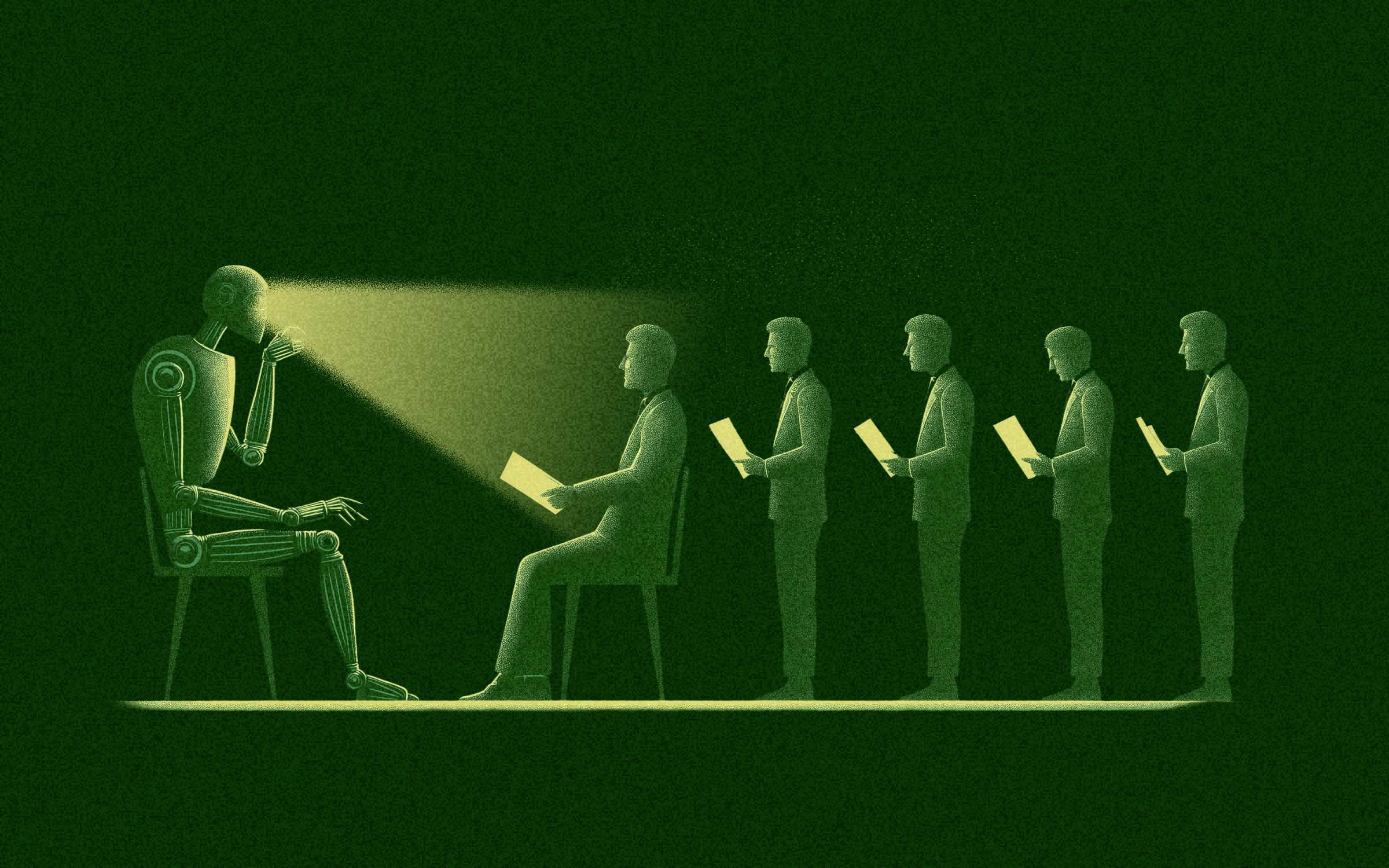
As AI takes on more recruiting tasks, HR leaders must decide where automation should stop, and human accountability should begin. Members of the Senior Executive HR Think Tank explain when candidates deserve human judgment, communication, transparency and a meaningful opportunity to challenge an automated decision.Hiring has always involved a tension between efficiency and humanity, but artificial intelligence is pushing that tension into new territory. AI can now help screen resumes, identify candidates, generate job descriptions and automate communication. According to LinkedIn's 2025 Future of Recruiting report, 37% of recruiting organizations are actively integrating or experimenting with generative AI, while 73% of talent-acquisition professionals say AI will change the way organizations hire.That makes the question less about whether companies should use AI and more about where responsibility belongs when technology affects someone's opportunity. Members of the Senior Executive HR Think Tank bring perspectives spanning talent acquisition, organizational leadership, career coaching, workplace culture and HR technology.Across their responses, one principle emerges: AI can take on more of the process, but companies cannot automate accountability.
expert panel
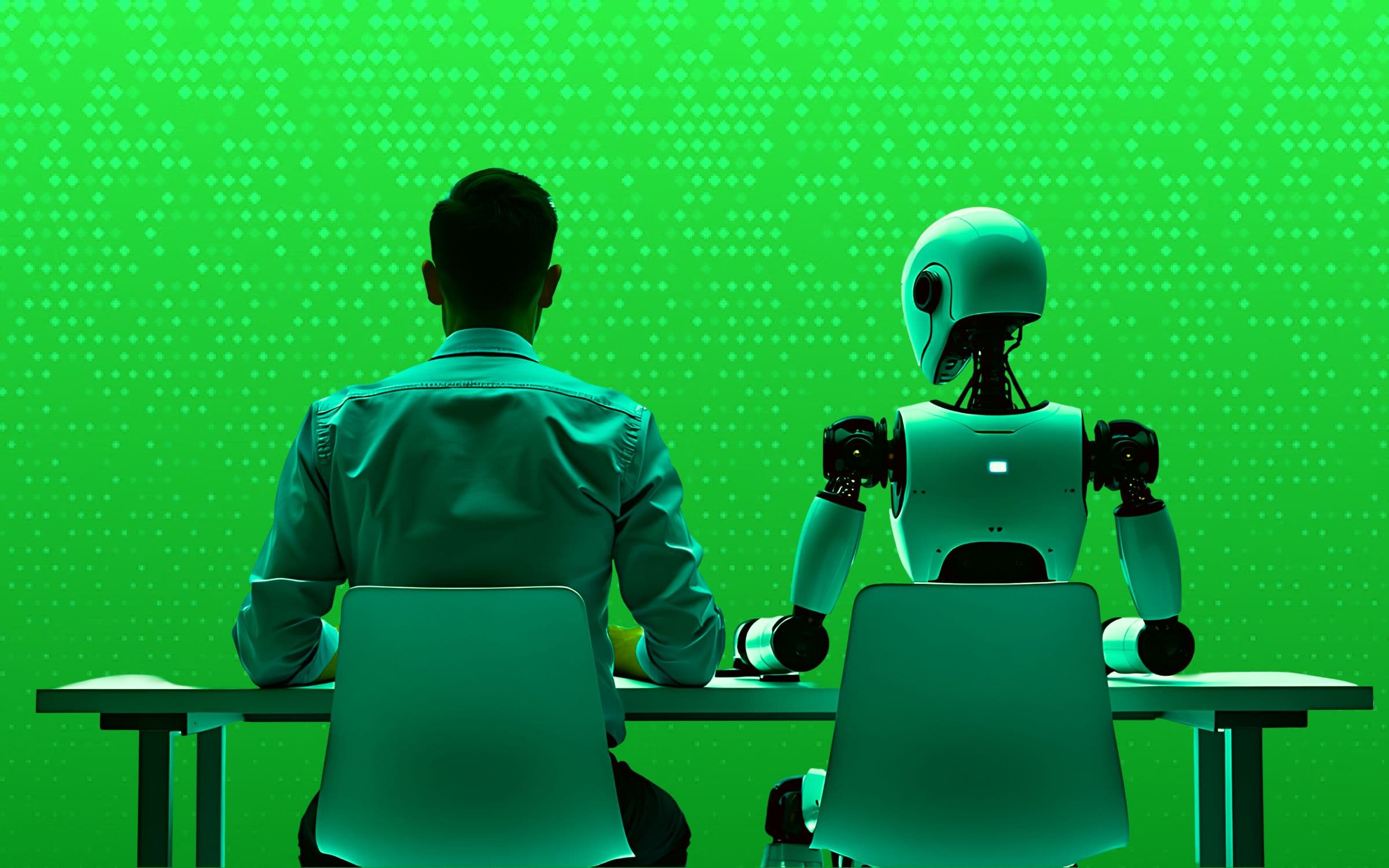
As AI and automation take on more work, leaders face a new challenge: creating efficiency without crowding out human judgment, creativity and connection. Members of the Senior Executive HR Think Tank share how to determine what should remain human, protect time for creative thinking and redesign AI-enabled work around better human outcomes.With AI and automation becoming part of everyday work, the leadership challenge is no longer simply deciding what can be automated. It’s deciding what should be. The more capable these systems become, the easier it is to automate work that once required significant human effort.But efficiency alone does not guarantee better thinking, stronger decisions or more innovative outcomes. In fact, the organizations that benefit most from AI may be those that use it not simply to increase output but to create more capacity for distinctly human work.That decision is becoming increasingly important as AI adoption accelerates. Gallup's 2025 research on AI use at work found that the share of U.S. employees using AI at work at least a few times a year had nearly doubled in two years, rising from 21% in 2023 to 40% in early 2025. As adoption expands, however, leaders must consider how to use technology in ways that strengthen rather than diminish human capabilities.That distinction is at the center of the insights shared by members of the Senior Executive HR Think Tank. Their experiences across leadership development, HR, organizational psychology, human performance and business transformation suggest that the strongest human-AI models are not built around a fixed division between people and technology. Instead, they are designed around the different strengths each brings to the work.The opportunity, then, is to use automation to create capacity and deliberately reinvest that capacity in judgment, creativity, relationships and the kinds of thinking that give work its strategic value.
expert panel
Aug 21, 2026
New employees quickly learn what an organization truly values by watching what happens around them. Members of the Senior Executive HR Think Tank identify everyday workplace behaviors that can quietly undermine trust, engagement and retention—and explain how leaders can make those signals work in their favor.A new employee's first impression of an organization rarely comes from the employee handbook. It comes from what happens around them: whether leaders show up on time, whether promised meetings actually happen, whether every request is treated as urgent and whether the culture's stated values match everyday behavior.That matters because onboarding is not simply an administrative process. SHRM describes it as an ongoing integration of employees into an organization's culture, role and workplace, noting that the first days and months are particularly important for retention.Members of the Senior Executive HR Think Tank see the same dynamic from different angles. Their advice points to a common lesson: New hires are constantly interpreting small behaviors as evidence of what it really means to work at an organization. The everyday habits leaders overlook may become the signals employees remember.
expert panel
Longer job searches. Résumés increasingly written—or optimized—by artificial intelligence. AI-driven screening tools have contributed to skyrocketing application volumes while also increasing the risk of qualified candidates being filtered out prematurely, especially as generative AI fuels résumé inflation and keyword stuffing. At the same time, new AI-driven hiring platforms, credentials and even proposed job marketplaces from technology leaders promise to “fix” what’s broken in talent acquisition. For senior HR and business leaders, the question is no longer whether AI will influence hiring, but how much trust organizations should place in these tools—and at what cost. Members of the Senior Executive HR Think Tank have experience across industries in talent acquisition, employee experience, DEI, workforce analytics and the responsible use of AI in HR. Their experience reveals a consistent truth: AI can unlock measurable value, but only when paired with strong governance and human judgment. Below, they expand further on the issues at hand for HR professionals today and weigh in on whether AI-driven hiring platforms and credentialing systems are solving real problems—or simply shifting complexity to a new layer of the process.
expert panel
Diversity and inclusion aren’t just important talking points—they’re tied directly to organizational performance. In a 2025 survey, 81% of C-suite leaders said their organizations had seen a positive correlation between DEI programs and customer loyalty; 77% cited a positive correlation between DEI programs and financial performance. As workplaces navigate shifting employee expectations and sharper public scrutiny around equity and representation, leaders are recognizing that progress demands more than aspirational statements; it requires defined strategies, measurable outcomes and accountability at every level. As expectations rise, leaders are pressing for clarity: Which DEI strategies truly work, and how do you measure meaningful progress? Members of the Senior Executive HR Think Tank have a front-row view into what helps diversity and inclusion efforts gain traction—or fall flat. Below, five of them share how organizations can move beyond performative approaches and build DEI practices rooted in employee experience, leadership commitment and data-driven evaluation.
article
Neurodiverse professionals bring unique strengths to teams—but leaders need to know how to support them. Members of the Senior Executive HR Think Tank share how they’re training managers to identify, engage and empower neurodiverse talent from the hiring process through long-term development.
Company details
My HR Confidant
Company bio
My HR Confidant is a workplace trust and communication platform that helps organizations create safer, more transparent workplaces by giving employees a secure way to speak up, stay informed, and be heard. The platform provides anonymous and confidential reporting with secure two-way communication, while also giving organizations tools for employee surveys, announcements, recognition, document access, case management, analytics, and secure evidence management. Employees can raise concerns and continue communicating without giving up their anonymity, helping organizations identify and address issues earlier. Unlike traditional ethics hotlines or standalone reporting systems, My HR Confidant is designed to support the broader employee relationship—not just the moment when something goes wrong. Our goal is to help organizations build trust, strengthen communication, preserve institutional knowledge, and identify emerging workplace risks before they become larger problems. Built with an HR and compliance perspective, My HR Confidant is particularly valuable for organizations with distributed, deskless, remote, or multi-location workforces. Your Voice Really Matters.