
Emily Popson
CallRail
Emily Popson
Published content

expert panel
Customers don’t perceive marketing, sales, service and digital touchpoints as separate departments; they experience one company. A brand can look and sound polished in every interaction and individual channel and still feel fragmented as a whole. For some leaders, as long as everyone on a team is communicating “professionally,” this fragmentation may not seem important, but it is: A consistent, seamless experience across channels can help keep customers engaged while building trust in a brand.That makes branding much more than a creative or aesthetic concern. As more teams contribute to customer-facing messages and experiences, small differences in how a company’s representatives interpret the brand can accumulate into something customers notice—particularly when the lines between marketing and communications start to blur across an expanding range of platforms and touchpoints. For marketing leaders, the challenge is creating enough shared understanding across the organization that a brand remains recognizable without requiring every team, channel or interaction to look and sound exactly alike.Members of the Senior Executive CMO Think Tank have extensive experience shaping brands, connecting with customers and guiding marketing across an increasingly complex mix of channels and technologies. Below, they highlight mistakes that can cause a brand to lose coherence and explain how marketing leaders can keep teams and touchpoints aligned.

expert panel
For years, search marketing has been built around a familiar goal: earn enough visibility to get a customer to click. AI-generated search results are changing that equation. For example, a 2025 analysis found that Google users clicked traditional search results in just 8% of visits when an AI summary appeared, compared with 15% when it didn’t—suggesting brands may have fewer opportunities to speak for themselves on their own turf.When an AI system becomes the layer between a company and a prospective customer, brand reputation isn’t shaped only by what the company publishes. The system may synthesize information from a range of sources, and that synthesis isn’t guaranteed to be accurate. Widespread problems, from speculative answers to fabricated links, have been found with the ways generative search tools retrieved and cited source material. For CMOs, that makes the broader information ecosystem surrounding a brand a more immediate marketing concern, since an incomplete, outdated or inaccurate answer can influence perception before a customer ever reaches the company’s website—if they reach it at all.As AI changes how customers discover and evaluate companies, marketing leaders need to rethink what it takes to earn authority when they may not control the first—and sometimes only—description a buyer sees. Below, members of the Senior Executive CMO Think Tank, a curated group with expertise in brand storytelling, digital advertising and the rise of AI in marketing, discuss how CMOs can approach brand authority, message consistency and reputation in an AI-mediated search environment.
expert panel
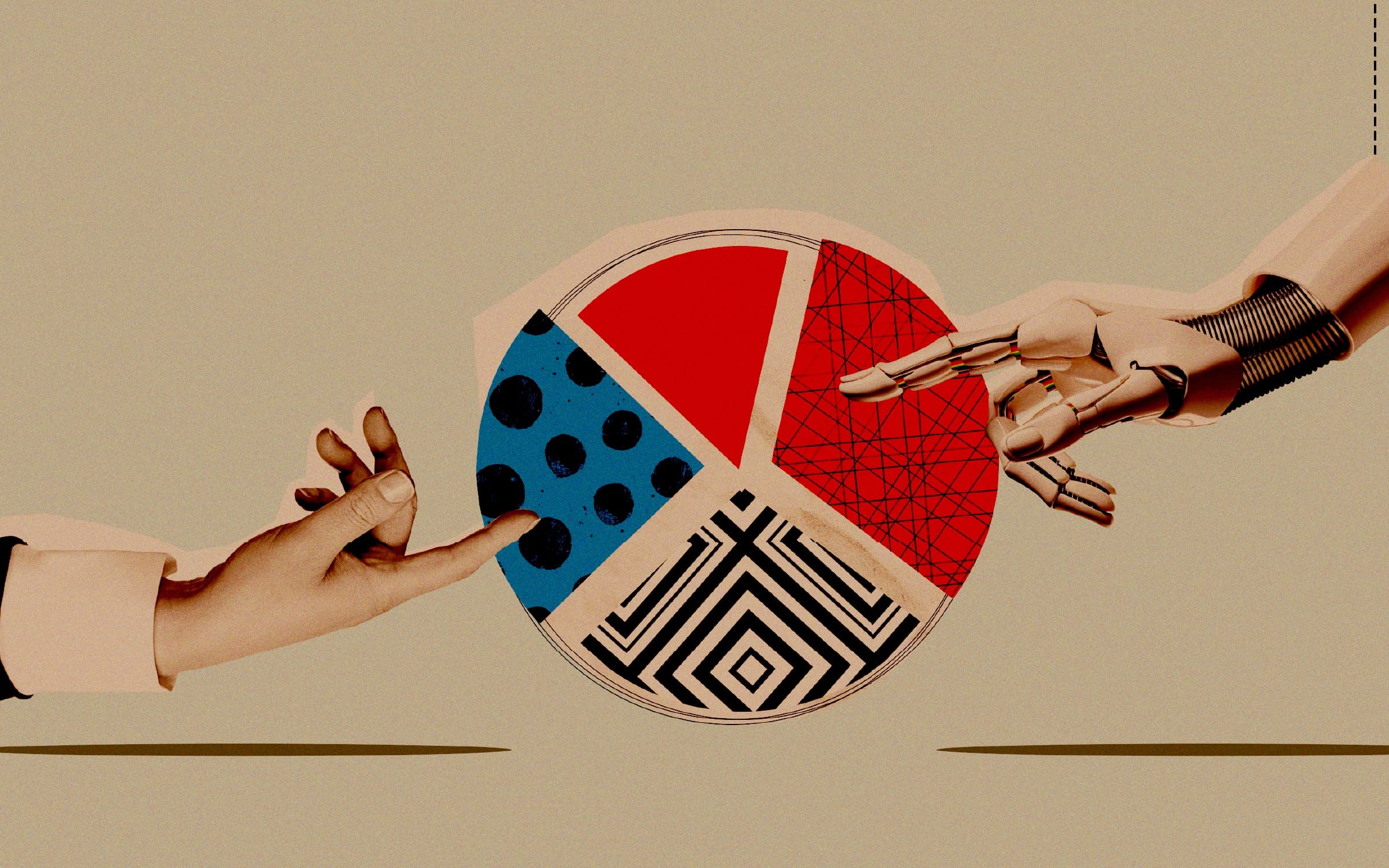
AI has become deeply embedded in day-to-day work, but the productivity payoff isn’t automatic. A 2026 Stanford survey of global executives found that about 70% of firms are actively using AI, yet the same survey found more than 80% of firms reported no impact on productivity over the previous three years. For marketing leaders under constant pressure to leverage AI to move faster and accomplish more, that gap is troubling enough. But they also have to navigate an additional challenge: keeping AI from diluting or damaging their brand’s voice.Efficiency isn’t just about producing something faster. Especially when it comes to marketing, AI should free people to spend more time on work that benefits from human judgment, creativity and connection. That’s an outcome that aligns with what workers themselves say they want from workplace AI: a collaborative relationship where they retain agency and oversight, rather than having AI encroach on the parts of their work that require human judgment.Members of the Senior Executive CMO Think Tank are experienced marketing leaders with expertise spanning brand storytelling, digital advertising, customer engagement, influencer marketing and the growing role of AI in marketing. Here, they discuss ways marketing teams can inadvertently create more friction with AI and share practical approaches for using the technology to make work simpler, clearer and more valuable instead.

expert panel

expert panel
Companies increasingly look to their CMOs for more than brand awareness, campaign performance and lead generation. Today’s marketing leaders are often expected to influence revenue, customer loyalty and long-term growth, even as research has found that many CMOs believe their roles as designed hinder their ability to maximize marketing performance outcomes.Part of the challenge is that CMOs and their executive colleagues may define growth—and marketing’s contribution to it—differently. For example, McKinsey found that 70% of CEOs measure marketing’s impact through year-over-year revenue growth and margins, while only 35% of CMOs consider those to be top metrics. CMOs may also take a longer view of brand building and customer relationships, while CEOs and CFOs face pressure to demonstrate more immediate financial returns. But even when there’s little to no C-suite agreement on priorities, timelines and measures of success, a CMO is often held responsible for delivering growth—without the necessary shared framework.Closing that gap requires more than expanding the CMO’s job description. Members of the Senior Executive CMO Think Tank are a curated group of experts with years of experience in marketing, including brand storytelling, digital advertising and customer engagement. Here, several of them explore the mindsets and strategies that need to change if CMOs are to have the influence, alignment and operating support needed to achieve what today’s organizations expect of them.