
Skills
About
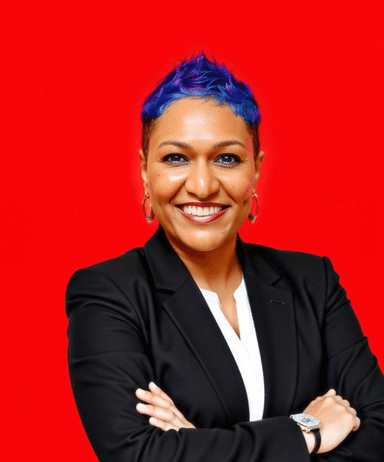
Ramya Chandrasekaran is the Chief Communications Officer of the QI Group, where she leads global reputation strategy, brand storytelling, and stakeholder engagement. An award-winning communications leader with more than two decades of international experience, she has been recognized by Provoke Media’s Innovator 25 Asia Pacific and Reputation Today’s Global 20 Indians in Communications. Passionate about the intersection of sustainability, technology, and storytelling, Ramya has pioneered the use of AI in communications to boost efficiency and creativity. She also serves as an Associate Director on the Board of QI Group, where she champions sustainability initiatives that align business growth with social impact. Ramya frequently represents the QI Group at high-profile global platforms, including the World Economic Forum’s events around the world, such as the Annual Meeting in Davos. Having lived and worked in multiple countries, she brings a deep understanding of cross-cultural dynamics to her leadership. Her mission is to reshape the future of communications by blending authenticity with bold, innovative storytelling that resonates across emerging markets.

Ramya Chandrasekaran
Published content
expert panel
Internal communication is easy to treat as a housekeeping function—something that happens after leadership has made the real decisions. But the way those decisions are explained can shape whether employees understand the direction, trust the people setting it and know what their own role is. According to a spring 2026 survey by Gallup, employees who strongly agree they trust their organization’s leadership are 3.7 times as likely to be engaged, yet just 20% of U.S. employees place themselves in that group.Those numbers suggest that successful internal communication is about more than just getting information out in a timely fashion. And there’s evidence leadership teams in many organizations are struggling to convey their plans and perceptions about the current environment and their vision of the path forward. The American Psychological Association’s 2025 Work in America survey found that upper management consistently reported more positive views of organizational change and their work experience than frontline workers and individual contributors did. Bridging that gap requires leaders to understand how employees are actually experiencing change, then frame their messages so they’re received and understood as intended.Marketing leaders spend their days translating complex ideas into messages that work for distinct audiences, so they’re well positioned to spot communication problems inside the business, too. Below, members of the Senior Executive CMO Think Tank, with expertise spanning brand storytelling, customer engagement, digital marketing and more, share internal communication mistakes business leaders should address and how marketing expertise can help.

expert panel
For years, search marketing has been built around a familiar goal: earn enough visibility to get a customer to click. AI-generated search results are changing that equation. For example, a 2025 analysis found that Google users clicked traditional search results in just 8% of visits when an AI summary appeared, compared with 15% when it didn’t—suggesting brands may have fewer opportunities to speak for themselves on their own turf.When an AI system becomes the layer between a company and a prospective customer, brand reputation isn’t shaped only by what the company publishes. The system may synthesize information from a range of sources, and that synthesis isn’t guaranteed to be accurate. Widespread problems, from speculative answers to fabricated links, have been found with the ways generative search tools retrieved and cited source material. For CMOs, that makes the broader information ecosystem surrounding a brand a more immediate marketing concern, since an incomplete, outdated or inaccurate answer can influence perception before a customer ever reaches the company’s website—if they reach it at all.As AI changes how customers discover and evaluate companies, marketing leaders need to rethink what it takes to earn authority when they may not control the first—and sometimes only—description a buyer sees. Below, members of the Senior Executive CMO Think Tank, a curated group with expertise in brand storytelling, digital advertising and the rise of AI in marketing, discuss how CMOs can approach brand authority, message consistency and reputation in an AI-mediated search environment.

expert panel
AI has become deeply embedded in day-to-day work, but the productivity payoff isn’t automatic. A 2026 Stanford survey of global executives found that about 70% of firms are actively using AI, yet the same survey found more than 80% of firms reported no impact on productivity over the previous three years. For marketing leaders under constant pressure to leverage AI to move faster and accomplish more, that gap is troubling enough. But they also have to navigate an additional challenge: keeping AI from diluting or damaging their brand’s voice.Efficiency isn’t just about producing something faster. Especially when it comes to marketing, AI should free people to spend more time on work that benefits from human judgment, creativity and connection. That’s an outcome that aligns with what workers themselves say they want from workplace AI: a collaborative relationship where they retain agency and oversight, rather than having AI encroach on the parts of their work that require human judgment.Members of the Senior Executive CMO Think Tank are experienced marketing leaders with expertise spanning brand storytelling, digital advertising, customer engagement, influencer marketing and the growing role of AI in marketing. Here, they discuss ways marketing teams can inadvertently create more friction with AI and share practical approaches for using the technology to make work simpler, clearer and more valuable instead.

expert panel
When a global brand stumbles in a new market, it’s often not because the product doesn’t translate well, but because the marketing doesn’t. Messaging that feels familiar and persuasive in one market can fall flat in another if it reflects assumptions instead of understanding. CMOs are often pressured to move fast, but sacrificing sensitivity in the interests of speed can derail multinational campaigns at digital speed. Surface-level localization may help a campaign look tailored, but the audience may find it irrelevant or disrespectful. Cultural missteps produce the worst kind of viral headlines; even worse, they erode trust with the very communities brands are trying to win over. Successful global branding requires the discipline to build processes that bring local perspective into campaign development early enough to shape the message before it goes live. So how can marketing leaders expand their reach without flattening cultural nuance, wandering into reputation-damaging mistakes, or completely reinventing the brand for every region? Below, members of the Senior Executive CMO Think Tank share their insights on how CMOs can create campaigns that connect more authentically in unfamiliar regions and put the right safeguards in place before small misunderstandings become big problems.

expert panel
Trust is hard to earn and easy to lose; the same is true of brand authority. It can't be purchased with a bigger ad budget or manufactured through a clever campaign. The brands that earn it do so by being consistently useful, credible and clear about what they stand for. Buyers today are flooded with claims for their attention, and they’re savvy. They’ll simply tune out generic, promotional brand messaging that shows no understanding of their real needs. Conversely, a coherent narrative backed by genuine expertise and validated by real outcomes becomes something customers actively seek out. A brand that masters that kind of messaging shifts from just another seller to a trusted resource and, eventually, to the obvious choice.So what questions do businesses need to ask and answer about themselves, and how can they build brand authority systematically rather than accidentally? And how do the pieces—narrative clarity, a distinctive value proposition, subject matter expertise and proof points—fit together into a winning strategy that compounds over time? Below, members of the Senior Executive CMO Think Tank discuss what this kind of disciplined approach to brand building looks like in practice, sharing their expertise in establishing the kind of authority that customers trust and actively seek out.

expert panel
Automation has a way of making marketing systems look busy—and therefore, healthy. Dashboards fill up, campaigns launch on schedule and follow-up happens at machine speed, creating the impression that marketing teams are becoming more efficient and effective. But activity isn’t the same as results. For a growing number of marketing organizations, automation has become a way to run faster in the wrong direction. Automation doesn’t fix fuzzy underlying strategies, scattered data or poorly defined handoffs between marketing, sales and product teams. It just moves them out of sight. A workflow that runs smoothly isn’t necessarily a workflow that works. Further, tool sprawl can leave teams struggling to manage and achieve ROI from an ever-growing, unchecked tech stack. That’s the uncomfortable reality many CMOs are grappling with right now. The proliferation of martech tools has made it easier than ever to automate nearly every touchpoint in the customer journey, yet in too many cases, revenue stalls, churn climbs and teams struggle to explain how—or if—automation is making a positive difference. The real job, then, isn’t just adopting better tools. It’s figuring out what the underlying problem is and whether technology will merely simply help a flawed process fail more elegantly. Members of the Senior Executive CMO Think Tank—a curated group of marketing leaders with deep expertise in digital advertising and technology’s growing role in marketing—have been at the forefront of the AI revolution. Here, they break down the process flaws automation most commonly conceals and share practical diagnostics to help CMOs build on solid ground before adding more speed.

Company details
QI Group
Company bio
The QI Group is a purpose-driven multinational conglomerate in the consumer industries with businesses across education, wellness, lifestyle, hospitality, and luxury. Headquartered in Hong Kong, the Group operates in multiple markets across Asia, Africa, the Middle East, and Europe through a portfolio of wholly owned businesses and partnerships.