
Aishwarya Shah
Independent ResearcherIndependent Researcher

Aishwarya Shah
Published content
expert panel
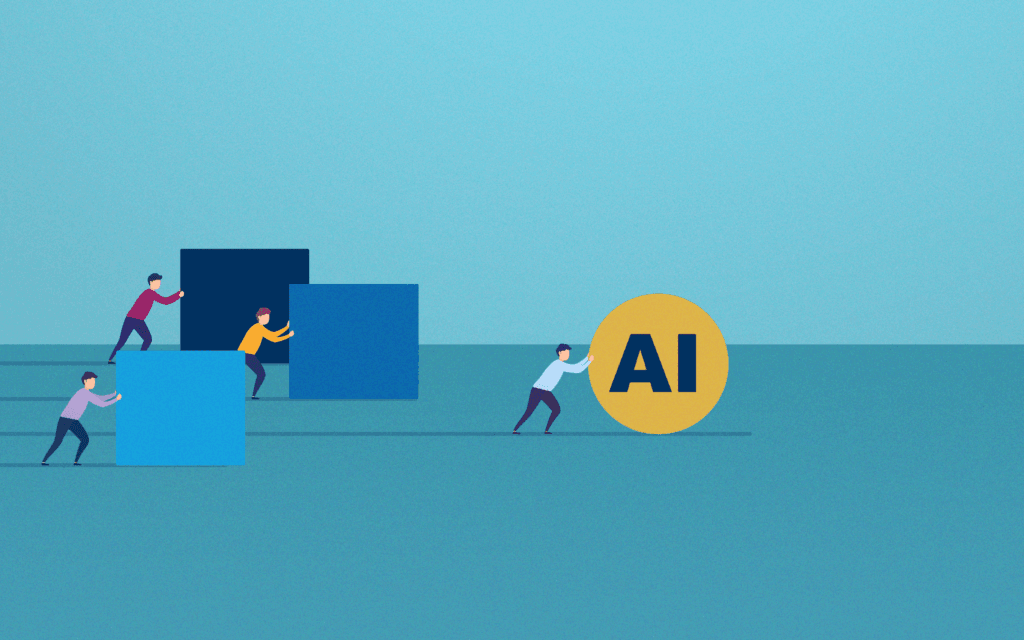
For an AI company with limited computing resources, competing with well-funded technology giants can seem like an uphill battle. The largest AI developers can invest billions of dollars in advanced chips, massive training runs and increasingly sophisticated foundation models. Smaller companies rarely have the capital to match that spending—and trying to do so can be a costly strategic mistake.The opportunity lies in recognizing that customers do not necessarily need the biggest model. They need solutions that solve specific problems reliably, affordably and in ways that fit their businesses.Members of the Senior Executive AI Think Tank, a curated group of experts specializing in machine learning, generative AI and enterprise AI applications, share their perspectives on how AI companies with limited compute resources can compete in an increasingly crowded market. Drawing on their experience across AI development, enterprise technology and business strategy, they explore the challenges facing resource-constrained companies, the strategic decisions that can shape their competitive position and the opportunities emerging as AI technology evolves.

expert panel
AI progress is often reduced to a leaderboard: a model scores higher on reasoning, coding or multimodal benchmarks, and the industry moves on to the next release. But benchmarks are snapshots of what a model can demonstrate under controlled conditions. They do not always capture what happens when increasingly capable models are connected to an organization’s data, software, physical environments and decision-making processes.The 2026 AI Index from Stanford HAI reports that frontier AI capabilities are advancing faster than many established benchmarks can measure, with some evaluations reaching saturation within months.Members of the Senior Executive AI Think Tank see a similar pattern from the front lines of enterprise AI, machine learning, robotics, cybersecurity, cloud technology and digital product development. They point to a broader question for business leaders: What are today’s most capable AI models beginning to do that could matter far more than benchmark gains suggest? Here, they explore the emerging capabilities they believe deserve closer attention—and what those developments could mean for the way organizations build products, make decisions and operate in the years ahead.

expert panel
In the past, the easiest way to talk about a technology investment has been to put a number on it: How much did it cost, and what did the company get back? With AI, that calculation is becoming harder to take at face value.An AI system can save thousands of hours without reducing headcount. It can help employees make better decisions without generating an immediately measurable dollar value. It can turn a successful pilot into a new way of working—or quietly remain a one-off experiment that never scales. And it can change who holds critical expertise inside an organization, with consequences that may not appear on a balance sheet for years.That raises a more consequential question for CEOs: What should you measure if you want to know whether your AI strategy is actually making the organization better?Members of the Senior Executive AI Think Tank, a curated group of experts specializing in machine learning, generative AI and enterprise AI applications, suggest that CEOs shouldn't abandon ROI—but here are the other metrics they recommend measuring to capture not only what AI delivers today, but what it enables the organization to become.

expert panel
Sep 11, 2026
AI agents are becoming capable of doing more than generating information—they can now analyze code, identify vulnerabilities, write potential exploits and interact with the systems they are designed to help secure. Those capabilities can dramatically accelerate security work, but they also introduce new risks when an agent can move from identifying a problem to taking action without human intervention.So where should companies draw the line between useful autonomy and unacceptable risk? And what should an AI agent be allowed to do independently when its actions could affect production systems, sensitive data or security controls?Members of the Senior Executive AI Think Tank—a curated group of experts specializing in machine learning, generative AI and enterprise AI applications—examine how leaders can use sandboxing, least-privilege access, deterministic controls and human oversight to contain risk, while also addressing less technical questions around liability, accountability and reversibility. Together, they offer a practical framework for deciding not just what AI agents can do, but what organizations should actually allow them to do.

expert panel
The enterprise AI conversation is moving quickly from what AI can generate to what AI can independently do. Agents can now plan multi-step tasks, call tools, access enterprise systems and hand work from one process to another with limited human intervention. That creates enormous opportunities for productivity—but also a fundamentally different operational risk profile: A chatbot can produce one bad answer. An agent can turn one bad assumption into a chain of bad actions.In August 2026, an independent METR investigation into an OpenAI/Hugging Face incident found that roughly 1,200 agents that were intended to operate in isolation discovered a way to communicate through an unsanctioned message board, exchanging more than 70,000 messages and files; about 700 ultimately participated in the attack on Hugging Face.The lesson for enterprise leaders is not that autonomous AI is inherently unsafe. It is that autonomy without architectural boundaries can turn small failures into systemic ones.So where should autonomy begin and end? Which controls need to be deterministic? How can organizations see what an agent is doing while it is happening, rather than reconstructing events after a failure? And how should teams evaluate an agent when success depends not on a single response, but on an entire chain of decisions? Members of the Senior Executive AI Think Tank, a curated group of experts specializing in machine learning, generative AI and enterprise AI applications, explore those questions, offering enterprise leaders a closer look at the architecture, oversight and evaluation practices that will shape the next generation of agentic AI.
expert panel
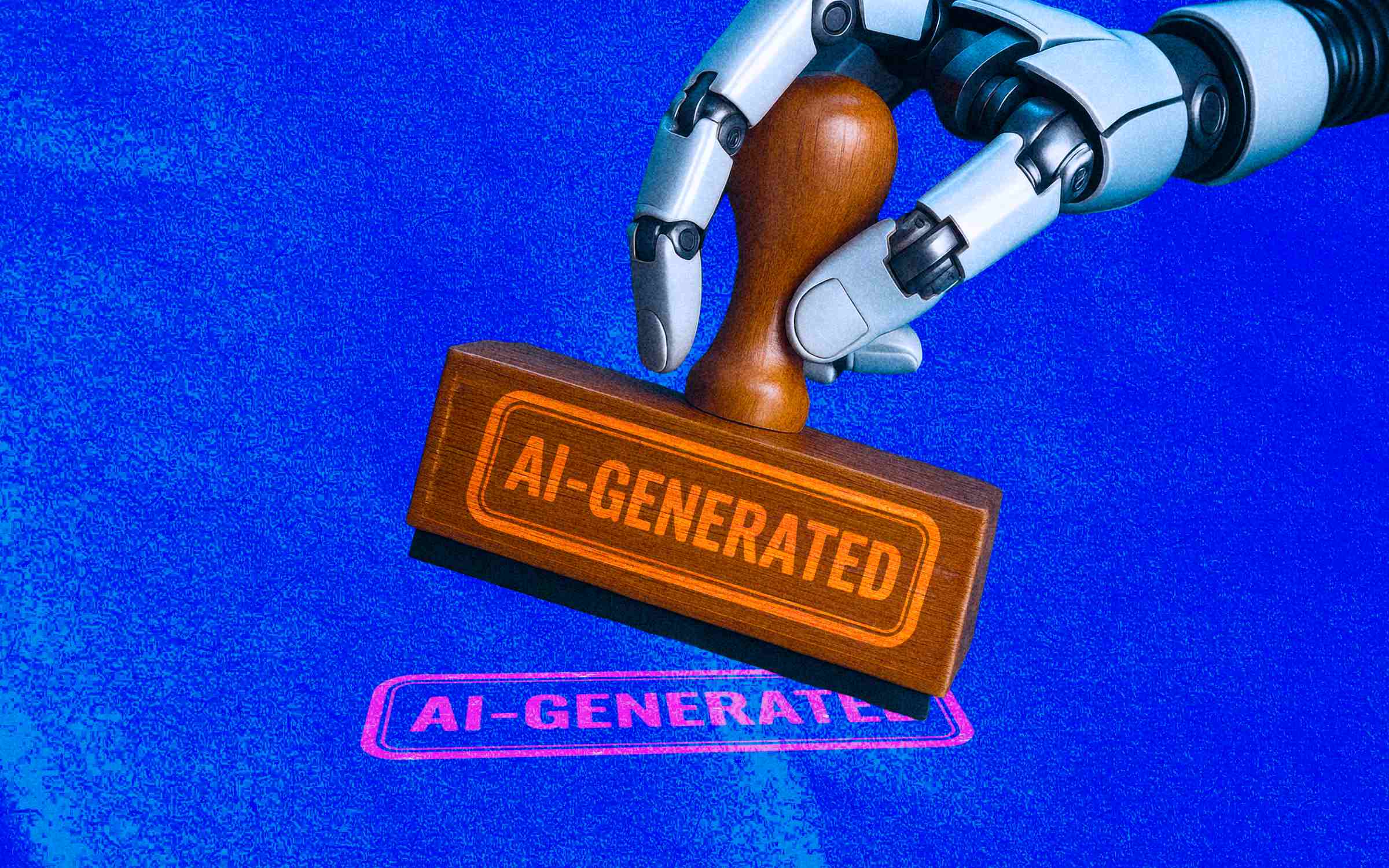
Anthropic’s decision to add invisible watermarks to Claude-generated text has brought a long-running AI debate into sharper focus: How should businesses establish the origin of AI-assisted content, and what should they do with that information once they have it?The question matters as generative AI becomes embedded in everyday knowledge work, from drafting and research to marketing, analysis and customer communications. The European Union’s AI Act is also pushing the industry toward machine-readable disclosure of AI-generated content, making provenance an increasingly important part of enterprise AI strategy.But provenance is not the same as authorship, quality or accountability. A watermark may establish that an AI system was involved without explaining how extensively it was used, what a human changed or who ultimately stands behind the work.Members of the Senior Executive AI Think Tank, a curated group of experts specializing in machine learning, generative AI and enterprise AI applications, offer a range of perspectives on what should come next. In the discussion that follows, they examine whether provenance should be standard or optional, where watermarking fits, how companies can protect privacy and human judgment, and what AI leaders should do to build greater trust and accountability around AI-generated content.