

Skills
About
Ajay Pundhir has spent fifteen years building AI systems inside organisations — Nokia, Samsung Research, American Express, and now Presight (G42) in Abu Dhabi and learning, from the inside, why most enterprise AI programmes fail before they ever reach production. He is the founder of AskAjay.ai, a strategic advisory practice for senior executives and board members navigating AI governance, regulatory compliance, and enterprise AI deployment. The practice is built on five proprietary frameworks - PRIME, MVG, Trust Premium, Liability Ledger, and A7, developed and validated across four countries, four regulatory environments, and twelve-plus enterprise organisations in financial services, healthcare, and government. Ajay serves on the Harvard Business Review Advisory Council and the MIT Technology Review Global Insights Panel, contributes to Forbes Technology Council, mentors AI founders through Stanford's LISA programme, and holds IEEE Senior Membership. His weekly newsletter, The Trust Premium, delivers original AI strategy insight to a growing community of senior leaders across MENA and globally. His work operates at one intersection: where AI ambition meets organisational reality and where AI advice must honestly end so that human judgment can begin.

Ajay Pundhir
Published content
expert panel
Sep 18, 2026
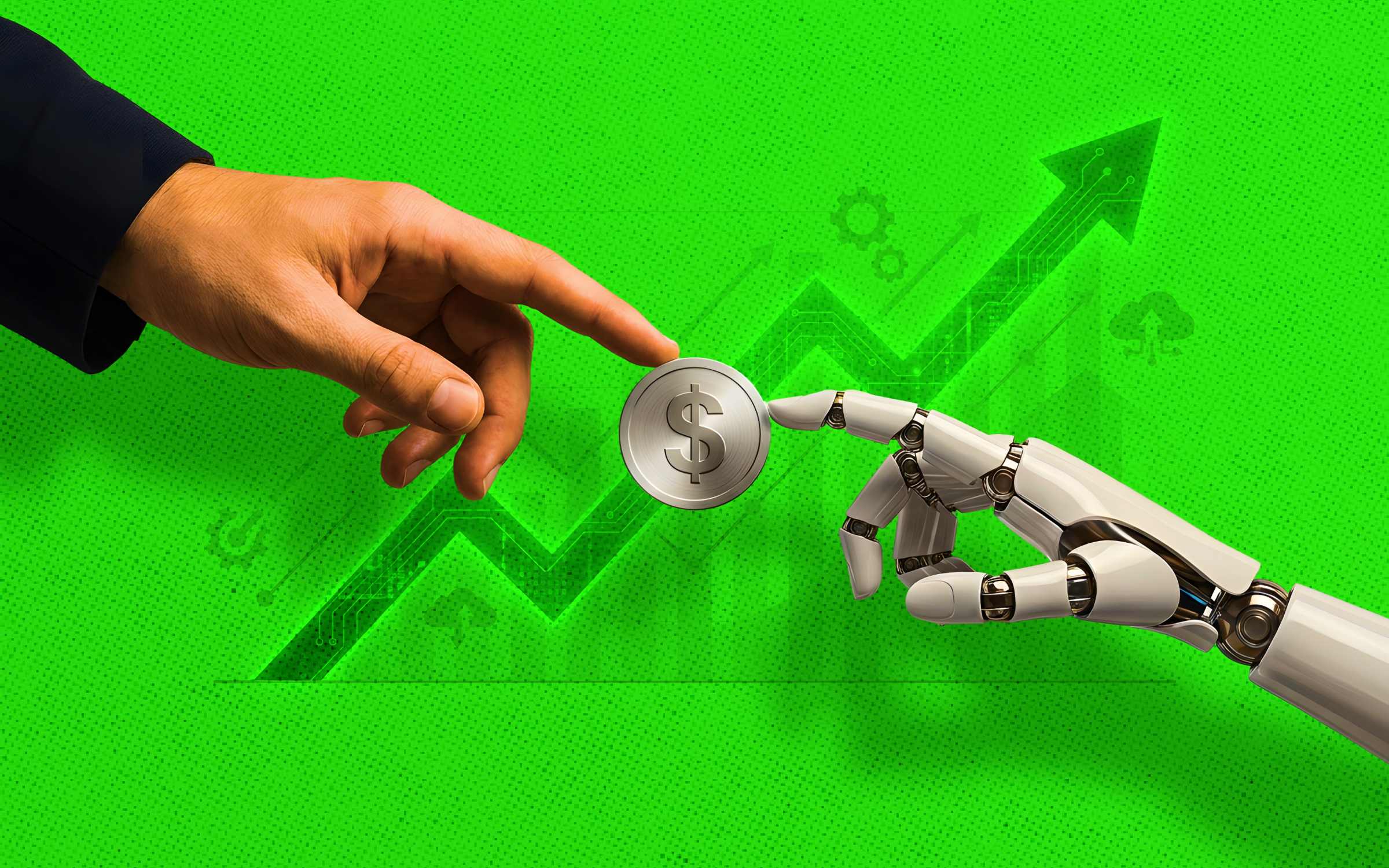
Startup fundraising has always followed a familiar formula: build the product, prove traction, raise enough money to reach the next milestone.But AI is disrupting that formula. Models change quickly, inference costs fluctuate, enterprise sales cycles can stretch for months and today’s breakthrough feature can become tomorrow’s commodity. The assumptions behind a traditional runway or growth plan can change before a company reaches its next round.That means AI founders need to rethink what they are raising capital to prove. Is it customer demand? Technical feasibility? Sustainable unit economics? Enterprise readiness? Or a durable advantage that can survive the next model release?Founders shouldn’t just consider how much money their startup can raise, but what that capital needs to accomplish—and what evidence it should produce along the way.Members of the Senior Executive AI Think Tank—a curated group of executives and practitioners working across machine learning, generative AI and enterprise AI applications—share the fundraising advice they believe AI founders should leave behind, from chasing maximum capital to relying too heavily on traditional traction, and what investors should see instead.

expert panel
Sep 11, 2026
AI agents are becoming capable of doing more than generating information—they can now analyze code, identify vulnerabilities, write potential exploits and interact with the systems they are designed to help secure. Those capabilities can dramatically accelerate security work, but they also introduce new risks when an agent can move from identifying a problem to taking action without human intervention.So where should companies draw the line between useful autonomy and unacceptable risk? And what should an AI agent be allowed to do independently when its actions could affect production systems, sensitive data or security controls?Members of the Senior Executive AI Think Tank—a curated group of experts specializing in machine learning, generative AI and enterprise AI applications—examine how leaders can use sandboxing, least-privilege access, deterministic controls and human oversight to contain risk, while also addressing less technical questions around liability, accountability and reversibility. Together, they offer a practical framework for deciding not just what AI agents can do, but what organizations should actually allow them to do.

expert panel
Artificial intelligence remains one of the most consequential forces reshaping business, yet many organizations still struggle to distinguish meaningful breakthroughs from attention-grabbing headlines. While public discussion often centers on increasingly powerful models, digital assistants and speculation about artificial general intelligence, many enterprise leaders are discovering that the most transformative AI developments occur behind the scenes.Ask 10 AI experts what will matter most a year from now, and you might expect 10 different answers. Instead, members of the Senior Executive AI Think Tank—a curated group of experts specializing in machine learning, generative AI and enterprise AI applications—arrived at a strikingly similar conclusion: The biggest opportunities—and risks—aren't tied to the next model release. Across industries, they point to the infrastructure that makes AI useful in practice, from governance and security to evaluation, trust and workflow integration. At the same time, many are skeptical of some of today's loudest predictions, particularly around fully autonomous agents replacing human judgment at scale.As recent research from McKinsey suggests, organizations are increasingly finding that AI success depends less on access to cutting-edge models and more on the ability to operationalize them effectively. The experts featured here—those on the front lines of AI innovation—share the developments they believe leaders are underestimating, the trends they think are overhyped and where executives should be investing now to create lasting competitive advantage.

expert panel
As multimodal AI moves rapidly from novelty to baseline expectation, companies are confronting a deeper challenge than simply adding new features. Users increasingly expect software to understand text, voice, images and video simultaneously, while preserving context seamlessly across every interaction. That shift is forcing organizations to rethink how products are designed, architected and differentiated.Members of the Senior Executive AI Think Tank say the next era of product competition will center less on standalone AI capabilities and more on orchestration, workflow intelligence and trust. Their insights arrive as major technology companies race to integrate multimodal capabilities into mainstream applications. Multimodal systems capable of understanding and generating across formats are becoming foundational to enterprise software strategy. At the same time, organizations are discovering that simply embedding AI into existing workflows does not automatically create better user experiences.Instead, experts argue, multimodal AI is changing the very definition of interface design. Products are evolving from static tools into adaptive systems that anticipate intent, reduce friction and collaborate more naturally with users. The insights that follow explore why multimodal AI is forcing companies to rethink everything from UX design and workflow orchestration to trust, memory and product differentiation—and what leaders must do now to stay competitive.

expert panel
The notion of a “steady state” has quietly disappeared from modern enterprise leadership. In its place is a reality defined by continuous disruption, where artificial intelligence is not just accelerating change but compounding it. Organizations are no longer transforming in phases—they are operating in a constant state of reinvention. For executives, this requires a shift from managing change as an event to leading within change as an environment. Members of the Senior Executive AI Think Tank—a curated group of experts in machine learning, generative AI and enterprise AI applications—bring a front-line perspective to this challenge. Their work across healthcare, cloud architecture, enterprise platforms and AI governance show that the organizations that succeed are not those with the most advanced tools, but those with the most adaptive operating models and leadership mindsets. According to McKinsey’s 2025 report on the state of AI, companies are rapidly scaling AI adoption, yet many struggle to translate that investment into sustained business value—often because their structures, decision-making processes and cultures are not designed for continuous change. To help their fellow leaders better cope with these evolving demands, Think Tank members outline the capabilities executives can no longer treat as optional. Through real-world insights and expert perspectives, they explore how leaders are redesigning operating models, reshaping team expectations and building organizations that don’t just withstand disruption, but continuously learn and perform within it.

expert panel
The rapid expansion of artificial intelligence across government—from cybersecurity to citizen services—is reshaping national security itself. As AI moves into critical decision-making, companies building these systems are evolving from technology providers to strategic partners with real geopolitical influence. And adoption is accelerating fast. AI is moving from experimental pilots to mission-critical infrastructure, powering intelligence analysis, threat detection and operational decisions in real time. With this reliance comes high stakes: Errors carry strategic, legal and human consequences, making accountability, transparency and ethical boundaries essential. For AI companies, this creates a defining tension: how to support national security objectives while maintaining principled limits on technology use. Senior Executive AI Think Tank members—a curated group of leaders in AI governance, enterprise transformation and digital innovation—argue that firms establishing clear guardrails now will shape global standards, build trust and secure long-term advantage. Below, they explain how AI companies can balance national security partnerships with ethical guardrails—and what risks or opportunities they see in drawing firm lines on how this technology can be used.




Company details
AskAjay.ai
Company bio
AskAjay.ai is a strategic advisory practice founded by Ajay Pundhir for senior executives and board members who are accountable for making AI work, not just adopting it. The practice operates across governance advisory, executive coaching, and AI strategy diagnostics, built on five proprietary frameworks developed over fifteen years of enterprise AI implementation. These frameworks cover the full arc of enterprise AI maturity from standing up a functioning governance structure in ninety days, to quantifying the business value of trusted AI, to assessing readiness for autonomous AI agents. Every framework has been validated across organisations in financial services, healthcare, government, and technology, with particular depth across the MENA region. AskAjay.ai also operates The Situation Room, an AI-powered intelligence system that applies validated advisory judgment to strategic questions, cites every recommendation to its source, and draws a clear line where AI guidance ends and human decision-making must take over. The work spans EU AI Act compliance, NIST AI Risk Management Framework alignment, and ISO 42001 implementation. One principle governs every engagement: the organisations that succeed with AI are not the ones that move fastest they are the ones that govern best.