
Skills
About
Executive leader in AI governance, leadership transformation and digital strategy, with 10+ years guiding large-scale innovation across public and private sectors. Founder of HumanLearn, helping leaders bridge technological intelligence with human judgment. Co-Founder of NOVAÉ AI, advancing responsible AI, synthetic creativity and governance for social good. Forbes contributor and AI leader within the Forbes Councils, writing on AI philosophy, governance and leadership. Recognized for thought leadership in AI ethics, organizational agility and the shift from control-based models to co-creation and accountability in AI-driven systems. Areas of focus include AI governance and strategic alignment, executive leadership in the age of AI, organizational transformation, human-centered innovation and AI literacy at the executive level.

Andre Shojaie
Published content

expert panel
For a long time, the central challenge in robotics was teaching machines exactly what to do. Now, some of the most interesting advances are coming from robots that can learn what to do for themselves.That shift is changing expectations for how quickly robots could become genuinely useful. New systems can learn from demonstrations, adapt to unfamiliar situations and transfer what they’ve learned across tasks and machines—bringing robotics closer to the flexibility that made generative AI so disruptive.Members of the Senior Executive AI Think Tank—a curated group of experts specializing in machine learning, generative AI and enterprise AI applications—have been watching these developments from across technology, healthcare, infrastructure, transformation and enterprise AI. We asked them what development in AI robotics has been most interesting to them this year, what it changed their minds about and what it suggests about how quickly robots will become capable of doing more in the real world.

expert panel
When an AI system produces a disappointing answer, the first instinct is often to rewrite the prompt. Add more context. Give it an example. Spell out the rules. Try again. Sometimes that works—but there’s a point where prompt refinement becomes a way of avoiding the real problem. If an AI system still struggles after repeated rounds of instruction, leaders need to ask a different question: Is the prompt actually the bottleneck?That question matters because AI performance depends on far more than the words sent to a model. The quality and availability of data, the tools a system can access, the workflow surrounding it and the model’s own capabilities can all shape the result.For leaders, the challenge is knowing when to stop tweaking and start redesigning. If the problem is the way work gets done, the answer may be a new workflow. If the system lacks reliable information, better data may matter more. If the task requires actions or specialized capabilities, different tooling or a different model may be necessary. And sometimes the right answer is to rethink the product or process altogether. Members of the Senior Executive AI Think Tank—a curated group of executives and practitioners with expertise across machine learning, generative AI and enterprise AI applications—share how they recognize those inflection points and what leaders can do when a better prompt is no longer enough.
expert panel
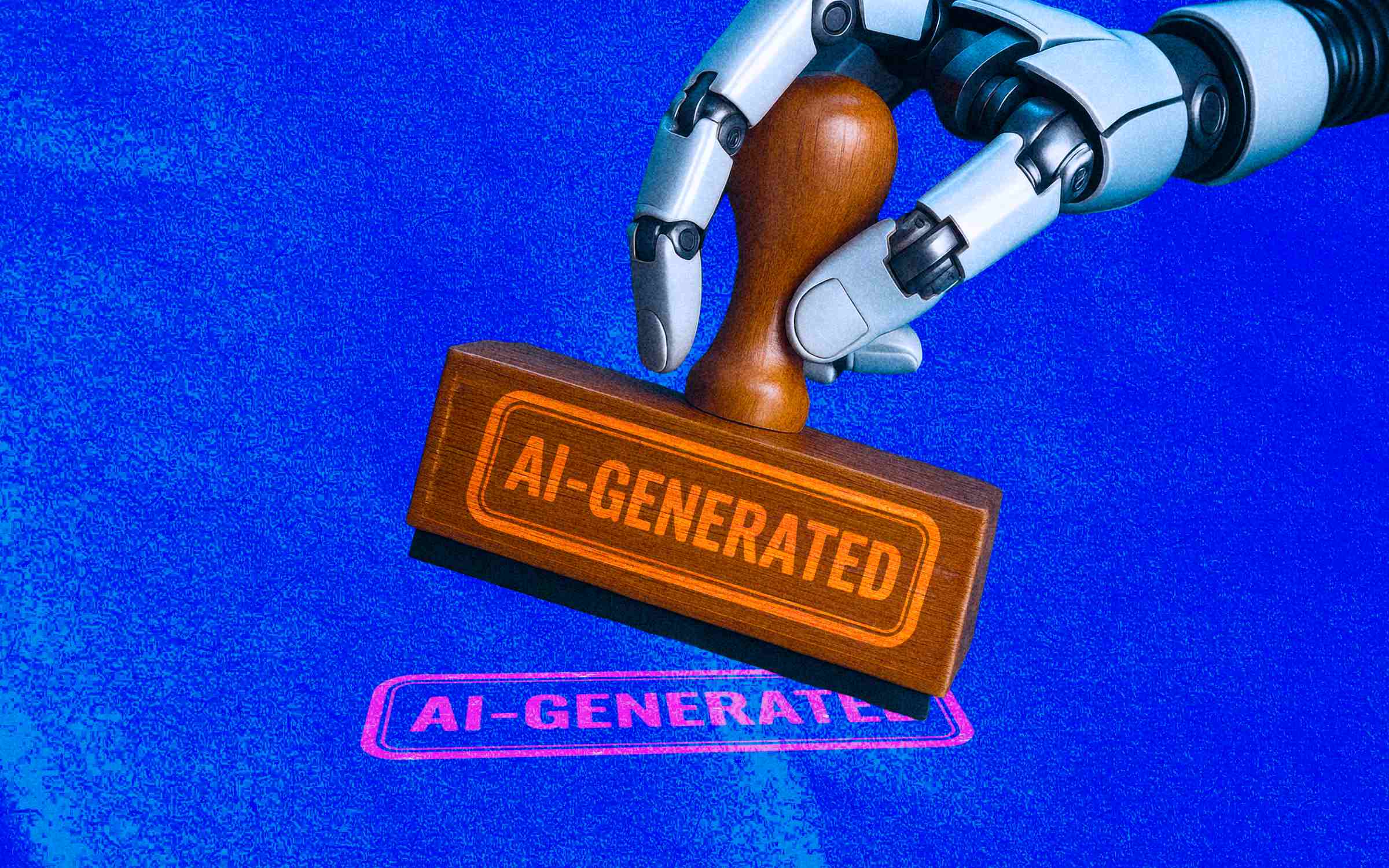
Anthropic’s decision to add invisible watermarks to Claude-generated text has brought a long-running AI debate into sharper focus: How should businesses establish the origin of AI-assisted content, and what should they do with that information once they have it?The question matters as generative AI becomes embedded in everyday knowledge work, from drafting and research to marketing, analysis and customer communications. The European Union’s AI Act is also pushing the industry toward machine-readable disclosure of AI-generated content, making provenance an increasingly important part of enterprise AI strategy.But provenance is not the same as authorship, quality or accountability. A watermark may establish that an AI system was involved without explaining how extensively it was used, what a human changed or who ultimately stands behind the work.Members of the Senior Executive AI Think Tank, a curated group of experts specializing in machine learning, generative AI and enterprise AI applications, offer a range of perspectives on what should come next. In the discussion that follows, they examine whether provenance should be standard or optional, where watermarking fits, how companies can protect privacy and human judgment, and what AI leaders should do to build greater trust and accountability around AI-generated content.

expert panel
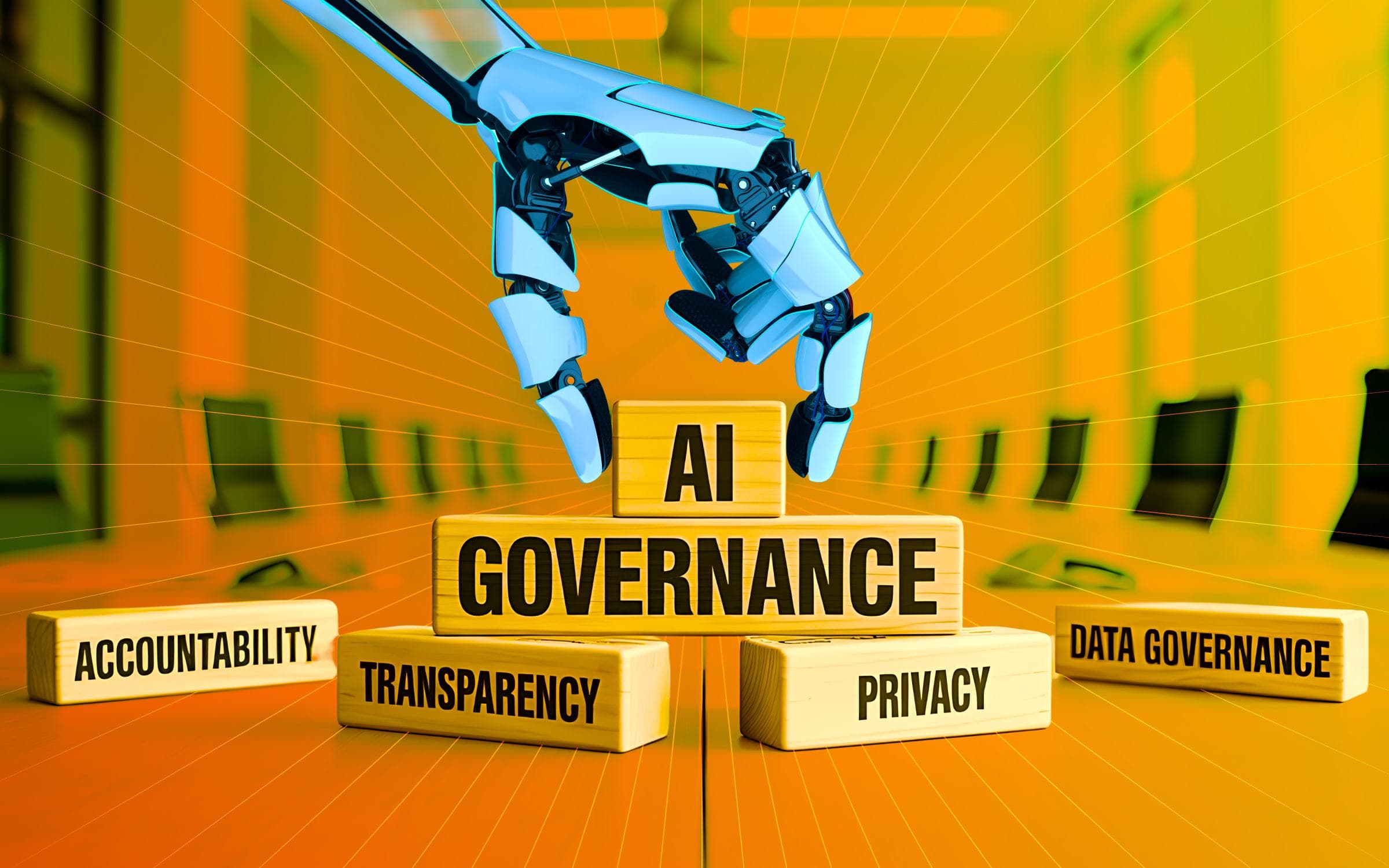
Supply chains have historically been designed around a simple premise: Build the best possible plan, then execute it as efficiently as possible. Artificial intelligence has made those plans smarter, helping companies forecast demand more accurately, optimize transportation routes and reduce inventory costs. But those improvements, while significant, still operate within the same playbook.The next chapter looks fundamentally different.Rather than simply making existing processes faster or cheaper, AI is beginning to reshape how supply chains are designed, managed and even governed. Emerging technologies such as agentic AI, digital twins and real-time decision engines can continuously evaluate changing market conditions, simulate alternative scenarios and recommend—or in some cases execute—responses before disruptions ripple across the business. In this model, supply chains become adaptive systems rather than static networks.The business case for that evolution is growing stronger. Gartner predicts that by 2030, half of supply chain management solutions will incorporate agentic AI capable of making autonomous cross-functional decisions, reflecting a broader shift from automation to intelligent orchestration. At the same time, geopolitical instability, changing trade policies and increasingly unpredictable customer demand are forcing organizations to rethink resilience as a competitive advantage—not just an operational objective.Against this backdrop, members of the Senior Executive AI Think Tank, a curated community of leaders specializing in machine learning, generative AI and enterprise AI applications, see a common theme emerging. The greatest transformation will not come from AI replacing planners or optimizing another workflow. Instead, they argue, AI is becoming the connective tissue that links procurement, manufacturing, logistics, finance and leadership into continuously learning decision systems. That shift promises to redefine not only how supply chains operate but also how organizations make decisions, assign accountability and create value in an increasingly uncertain world.
expert panel
For many customers, the first question they have about an AI-powered product is no longer “What can it do?” It’s “What happens to my data when I use it?”That question is becoming harder for organizations to answer as AI moves deeper into everyday business processes. A customer using an AI assistant, a patient interacting with a healthcare platform or an employee relying on an AI-powered workflow may not know what systems are operating behind the scenes—but they increasingly want to understand how their information is being handled.Where is the data processed? Who has access to it? Is it being used to improve a model? What control does the customer have if they want to change their preferences? These questions are forcing executives to rethink what transparency means in the AI era. A privacy policy alone is no longer enough. Customers want clear explanations, practical choices and confidence that organizations are applying the same principles internally that they communicate externally.Members of the Senior Executive AI Think Tank—a curated group of experts specializing in machine learning, generative AI and enterprise AI applications—say trust will depend on more than meeting regulatory requirements. From stronger governance processes to clearer communication about data use, these leaders share how organizations can build trust while continuing to innovate.

expert panel
Open-weight large language models have become one of enterprise AI's hottest topics. Their promise is compelling: greater control, improved privacy, customization and freedom from vendor lock-in. Yet many executives remain focused on one number—the licensing cost—while overlooking the far larger operational commitment required after deployment.Members of the Senior Executive AI Think Tank, a community of executives and practitioners leading AI strategy across industries, agree that organizations should evaluate open-weight models the same way they would any other mission-critical technology platform: through total cost of ownership, long-term operational resilience and measurable business outcomes.McKinsey has emphasized that successful AI adoption depends not only on selecting the right models but also on building the data infrastructure, operating models and organizational capabilities needed to scale them. For enterprises adopting open-weight models, those ongoing investments can quickly become a larger cost factor than the model itself.In this article, AI Think Tank members examine the hidden costs and strategic considerations behind open-weight AI adoption, sharing how executives should think about infrastructure, talent, security, governance, maintenance and the business cases where owning and operating these models can create a meaningful advantage—and when the hidden costs outweigh the benefits.