
Britton Bloch
Published content
expert panel
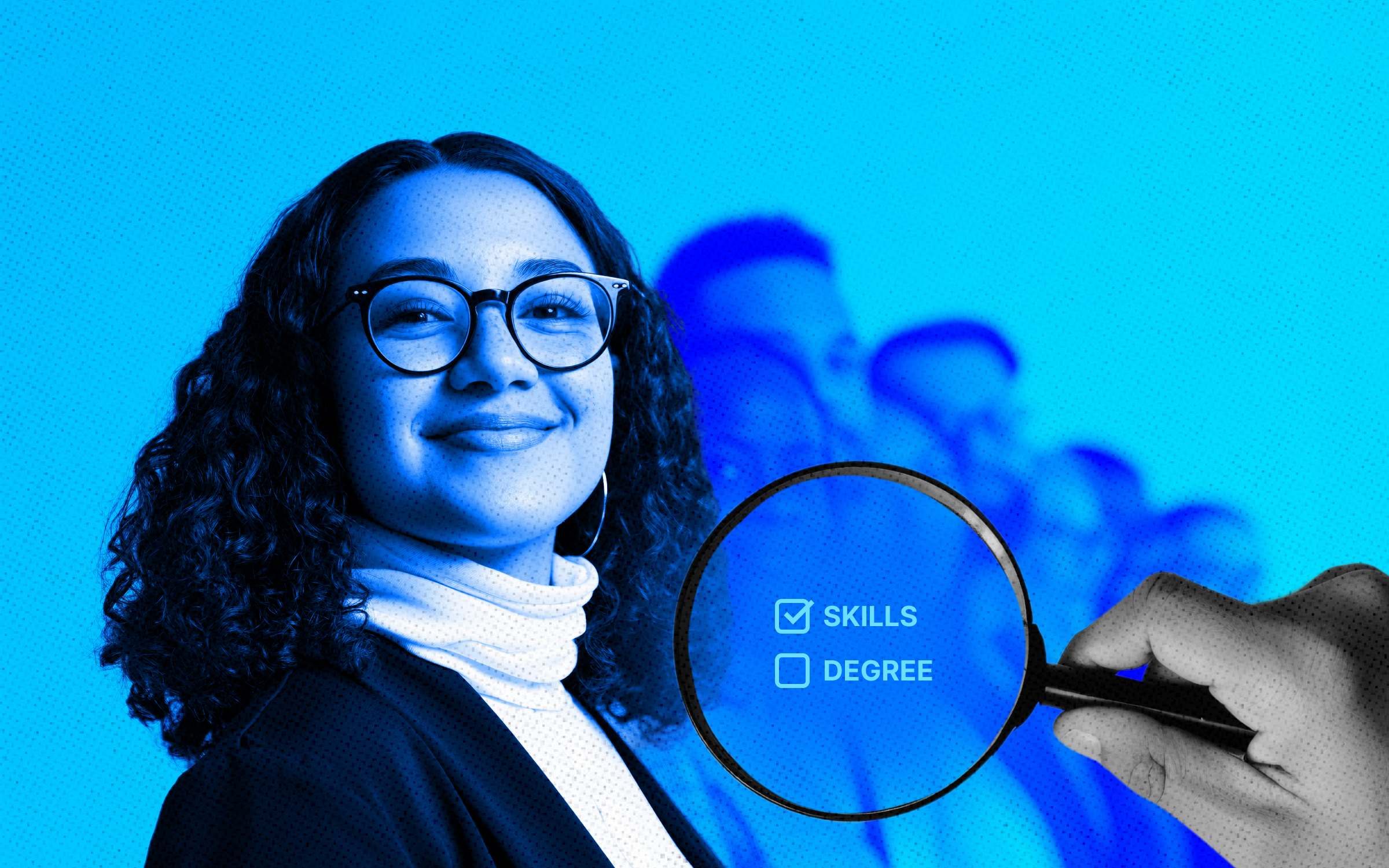
Skills-based hiring promised to make the labor market more accessible by shifting attention from where candidates went to school to what they can actually do. Yet changing a job description is much easier than changing the systems and habits that determine who ultimately gets an offer.Reports suggest a real gap between changing job requirements and changing hiring outcomes. In 2025, Harvard Business School conducted research with the Burning Glass Institute. The study found that companies that removed degree requirements saw only modest increases in hiring workers without degrees, with fewer than one in 700 new hires benefiting from the reforms overall. At the same time, the trend has not disappeared: Indeed reported in January 2026 that 19.3% of U.S. job postings required a bachelor’s degree or higher in November 2025, up from 16.6% two years earlier.Members of the Senior Executive HR Think Tank say the question is therefore bigger than whether a degree appears in a job posting. The real test is whether employers have changed how they define qualified, evaluate candidates and recognize capability.
expert panel
Quiet hiring is evolving beyond internal transfers and stretch assignments as companies use redeployment, selective hiring, contractors, technology and expanded responsibilities to build capacity without adding significant headcount. Members of the Senior Executive HR Think Tank explain how leaders can make the practice more transparent, sustainable and beneficial to employees.“Quiet hiring” may have started as a way to describe companies filling skill gaps without making traditional external hires. But the underlying practice is proving more durable than the label.In today's cautious hiring environment, organizations can expand their capabilities through internal mobility, selective external hiring, contractors, technology, AI-enabled productivity and employees taking on responsibilities that once belonged to separate roles. Recent BambooHR data illustrates the shift: Internal mobility accounted for 62% of hires in 2025, up from 51% in 2021.Members of the Senior Executive HR Think Tank bring perspectives spanning talent strategy, recruiting, ethics, organizational development, employee experience and workforce planning. Their message is consistent: Quiet hiring itself is not necessarily a problem. The risk comes when organizations use it to obscure how work is changing or expect employees to absorb additional responsibilities indefinitely without clarity, development or recognition.

expert panel
Solopreneurs can replace the accountability of a traditional workplace with measurable goals, outside support, regular reviews and systems designed to make commitments harder to ignore. Insights from members of the Senior Executive HR Think Tank show how independent professionals can stay focused without becoming their own worst boss.Working without a manager offers greater freedom, but it also removes many of the structures that make follow-through easier. No supervisor is checking deadlines, no colleague is flagging a missed commitment and no team meeting is prompting a progress update.That makes self-accountability less about having extraordinary discipline and more about deliberately building the structures that a workplace would normally provide. Members of the Senior Executive HR Think Tank bring perspectives spanning organizational psychology, leadership, recruiting, culture and career development to the question of how independent professionals can create those structures for themselves.Recent Gallup research reinforces the importance of the issue: In a survey, creating accountability ranked as the lowest-rated of seven leadership competencies, with just 46% of leaders rating themselves "exceptional or outstanding" at holding people responsible for exceptional performance. If accountability can be difficult even inside organizations with managers and teams, solopreneurs have even more reason to intentionally design it into their work.The experts suggest several ways to do that, from building a personal support network and creating financial consequences to making goals public, tracking measurable outcomes and protecting time for meaningful work.

expert panel
As AI takes on more recruiting tasks, HR leaders must decide where automation should stop, and human accountability should begin. Members of the Senior Executive HR Think Tank explain when candidates deserve human judgment, communication, transparency and a meaningful opportunity to challenge an automated decision.Hiring has always involved a tension between efficiency and humanity, but artificial intelligence is pushing that tension into new territory. AI can now help screen resumes, identify candidates, generate job descriptions and automate communication. According to LinkedIn's 2025 Future of Recruiting report, 37% of recruiting organizations are actively integrating or experimenting with generative AI, while 73% of talent-acquisition professionals say AI will change the way organizations hire.That makes the question less about whether companies should use AI and more about where responsibility belongs when technology affects someone's opportunity. Members of the Senior Executive HR Think Tank bring perspectives spanning talent acquisition, organizational leadership, career coaching, workplace culture and HR technology.Across their responses, one principle emerges: AI can take on more of the process, but companies cannot automate accountability.

expert panel
Customers increasingly expect companies to anticipate their needs and make interactions seamless. Members of the HR Think Tank explain how employers can apply those principles to the employee experience while preserving human connection, autonomy, trust and belonging.Consumers have become accustomed to experiences that anticipate their needs, remove unnecessary friction and adapt to individual preferences. That expectation is increasingly finding its way into the workplace, where employees encounter everything from personalized learning recommendations to flexible benefits and technology-enabled HR services.But applying customer experience principles to employees has an important limit: Employees are not simply consumers of an internal service. They are participants in an ongoing relationship with their organizations.That distinction is central to the advice from members of the Senior Executive HR Think Tank, a curated group of HR leaders, consultants and workplace experts. Their perspectives suggest that the best employee experiences borrow the principles of customer experience, such as clarity, responsiveness, personalization and ease, without adopting a transactional mindset.Deloitte's 2025 Global Human Capital Trends research supports that balance. The report found that 67% of leaders consider customizing work and workforce practices around employees' skills, motivations, passions and work styles important. Yet only 5% said their organizations were leading in using technology to hyper-personalize how they influence workers. Deloitte also emphasizes that personalization must be balanced with employee autonomy and responsible data practices.

expert panel
Members of the Senior Executive HR Think Tank explore why empathy, self-awareness and compassion are becoming essential leadership competencies and what the shift means for developing and evaluating leaders.Leadership has never been only about strategy, execution or financial results. But as employee expectations continue to change, the way leaders create those results is receiving greater scrutiny. Employees increasingly expect leaders to understand their own impact, recognize the experiences of others and create environments where people can perform without sacrificing trust or humanity.That makes the distinction between “soft skills” and business skills increasingly difficult to defend. Members of the Senior Executive HR Think Tank bring experience across executive leadership, HR, talent acquisition, leadership development and organizational consulting to examine what this means for organizations and how companies can make these competencies part of how leaders are developed, assessed and promoted.The timing matters. Gallup's 2026 State of the Global Workplace report found that global employee engagement fell to 20% in 2025, its lowest level since 2020, while manager engagement fell to 22%. At the same time, a recent Forbes article on workplace trust highlights how trust is built through the everyday ways leaders communicate, connect and follow through. Together, these dynamics raise an increasingly important question: Are self-awareness, empathy and compassion simply “soft skills,” or are they now essential leadership competencies?