

Skills
About
Dhyey Mavani is a MTS at Abridge, and computational mathematics researcher working at the intersection of agentic AI, generative AI systems, statistical learning, and mathematical reasoning. Most recently, he worked at LinkedIn across AI Platforms, generative AI inference, and special projects in agentic AI directly with the C-suite, building systems focused on reliability, efficiency, and real-world deployment. His research at Amherst College has explored machine-assisted mathematical reasoning, statistical modeling, and computational mathematics, including formal verification with Lean 4 and open-source research software. Dhyey has published research and open-source software with 40,000+ downloads, collaborating with academics and industry leaders. He is also an active technical writer and contributor to publications including VentureBeat, LeadDev, and DZone, where he writes about AI systems, engineering, and the evolving role of AI in organizations.

Dhyey Mavani
Published content

expert panel
AI has a habit of making yesterday’s infrastructure decisions look permanent—until the next model, vendor or use case comes along. For enterprise leaders, that creates a difficult problem: AI is advancing faster than the infrastructure built to support it, while data platforms, security controls and governance programs can take years to design and implement.So what should companies make permanent, and what should they make easy to replace? We asked members of the Senior Executive AI Think Tank—a curated group of leaders specializing in machine learning, generative AI and enterprise AI applications—to explore how leaders can balance the needs of today with an AI landscape that is likely to look very different tomorrow.Below, they examine what belongs at the foundation of an AI-ready enterprise—and how leaders can build enough flexibility into that foundation to adapt without starting over every time the technology changes.

expert panel
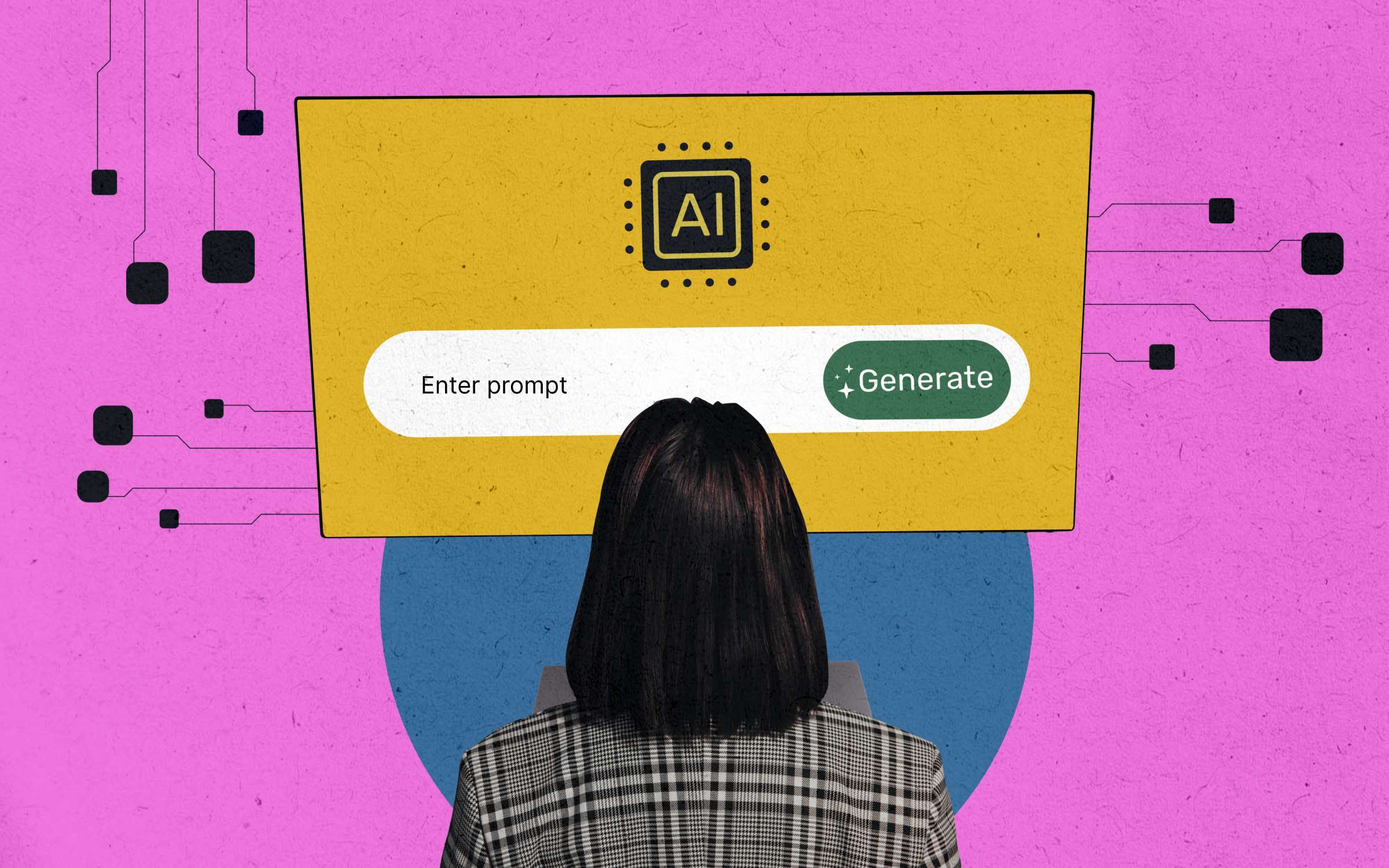
When an AI system produces a disappointing answer, the first instinct is often to rewrite the prompt. Add more context. Give it an example. Spell out the rules. Try again. Sometimes that works—but there’s a point where prompt refinement becomes a way of avoiding the real problem. If an AI system still struggles after repeated rounds of instruction, leaders need to ask a different question: Is the prompt actually the bottleneck?That question matters because AI performance depends on far more than the words sent to a model. The quality and availability of data, the tools a system can access, the workflow surrounding it and the model’s own capabilities can all shape the result.For leaders, the challenge is knowing when to stop tweaking and start redesigning. If the problem is the way work gets done, the answer may be a new workflow. If the system lacks reliable information, better data may matter more. If the task requires actions or specialized capabilities, different tooling or a different model may be necessary. And sometimes the right answer is to rethink the product or process altogether. Members of the Senior Executive AI Think Tank—a curated group of executives and practitioners with expertise across machine learning, generative AI and enterprise AI applications—share how they recognize those inflection points and what leaders can do when a better prompt is no longer enough.

expert panel
The AI industry has been celebrating increasingly capable demonstrations: a model beats a benchmark, an autonomous vehicle completes a route, an AI agent handles a task that once required a person. But a successful demonstration answers only one question: Can the technology work?Commercialization demands much harder answers: Can it work every day? What happens when it fails? Who is responsible? Can the surrounding operation absorb those failures? And do the economics still work when real customers are paying for the result? Nevada’s recent approval of robotaxi networks for Tesla, Waymo and Uber opens the door to thousands of autonomous vehicles operating commercially, and brings those questions into sharp focus.Members of the Senior Executive AI Think Tank bring perspectives from machine learning, enterprise technology, product management, data architecture, financial services, infrastructure, healthcare and design to this next stage of the AI conversation. Below, they examine what it takes to move beyond a working model and build a system that can withstand real-world complexity—from managing failures and infrastructure to earning regulatory and public trust, establishing accountability and making the economics work at scale.
expert panel
For many executives, AI has already become part of the daily workflow. They use it to summarize reports, find information, draft emails and work through routine tasks. But familiarity with the tools can create a false sense of fluency—and make it harder to recognize the gap between using AI and knowing how to use it strategically.Microsoft research involving thousands of knowledge workers found that generative AI can reduce time spent on tasks such as writing, information retrieval and summarization. But those individual productivity gains do not automatically translate into changes in how organizations make decisions or operate. Research from McKinsey similarly finds that while AI adoption is widespread, most organizations are still struggling to turn it into significant enterprise-level impact.The challenge, then, is not simply getting leaders to use AI more. It is learning to recognize where AI can change the work itself—and developing the judgment to know when, where and how to make that change.So what does genuine AI fluency look like at the leadership level? Members of the Senior Executive AI Think Tank approach that question from different vantage points, spanning enterprise technology, research, finance, retail, design and AI implementation. Their experiences offer a closer look at what happens when leaders move beyond individual productivity and begin applying AI to decisions, workflows, business systems and organizational strategy.

expert panel
The race to make AI indispensable in everyday life may have found its most compelling use case: health. As Google expands Gemini-powered health coaching capabilities and AI becomes increasingly embedded in wearables, smartphones and wellness platforms, the prospect of a 24/7 personalized health assistant is moving from science fiction to consumer reality.Members of the Senior Executive AI Think Tank believe AI health assistants possess characteristics few other AI applications can match: continuous engagement, highly personal relevance and the ability to influence daily behavior. Their optimism, however, comes with significant caveats.According to a Nature Digital Medicine analysis of large language models in healthcare, AI systems are advancing rapidly across clinical and consumer health applications, but researchers argue that stronger oversight, transparency and governance are necessary to ensure safe and responsible deployment.Think Tank members largely agree that AI health assistants have the potential to become the first truly mainstream consumer AI product, but they also emphasize that widespread adoption will depend on getting the safeguards right. Their insights reveal where the greatest opportunities lie, where the biggest risks remain and what organizations must do to build systems worthy of users' trust.

expert panel
Artificial intelligence remains one of the most consequential forces reshaping business, yet many organizations still struggle to distinguish meaningful breakthroughs from attention-grabbing headlines. While public discussion often centers on increasingly powerful models, digital assistants and speculation about artificial general intelligence, many enterprise leaders are discovering that the most transformative AI developments occur behind the scenes.Ask 10 AI experts what will matter most a year from now, and you might expect 10 different answers. Instead, members of the Senior Executive AI Think Tank—a curated group of experts specializing in machine learning, generative AI and enterprise AI applications—arrived at a strikingly similar conclusion: The biggest opportunities—and risks—aren't tied to the next model release. Across industries, they point to the infrastructure that makes AI useful in practice, from governance and security to evaluation, trust and workflow integration. At the same time, many are skeptical of some of today's loudest predictions, particularly around fully autonomous agents replacing human judgment at scale.As recent research from McKinsey suggests, organizations are increasingly finding that AI success depends less on access to cutting-edge models and more on the ability to operationalize them effectively. The experts featured here—those on the front lines of AI innovation—share the developments they believe leaders are underestimating, the trends they think are overhyped and where executives should be investing now to create lasting competitive advantage.




Company details
Abridge
Company bio
Founded in 2018, Abridge is the first AI-native clinician intelligence platform organized around the patient, built for clinicians, and designed to help health systems coordinate the clinical, financial, and evidence-based decisions for every moment of care. Powered by purpose-built AI for healthcare, Abridge connects patients, providers, payers, and life sciences companies. This year, the platform will support more than 100 million patient-clinician conversations across 300 of the largest and most complex health systems in the U.S. With deep EHR integration, Abridge’s automatic speech recognition and note generation has been validated to capture encounters in 28+ languages across specialties and care settings. Abridge is setting the industry standard for the responsible deployment of AI across health systems. Features like Linked Evidence map AI-generated clinical documentation to source data, helping clinicians quickly trust and verify the output. Abridge was awarded Best in KLAS for Ambient AI in 2025 and 2026, in addition to other accolades, including TIME Best Inventions of 2024 and 2025, CNBC Disruptor 2025, and Fast Company’s Most Innovative Companies 2025.