
Edward Morris
CEO and Lead Prompt EngineerEnigmatica
Edward Morris
Published content
expert panel
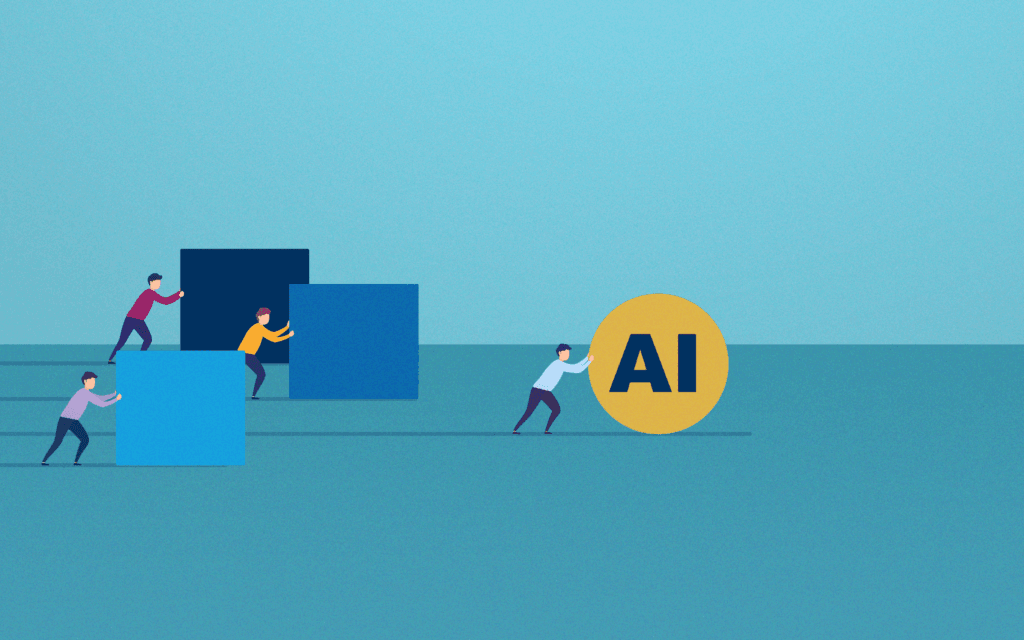
For an AI company with limited computing resources, competing with well-funded technology giants can seem like an uphill battle. The largest AI developers can invest billions of dollars in advanced chips, massive training runs and increasingly sophisticated foundation models. Smaller companies rarely have the capital to match that spending—and trying to do so can be a costly strategic mistake.The opportunity lies in recognizing that customers do not necessarily need the biggest model. They need solutions that solve specific problems reliably, affordably and in ways that fit their businesses.Members of the Senior Executive AI Think Tank, a curated group of experts specializing in machine learning, generative AI and enterprise AI applications, share their perspectives on how AI companies with limited compute resources can compete in an increasingly crowded market. Drawing on their experience across AI development, enterprise technology and business strategy, they explore the challenges facing resource-constrained companies, the strategic decisions that can shape their competitive position and the opportunities emerging as AI technology evolves.

expert panel
For AI companies operating across borders, the question of where data lives is getting harder to separate from the question of how AI gets built and delivered.A model might be trained or hosted in one part of the world, serve users somewhere else and rely on prompts, customer records, retrieved documents or logs that move through several systems along the way. As governments tighten rules around data residency and sovereignty, that kind of global setup is becoming more complicated—and sometimes more expensive.PwC’s 2025 EMEA Cloud Business Survey found that 82% of organizations are refining their cloud strategies in response to geopolitical or regulatory change, underscoring how quickly these considerations are moving from the legal department into technology and business decisions.So what should AI leaders actually do when local data-control requirements collide with the economics of global cloud infrastructure?Members of the Senior Executive AI Think Tank—a curated group of experts specializing in machine learning, generative AI and enterprise AI applications—approach the question from different angles. Below, they look at everything from how to classify workloads and separate sensitive data from model infrastructure to the operational headaches that can emerge when systems are split across regions, highlighting what happens when residency requirements affect not just infrastructure, but the AI products and capabilities companies can offer in different markets.
expert panel
For many executives, AI has already become part of the daily workflow. They use it to summarize reports, find information, draft emails and work through routine tasks. But familiarity with the tools can create a false sense of fluency—and make it harder to recognize the gap between using AI and knowing how to use it strategically.Microsoft research involving thousands of knowledge workers found that generative AI can reduce time spent on tasks such as writing, information retrieval and summarization. But those individual productivity gains do not automatically translate into changes in how organizations make decisions or operate. Research from McKinsey similarly finds that while AI adoption is widespread, most organizations are still struggling to turn it into significant enterprise-level impact.The challenge, then, is not simply getting leaders to use AI more. It is learning to recognize where AI can change the work itself—and developing the judgment to know when, where and how to make that change.So what does genuine AI fluency look like at the leadership level? Members of the Senior Executive AI Think Tank approach that question from different vantage points, spanning enterprise technology, research, finance, retail, design and AI implementation. Their experiences offer a closer look at what happens when leaders move beyond individual productivity and begin applying AI to decisions, workflows, business systems and organizational strategy.
expert panel
The machine says the patient is low risk. The veteran clinician says something feels wrong. The AI recommends cutting a workstream. The executive team knows that workstream is critical to a customer they are trying to win. The coding assistant produces perfectly functioning code—except it has quietly recreated a function that already exists somewhere else in the codebase.These aren't hypothetical scenarios. They are the kinds of moments leaders increasingly face as AI moves from experimentation into decisions that affect customers, employees, operations and the bottom line. Automatically trusting the machine ignores context, intuition and accountability. Automatically siding with the human can mean overlooking patterns and possibilities that AI can uncover. So what should happen when an AI system and an experienced human reach different conclusions?Members of the Senior Executive AI Think Tank—a curated community of leaders specializing in machine learning, generative AI and enterprise AI applications—have encountered this tension firsthand across healthcare, manufacturing, software development, enterprise transformation, market intelligence and technology strategy. In the examples that follow, they share what happened when AI and human expertise diverged, how their teams responded and what those moments revealed about the roles each should play in high-stakes decision-making.