Skills
About
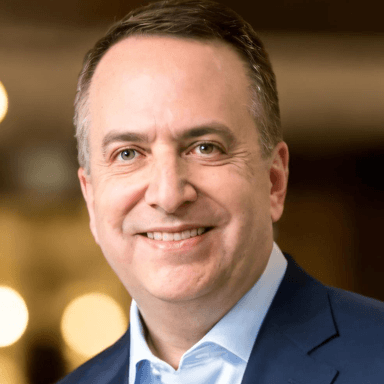
I'm a Computer Scientist by education and technology entrepreneur throughout my career. Along the way I've created more than a dozen startups, thankfully six of them resulted in exits. The most recent was FastSpring, a leading e-commerce provider which I co-founded, grew to be #53 on the Inc 500 and ultimately sold to Accel-KKR. Currently I am the Managing Director of Technology Services at Archetype Growth. We are investors, consultants and technology solution providers for our portfolio companies and for the industry at large. Our technology group specializes in Salesforce implementations (including Agentforce), all types of AI implementations, AI assessments, mobile apps and various types of platform builds.

Jason Foodman
Published content

expert panel
Healthcare organizations make countless decisions that shape how care is delivered: which technologies to adopt, how teams are staffed, how workflows are designed and where to invest for the future. Yet the people who work closest to patients are not always in the room when those decisions are being made.That disconnect can be costly. A decision that looks sensible on a spreadsheet may create unexpected friction in a clinical setting. A technology selected to improve efficiency may complicate a workflow. A staffing strategy that works operationally may look very different from the perspective of the people responsible for delivering care.The answer is not to put clinicians on every committee or require consensus on every decision. But simply asking for feedback after a plan is largely settled does not create genuine influence either. The challenge for healthcare leaders is finding the point between those extremes: How can clinicians have a meaningful voice in decisions that affect their work and their patients without creating another layer of bureaucracy?Members of the Senior Executive Healthcare Think Tank bring perspectives shaped by experience in patient experience, workforce strategy, policy, quality, equity and healthcare technology. They weigh in on what meaningful clinician influence should look like—and how leaders can build it into decision-making without sacrificing the ability to move.

expert panel
Healthcare mergers and acquisitions are often built around a compelling financial or strategic thesis: expand market reach, add capabilities, improve scale or create efficiencies. Yet the hardest part of the transaction frequently begins after the paperwork is signed, when two organizations must actually function as one.That issue often comes down to the way work actually happens. Employees develop workarounds. Physicians build relationships and routines that aren't captured in organizational charts. Technology systems accumulate custom configurations. Data acquires its own definitions and dependencies. Products evolve along separate roadmaps. Leaders develop different approaches to decision-making and accountability. None of these realities necessarily makes an acquisition unattractive, but failing to understand them can make integration far more difficult than anticipated.So what should healthcare leaders be looking for before they close the deal?The members of the Senior Executive Healthcare Think Tank—a curated group of experts in healthcare operations, technology, workforce strategy, medical devices, data, AI and clinical systems—offer perspectives that collectively challenge the traditional due diligence checklist. The following insights explore where hidden operational risks tend to surface and, more importantly, the questions leaders should be asking while there is still time to act on the answers.

expert panel
A healthcare organization can look healthy on paper right up until it doesn’t.The quarterly numbers may be on target. Patient satisfaction may still be holding steady. Revenue may look strong. But somewhere inside the organization, a different story may already be taking shape: Employees are calling out more often. Patients are missing appointments. Clinicians are finding workarounds. Claims are taking longer to resolve. Information is moving more slowly between systems. People who used to speak up have started keeping quiet.By the time those problems show up in the metrics most executives watch, the organization may already be responding to consequences rather than causes.Below, members of the Senior Executive Healthcare Think Tank—experts in healthcare transformation, workforce strategy, patient experience, technology, revenue cycle, medical devices, interoperability, AI and digital health—look beyond traditional financial and operational measures and identify the signals that can reveal emerging problems, offering healthcare leaders a closer look at what they can measure now to better understand where their organizations are headed next.

expert panel
Healthcare organizations have never had more opportunities to communicate directly with patients and the public. Social media allows clinicians to explain complex health topics in accessible language, organizations to respond to emerging concerns and healthcare leaders to build communities around prevention, wellness and better care.But the opportunity comes with real challenges. A confusing post can undermine understanding. An unsupported claim can spread misinformation. A poorly handled patient story can compromise privacy. And when a false claim gains traction, a slow response can leave patients looking elsewhere for answers. A 2025 study of 3,805 U.S. adults found an association between perceived exposure to substantial health misinformation on social media and lower trust in the healthcare system.The question for healthcare leaders, then, is not whether to engage on social media, but how to do so in a way that strengthens the patient experience and protects the trust on which effective care depends.Members of the Senior Executive Healthcare Think Tank bring perspectives spanning patient experience, healthcare technology, telehealth, clinical systems, workforce health, health administration and responsible innovation. They examine how healthcare organizations can approach social media governance, empower clinicians to participate, reach the right audiences, verify health information and respond effectively when misinformation emerges.

expert panel
For all the progress in health technology, one problem remains: Knowing more about our health does not necessarily mean we will do anything differently.But that may be about to change. Wearables can capture what is happening throughout the day. Continuous monitors can reveal how the body responds in real time. AI can connect those signals and identify patterns that might otherwise go unnoticed. The question is whether these technologies can move from telling us what is happening to helping us decide what to do next.That distinction matters in the workplace, where health, performance and behavior are closely connected. A useful technology should not simply produce another score or notification. It should help an employee make a better decision, give a manager a way to support a healthier work environment or identify a potential problem early enough to do something about it.We asked members of the Senior Executive Healthcare Think Tank—experts in AI, digital health, telehealth, workforce strategy, aging, healthcare architecture and data interoperability—which emerging technology they believe has the greatest potential to improve workforce health and performance.Their answers offer a look at what comes next: a shift from health technology that measures and reports to technology that can, when used thoughtfully, help people act.
expert panel
Patients do not experience healthcare in isolation. Their expectations are shaped by every other part of their lives—from the speed of a fintech transaction to the ease of online shopping and the proactive communication of a hotel—and the digital healthcare experience is lagging behind. Healthcare leaders may be able to glean key insights from other industries, but which lessons are worth borrowing, and where should they draw the line?In healthcare, patients make decisions that can be emotionally charged, financially consequential and deeply personal, with privacy, clinical judgment and safety influencing every interaction. A tactic that drives conversion in retail can have a very different meaning when applied to someone deciding when and where to seek care. For leaders, the key is to identify what makes other industries' experiences effective and adapt those principles without losing sight of healthcare's higher stakes.Members of the Senior Executive Healthcare Think Tank bring expertise across technology, digital health, systems engineering, telehealth, workforce health and transformation. Their perspectives examine how healthcare can rethink everything from patient navigation and pricing transparency to personalization, communication and data—while also identifying tactics that could undermine patient trust.





Company details
Archetype Growth
Company bio
Archetype was founded in 2013 to invest in the strongest companies in the health insurance and employee benefits sector. From the beginning, the company created a sourcing paradigm by which Archetype consults with larger enterprises to get access to robust, yet under-invested vendor networks. After six years of independently investing in the space and accelerating Archetype's platform, Archetype invited limited partners into its first fund. Since then, the firm has evolved into a comprehensive growth equity, consulting and technology services ecosystem. Today, this integrated model is powered by the Archetype Fund, Archetype Solutions, and the RAD Collective—a unique synergy designed to identify, fund, and scale the next generation of healthcare innovation.