

Skills
About
Kiran Palla serves as the Chief Information Officer at Cogniware, where he collaborates closely with U.S. Federal Government agencies to advance enterprise grade AI solutions, trusted automation, and digital modernization. Prior to this role, Kiran was a Senior IT Executive at the U.S. Department of the Treasury, IRS, serving as both Senior CXO Advisor and Chief of Automation, overseeing technology portfolio management, enterprise automation strategy, and mission critical modernization initiatives. Before his tenure in public service, Kiran held multiple executive positions in the commercial sector, including Chief Technology Officer (CTO), Chief Information Officer (CIO), and Vice President of Technology, leading large scale transformation programs across diverse industries. Kiran’s contributions have earned national recognition. He received the IRS Commissioner Award (2024) for public service, the White House Voluntary Service Gold Medal (2022), and the CIO Cup (2023). He recently completed several attestations and certifications in United Nations Sustainable Development Goals (SDGs), Human Rights, and Ethical AI practices. He was also honored with an advocacy pin from the United States Institute of Diplomacy and Human Rights for his commitment to responsible innovation and global ethics. He is an active member of several elite leadership communities, including the Harvard Business Review Group, MIT CIO Community, CIO Professional Network, and the Forbes Technology Council. As part of the Federal Executive Board, he coached senior executives from 26 federal agencies and received an appreciation award in 2024 for his leadership impact. Demonstrating a deep commitment to lifelong learning, Kiran has completed over 650 certifications and accreditations and continues to champion continuous education among peers and colleagues. His academic credentials include a Digital MBA from CTO Academy, an MBA from Northern Illinois University, and a Master’s degree from the New York Institute of Technology.

Kiran Palla
Published content
expert panel
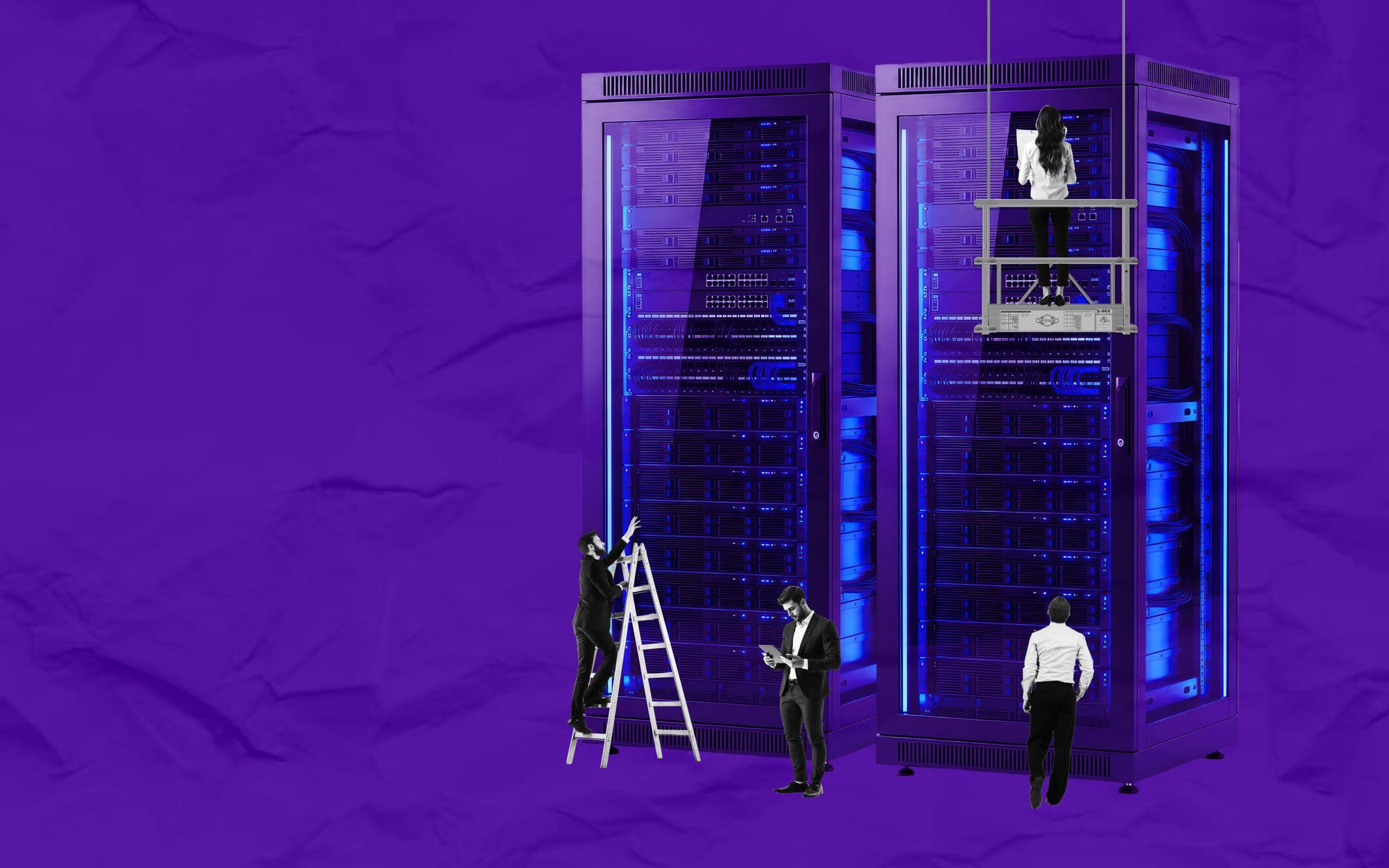
The AI industry has embraced a simple idea about data centers: If AI needs more computing power, build bigger facilities and pack them with more chips. But as the infrastructure race accelerates, that assumption is becoming harder to defend. Power availability, grid capacity, cooling, water and the physical limits of getting new facilities online are emerging as constraints that raw compute cannot solve.The question matters because data centers are long-term investments being built around a technology that is changing at remarkable speed. The infrastructure designed for training enormous models may not be what businesses need as inference workloads grow, models become more efficient and AI moves closer to where data and users actually reside.There are also business questions hiding underneath the engineering one: How much compute does a company actually need? Where should it run? What happens when power costs change or a new generation of hardware makes today's architecture less attractive? And how should CEOs think about infrastructure that needs to remain useful even as the AI workloads it supports evolve?Members of the Senior Executive AI Think Tank, a curated group of experts specializing in machine learning, generative AI and enterprise AI applications, offer a range of perspectives on what should come next. In the discussion that follows, they examine whether bigger data centers are really the answer, where power and efficiency fit into the equation, why inference deserves a different infrastructure strategy and which overlooked factors—from memory and networking to reliability and data governance—could determine whether an AI investment delivers lasting business value.

expert panel
Aug 20, 2026
Early-career employees have always learned by doing the work that more experienced colleagues have moved beyond: building the first draft, reconciling data, troubleshooting code, preparing analyses and sitting in on important decisions. Much of it is repetitive, but it also gives new professionals something essential—exposure to how problems unfold, how mistakes get fixed and how judgment develops.As AI takes over more of that work, companies face a problem hiding inside a productivity opportunity: If the first rung of the career ladder disappears, what replaces it?Members of the Senior Executive AI Think Tank—experts in machine learning, generative AI and enterprise AI applications—are seeing this challenge across industries. They point to a new approach: Let AI handle more of the execution while giving early-career employees more responsibility for evaluating work, making decisions, solving problems and learning from experienced leaders.That means rethinking more than training programs. In the sections that follow, members of the Think Tank explain how leaders can redesign junior roles around judgment and verification, use simulations and AI-generated work as training tools, preserve mentorship and hands-on experience and give emerging talent meaningful accountability earlier in their careers—ensuring that as AI makes work faster, it doesn't make the path to becoming a capable leader disappear.
expert panel
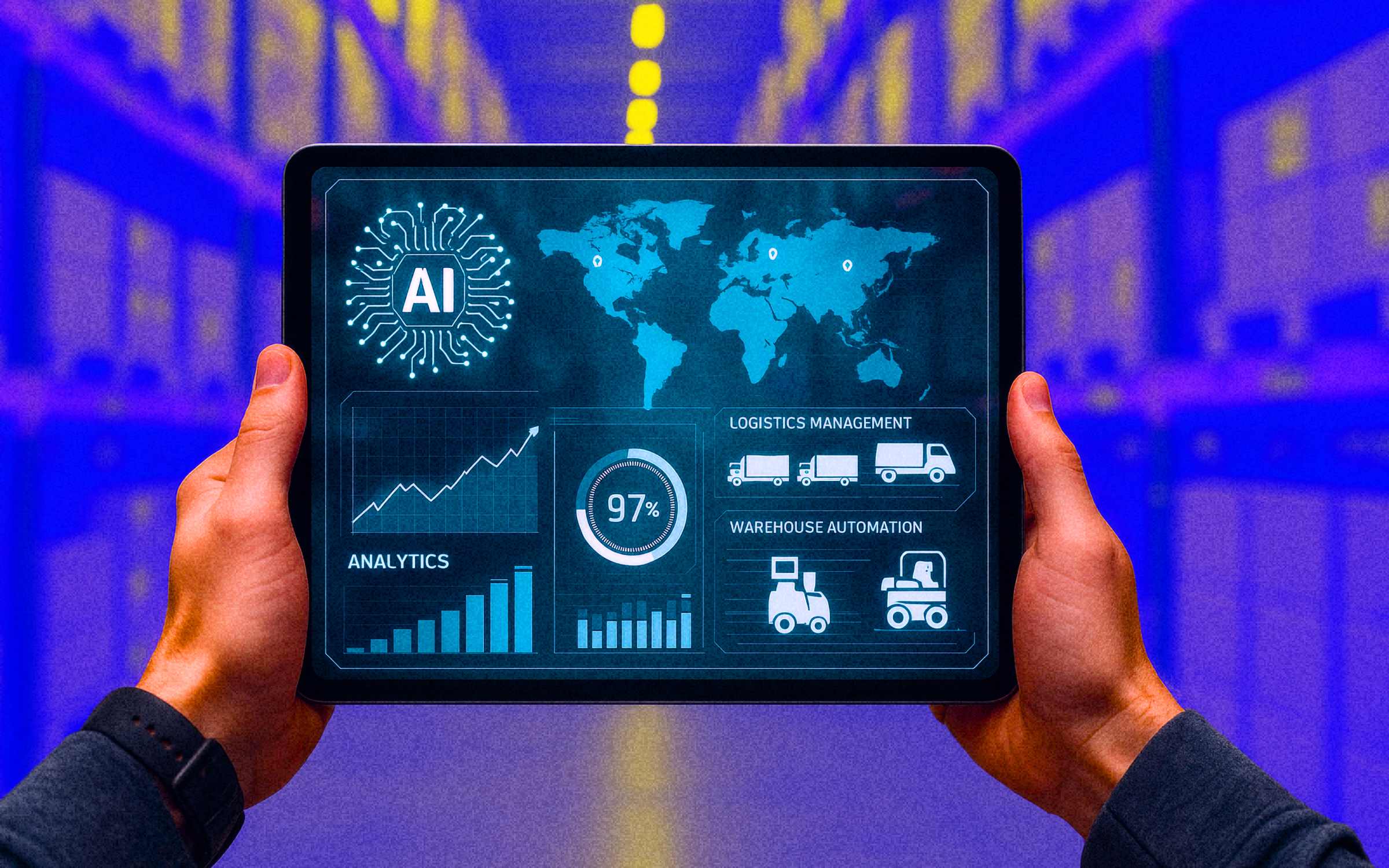
Supply chains have historically been designed around a simple premise: Build the best possible plan, then execute it as efficiently as possible. Artificial intelligence has made those plans smarter, helping companies forecast demand more accurately, optimize transportation routes and reduce inventory costs. But those improvements, while significant, still operate within the same playbook.The next chapter looks fundamentally different.Rather than simply making existing processes faster or cheaper, AI is beginning to reshape how supply chains are designed, managed and even governed. Emerging technologies such as agentic AI, digital twins and real-time decision engines can continuously evaluate changing market conditions, simulate alternative scenarios and recommend—or in some cases execute—responses before disruptions ripple across the business. In this model, supply chains become adaptive systems rather than static networks.The business case for that evolution is growing stronger. Gartner predicts that by 2030, half of supply chain management solutions will incorporate agentic AI capable of making autonomous cross-functional decisions, reflecting a broader shift from automation to intelligent orchestration. At the same time, geopolitical instability, changing trade policies and increasingly unpredictable customer demand are forcing organizations to rethink resilience as a competitive advantage—not just an operational objective.Against this backdrop, members of the Senior Executive AI Think Tank, a curated community of leaders specializing in machine learning, generative AI and enterprise AI applications, see a common theme emerging. The greatest transformation will not come from AI replacing planners or optimizing another workflow. Instead, they argue, AI is becoming the connective tissue that links procurement, manufacturing, logistics, finance and leadership into continuously learning decision systems. That shift promises to redefine not only how supply chains operate but also how organizations make decisions, assign accountability and create value in an increasingly uncertain world.
expert panel
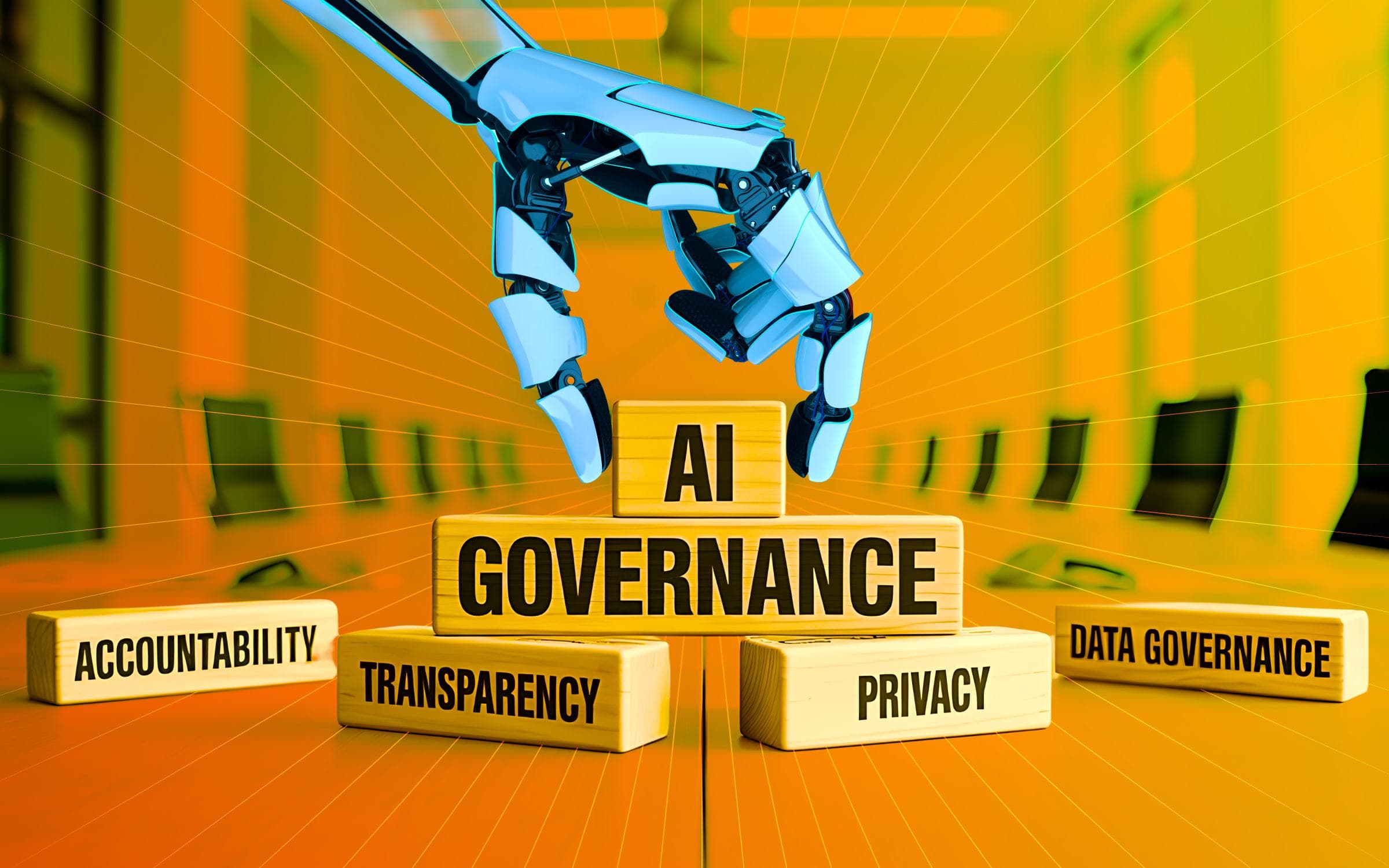
For many customers, the first question they have about an AI-powered product is no longer “What can it do?” It’s “What happens to my data when I use it?”That question is becoming harder for organizations to answer as AI moves deeper into everyday business processes. A customer using an AI assistant, a patient interacting with a healthcare platform or an employee relying on an AI-powered workflow may not know what systems are operating behind the scenes—but they increasingly want to understand how their information is being handled.Where is the data processed? Who has access to it? Is it being used to improve a model? What control does the customer have if they want to change their preferences? These questions are forcing executives to rethink what transparency means in the AI era. A privacy policy alone is no longer enough. Customers want clear explanations, practical choices and confidence that organizations are applying the same principles internally that they communicate externally.Members of the Senior Executive AI Think Tank—a curated group of experts specializing in machine learning, generative AI and enterprise AI applications—say trust will depend on more than meeting regulatory requirements. From stronger governance processes to clearer communication about data use, these leaders share how organizations can build trust while continuing to innovate.
Company details
CogniwareAI
Company bio
Cogniware technology helps enterprises cut the cost and complexity of generative AI by making inference more efficient, scalable, accurate, and hardware flexible. Cogniware middleware optimizes how GenAI systems use compute resources, enabling organizations to run multiple LLMs on a single device, improve hardware utilization, and reduce infrastructure costs by up to 70%. Unique dual-reasoning, multi-model inference improves accuracy, reduces hallucinations, and increases efficiency via intelligent model routing and orchestration. The platform supports deployment across NVIDIA, Intel, AMD, and other architectures, helping organizations avoid vendor lock-in while scaling AI workloads more cost-effectively.