
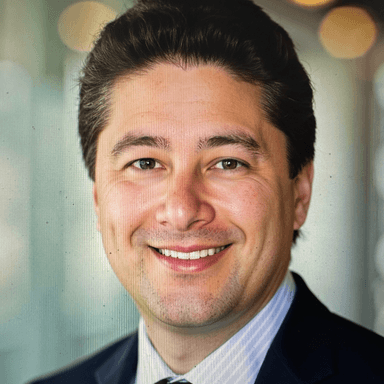
Kurt Allen
Vice President, Enrollment, Marketing and CommunicationsNotre Dame de Namur University
Skills
About
Results-driven Senior Marketing Executive with 25+ years of leadership experience across banking, financial services, credit cards, multi-media, and higher education. Proven expertise in brand development, product marketing, SEO, paid media, digital marketing, and customer experience transformation. Adept at driving growth, building high-performing teams, and delivering measurable results in competitive markets. Deep understanding of omnichannel campaigns, customer lifecycle strategy, and data-driven marketing to maximize ROI and engagement.

Kurt Allen
Published content
expert panel
Companies refresh their brands for plenty of legitimate reasons: The business may have evolved, its audience may have changed or its identity may no longer reflect its products, positioning or ambitions. Changes in markets, business models, acquisitions or target audiences can create a gap between what a company has become and what its brand still communicates.Still, even a well-founded refresh can go wrong. The most visible risk is backlash when customers feel a company has discarded or even disrespected something they valued about the old brand. But there’s another, quieter risk, too: In the push to look current, a company can strip away the visual cues, language, personality and positioning that made its brand recognizable, leaving behind something polished but generic and harder to distinguish from competitors. For example, the streamlined, sleeker logo briefly introduced by Cracker Barrel in 2025 got pushback from customers and commentators who described it as “soulless,” “bland,” and “generic.”So how can CMOs modernize a brand without alienating the people who already value it or stripping away the qualities that set it apart? Below, members of the Senior Executive CMO Think Tank share what separates a strong brand refresh from a forgettable one—and what marketing leaders should protect most carefully as a brand evolves.

expert panel
For years, search strategy largely revolved around earning a prominent place in a list of links. AI-generated answers are changing the front door to search: A 2026 Pew Research Center survey found that 60% of U.S. adults say they read the AI summaries at the top of search results, and about four in 10 say they use AI chatbots to search for information. For CMOs, that shift raises a bigger question than where a brand ranks: What will people learn about the company when an AI system assembles the answer for them?That question sits at the center of answer engine optimization, or AEO, the practice of making a brand’s information easy for AI systems to find, trust and cite. These systems rarely rely on a single page. Google explains that AI Overviews and AI Mode can run multiple related searches across subtopics and data sources, identifying supporting web pages as they build a response. As a result, an answer about a company may draw not only on its website but also on news coverage, analyst commentary, reviews and other third-party sources. A polished corporate website establishes what a company says about itself, but in an AI-driven search environment, that story has to be corroborated elsewhere.That puts owned media (the channels a company controls) and earned media (the coverage and endorsements it has to win) on the same team. The challenge for CMOs is to keep core facts, claims and positioning consistent across both so AI systems encounter a coherent picture without forcing every channel to sound exactly the same. Below, members of the Senior Executive CMO Think Tank, a curated group of leaders with expertise in brand storytelling, digital advertising and the rise of AI in marketing, explore how to bring owned and earned media together to strengthen the authority, consistency and trust brands need in an answer-driven search environment.

expert panel
Customers don’t perceive marketing, sales, service and digital touchpoints as separate departments; they experience one company. A brand can look and sound polished in every interaction and individual channel and still feel fragmented as a whole. For some leaders, as long as everyone on a team is communicating “professionally,” this fragmentation may not seem important, but it is: A consistent, seamless experience across channels can help keep customers engaged while building trust in a brand.That makes branding much more than a creative or aesthetic concern. As more teams contribute to customer-facing messages and experiences, small differences in how a company’s representatives interpret the brand can accumulate into something customers notice—particularly when the lines between marketing and communications start to blur across an expanding range of platforms and touchpoints. For marketing leaders, the challenge is creating enough shared understanding across the organization that a brand remains recognizable without requiring every team, channel or interaction to look and sound exactly alike.Members of the Senior Executive CMO Think Tank have extensive experience shaping brands, connecting with customers and guiding marketing across an increasingly complex mix of channels and technologies. Below, they highlight mistakes that can cause a brand to lose coherence and explain how marketing leaders can keep teams and touchpoints aligned.

expert panel
For years, search marketing has been built around a familiar goal: earn enough visibility to get a customer to click. AI-generated search results are changing that equation. For example, a 2025 analysis found that Google users clicked traditional search results in just 8% of visits when an AI summary appeared, compared with 15% when it didn’t—suggesting brands may have fewer opportunities to speak for themselves on their own turf.When an AI system becomes the layer between a company and a prospective customer, brand reputation isn’t shaped only by what the company publishes. The system may synthesize information from a range of sources, and that synthesis isn’t guaranteed to be accurate. Widespread problems, from speculative answers to fabricated links, have been found with the ways generative search tools retrieved and cited source material. For CMOs, that makes the broader information ecosystem surrounding a brand a more immediate marketing concern, since an incomplete, outdated or inaccurate answer can influence perception before a customer ever reaches the company’s website—if they reach it at all.As AI changes how customers discover and evaluate companies, marketing leaders need to rethink what it takes to earn authority when they may not control the first—and sometimes only—description a buyer sees. Below, members of the Senior Executive CMO Think Tank, a curated group with expertise in brand storytelling, digital advertising and the rise of AI in marketing, discuss how CMOs can approach brand authority, message consistency and reputation in an AI-mediated search environment.
expert panel
A rising conversion rate is the kind of metric that can make a leadership team feel good about growth. Customers are moving through the funnel more efficiently, acquisition costs may be improving and marketing can point to a clear return on investment. But there’s a critical question hiding behind those results: Is the business actually creating more demand, or simply getting better at converting the demand that was already there?That distinction matters because efficiency can improve even as a company’s future growth potential weakens. A business can become highly effective at reaching people who already know the brand, have an existing need or are close to making a purchase without expanding the pool of potential customers. Research from the Institute of Practitioners in Advertising reinforces the importance of balancing short-term sales activation with longer-term brand building, noting that sustained investment can contribute to growth over time.For marketing leaders, the challenge is to make that difference visible inside the organization. Members of the Senior Executive CMO Think Tank bring deep experience in brand storytelling, digital advertising and customer engagement to this challenge. Here, these marketing leaders explore how to tell if a business that is turning interest into revenue today is also creating the conditions for more customers to enter the market tomorrow.

expert panel
Companies increasingly look to their CMOs for more than brand awareness, campaign performance and lead generation. Today’s marketing leaders are often expected to influence revenue, customer loyalty and long-term growth, even as research has found that many CMOs believe their roles as designed hinder their ability to maximize marketing performance outcomes.Part of the challenge is that CMOs and their executive colleagues may define growth—and marketing’s contribution to it—differently. For example, McKinsey found that 70% of CEOs measure marketing’s impact through year-over-year revenue growth and margins, while only 35% of CMOs consider those to be top metrics. CMOs may also take a longer view of brand building and customer relationships, while CEOs and CFOs face pressure to demonstrate more immediate financial returns. But even when there’s little to no C-suite agreement on priorities, timelines and measures of success, a CMO is often held responsible for delivering growth—without the necessary shared framework.Closing that gap requires more than expanding the CMO’s job description. Members of the Senior Executive CMO Think Tank are a curated group of experts with years of experience in marketing, including brand storytelling, digital advertising and customer engagement. Here, several of them explore the mindsets and strategies that need to change if CMOs are to have the influence, alignment and operating support needed to achieve what today’s organizations expect of them.



Company details
Notre Dame de Namur University
Company bio
Notre Dame de Namur University (NDNU) is a Catholic, not-for-profit, coeducational institution serving adult learners from diverse backgrounds. Established in 1851 by the Sisters of Notre Dame de Namur, NDNU is the third-oldest college in California and the first authorized to grant women a baccalaureate degree. The university is WSCUC accredited and offers master’s in business, education, and psychology, undergraduate degree completion programs in business administration and psychology, along with teacher credential programs. NDNU maintains a strong commitment to academic excellence, social justice, and community engagement.