
Skills
About
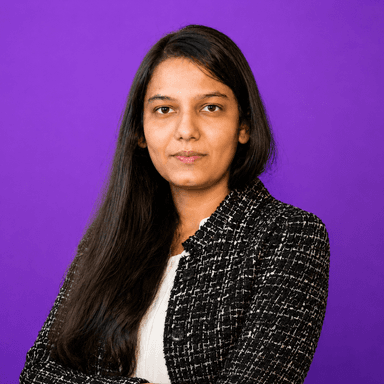
Manu Agrawal is a technology leader specializing in enterprise AI systems, agentic workflows, multimodal AI infrastructure, and large-scale distributed platforms across healthcare and cloud computing. She currently leads GenAI, privacy, trust, and agentic AI platform initiatives at Oracle Health & Life Sciences, focusing on governed autonomous systems, orchestration frameworks, retrieval infrastructure, and trustworthy AI deployment in highly regulated environments. Prior to Oracle, Manu held senior engineering leadership roles at Amazon Web Services across Amazon Bedrock, Rekognition, Textract, CloudFront, and Amazon Global Accelerator. Her work spans enterprise AI governance, multi-agent runtime systems, distributed execution frameworks, healthcare AI systems, and operational AI deployment at scale.

Manu Agrawal
Published content

expert panel
AI observability is quickly becoming one of the most consequential shifts in enterprise AI—not because it adds more dashboards, but because it exposes how AI systems actually behave inside real business workflows. For executives, that visibility is both a breakthrough and a burden. It reveals model performance, data quality, user interaction patterns and system drift in real time, yet it often arrives in a form that is fragmented, technical and difficult to translate into decisions that matter at the board level.Organizations are rapidly scaling generative AI and machine learning systems across core operations, but many are struggling to operationalize oversight in a way that connects technical signals to measurable business outcomes. The result is a widening gap between AI capability and executive clarity—where systems are increasingly powerful, but not always understandable in business terms.Members of the Senior Executive AI Think Tank—a curated group of leaders in machine learning, generative AI and enterprise transformation—argue that the issue is not a lack of data. It is a lack of translation. AI observability, they note, only becomes strategically meaningful when organizations move beyond monitoring and toward decision-making frameworks that connect model behavior, risk signals and user impact directly to business KPIs.In the sections that follow, Think Tank members break down how organizations can close this gap in practice—from building operating models that turn observability into action, to identifying behavioral drift before it becomes business risk, to redefining governance so insights don’t remain trapped in technical teams. They also surface the most persistent obstacles executives face today—including signal overload, fragmented ownership and the absence of shared language between business and technical stakeholders—and offer concrete ways leaders can turn visibility into decisions that drive measurable value.

expert panel
Artificial intelligence remains one of the most consequential forces reshaping business, yet many organizations still struggle to distinguish meaningful breakthroughs from attention-grabbing headlines. While public discussion often centers on increasingly powerful models, digital assistants and speculation about artificial general intelligence, many enterprise leaders are discovering that the most transformative AI developments occur behind the scenes.Ask 10 AI experts what will matter most a year from now, and you might expect 10 different answers. Instead, members of the Senior Executive AI Think Tank—a curated group of experts specializing in machine learning, generative AI and enterprise AI applications—arrived at a strikingly similar conclusion: The biggest opportunities—and risks—aren't tied to the next model release. Across industries, they point to the infrastructure that makes AI useful in practice, from governance and security to evaluation, trust and workflow integration. At the same time, many are skeptical of some of today's loudest predictions, particularly around fully autonomous agents replacing human judgment at scale.As recent research from McKinsey suggests, organizations are increasingly finding that AI success depends less on access to cutting-edge models and more on the ability to operationalize them effectively. The experts featured here—those on the front lines of AI innovation—share the developments they believe leaders are underestimating, the trends they think are overhyped and where executives should be investing now to create lasting competitive advantage.
Company details
Oracle
Company bio
Oracle Health & Life Sciences develops enterprise healthcare infrastructure, healthcare AI systems, clinical platforms, and large-scale data and AI technologies used by healthcare providers, public-sector healthcare organizations, and life sciences ecosystems globally. The organization focuses on operationalizing trustworthy AI systems, healthcare data interoperability, multimodal AI infrastructure, and governed autonomous systems in highly regulated healthcare environments.