

Skills
About
Pawan Anand is a senior technology executive and Portfolio Head at LTM, where he leads strategic AI-driven transformation for clients in the Communications, Media, and Entertainment (CME) sector. He oversees large-scale innovation programs spanning Generative AI, AgenticAI automation, and digital engineering, while managing high-impact global teams across industries. With deep expertise in Generative AI, Agile software engineering, and platform modernization, Pawan blends innovation with operational excellence. He holds an Executive Doctorate in Business Administration from Temple University, where his research explored how enterprises can integrate Generative AI into Agile software development at scale. A published thought leader and frequent speaker at global AI and digital transformation forums, Pawan is passionate about inclusive innovation, ethical AI, and mentoring future leaders. His contributions have earned recognition including Business Elite’s 40 Under 40 and the Globee Leadership Award.

Pawan Anand
Published content
expert panel
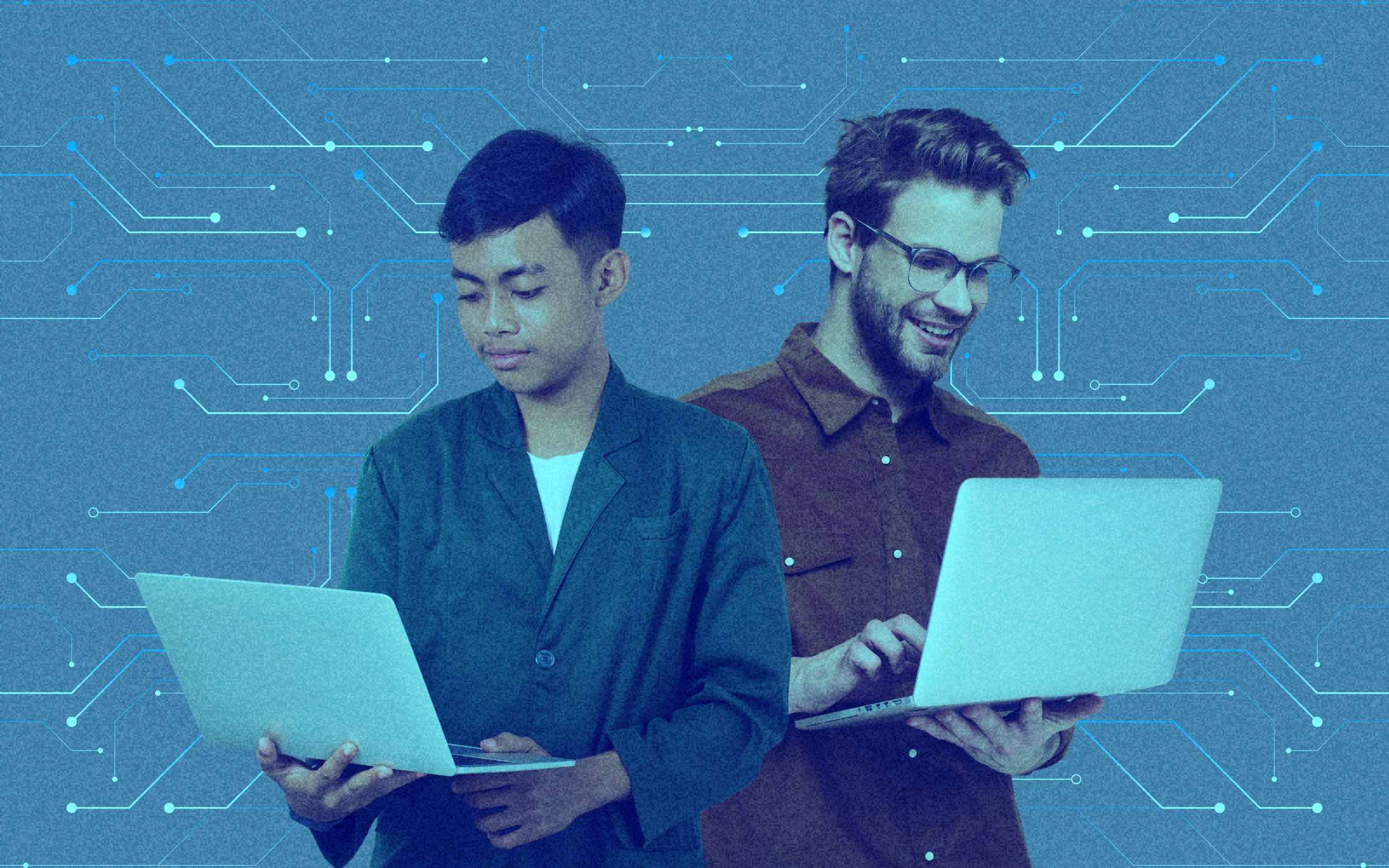
As artificial intelligence transforms how organizations operate, the traditional sources of professional advantage are shifting. Younger, AI-native employees may have an edge in adopting emerging tools, experimenting with new technologies and accelerating execution, but experienced leaders bring institutional knowledge, strategic perspective and the judgment developed through years of navigating complex business decisions.However, the divide between these groups may be less important than what happens when they work together.According to the World Economic Forum's Future of Jobs Report 2025, 39% of workers' existing skill sets are expected to be transformed or become outdated by 2030. Although AI and big data are among the fastest-growing skills, analytical thinking, resilience, leadership and creative thinking remain essential capabilities.Members of the Senior Executive AI Think Tank, a curated group of experts specializing in machine learning, generative AI and enterprise AI applications, suggest that neither technological familiarity nor years of experience will be enough on its own. Below, they explore how AI is changing the value of experience, what skills will matter most and how companies can prepare their workforces for what's ahead.

expert panel
The AI hardware race is about to get a lot more interesting. For years, the industry has focused on building faster, more powerful chips to keep up with increasingly demanding AI models. But what if the next breakthrough isn't a faster processor at all? What if it comes from rethinking how computers handle memory, move data or even where AI processing happens? From chips that use light to move information to processors that bring computing closer to memory, a new wave of architectures is challenging the way we've traditionally thought about AI infrastructure.Members of the Senior Executive AI Think Tank, a curated group of experts specializing in machine learning, generative AI and enterprise AI applications, weigh in on the emerging hardware architectures they believe could have the greatest impact on AI computing and what will ultimately separate transformative technologies from those that struggle to gain commercial traction.
expert panel
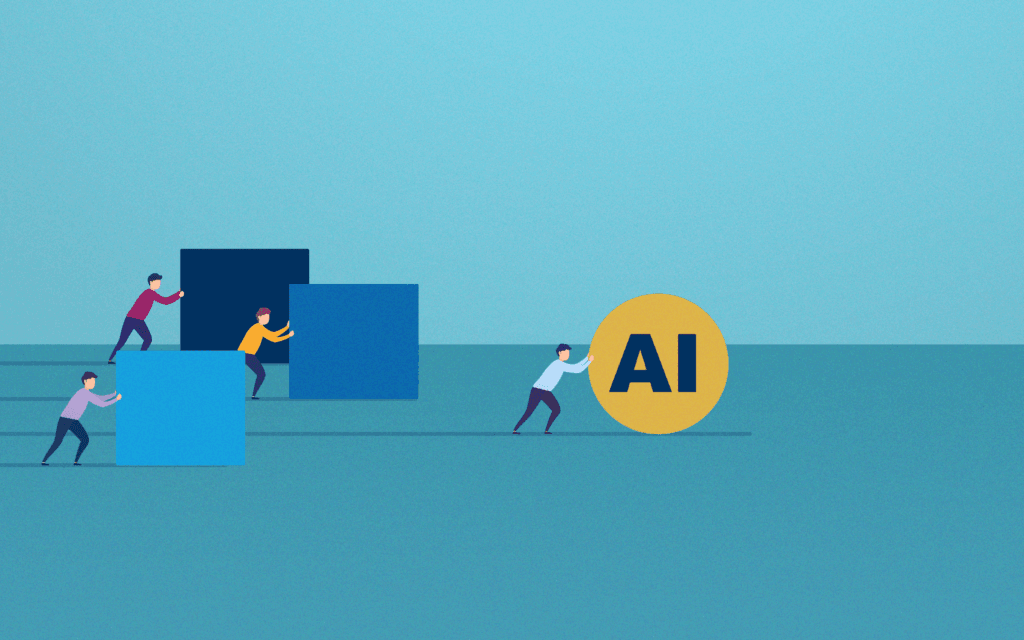
For an AI company with limited computing resources, competing with well-funded technology giants can seem like an uphill battle. The largest AI developers can invest billions of dollars in advanced chips, massive training runs and increasingly sophisticated foundation models. Smaller companies rarely have the capital to match that spending—and trying to do so can be a costly strategic mistake.The opportunity lies in recognizing that customers do not necessarily need the biggest model. They need solutions that solve specific problems reliably, affordably and in ways that fit their businesses.Members of the Senior Executive AI Think Tank, a curated group of experts specializing in machine learning, generative AI and enterprise AI applications, share their perspectives on how AI companies with limited compute resources can compete in an increasingly crowded market. Drawing on their experience across AI development, enterprise technology and business strategy, they explore the challenges facing resource-constrained companies, the strategic decisions that can shape their competitive position and the opportunities emerging as AI technology evolves.

expert panel
AI has a habit of making yesterday’s infrastructure decisions look permanent—until the next model, vendor or use case comes along. For enterprise leaders, that creates a difficult problem: AI is advancing faster than the infrastructure built to support it, while data platforms, security controls and governance programs can take years to design and implement.So what should companies make permanent, and what should they make easy to replace? We asked members of the Senior Executive AI Think Tank—a curated group of leaders specializing in machine learning, generative AI and enterprise AI applications—to explore how leaders can balance the needs of today with an AI landscape that is likely to look very different tomorrow.Below, they examine what belongs at the foundation of an AI-ready enterprise—and how leaders can build enough flexibility into that foundation to adapt without starting over every time the technology changes.

expert panel
Sep 25, 2026
The first generation of AI adoption asked a simple question: What work can we automate?The next question is harder: What happens to the people who were experts at doing it before?Expertise has traditionally been built through practice. Engineers write and review code. Analysts work through problems. Marketers study audiences and campaigns. Architects design systems. Leaders accumulate judgment by making decisions and seeing what happens next. If AI increasingly performs those activities, where does that leave the role of the expert?Members of the Senior Executive AI Think Tank—a curated group of leaders specializing in machine learning, generative AI and enterprise AI applications—are thinking about that transition from inside the organizations and disciplines being reshaped by AI. Together, they raise an important question that reaches into the design of the organization itself: How do you build a company where AI can do more of the work without losing the human expertise that tells the company what work is worth doing?

expert panel
The race to make AI indispensable in everyday life may have found its most compelling use case: health. As Google expands Gemini-powered health coaching capabilities and AI becomes increasingly embedded in wearables, smartphones and wellness platforms, the prospect of a 24/7 personalized health assistant is moving from science fiction to consumer reality.Members of the Senior Executive AI Think Tank believe AI health assistants possess characteristics few other AI applications can match: continuous engagement, highly personal relevance and the ability to influence daily behavior. Their optimism, however, comes with significant caveats.According to a Nature Digital Medicine analysis of large language models in healthcare, AI systems are advancing rapidly across clinical and consumer health applications, but researchers argue that stronger oversight, transparency and governance are necessary to ensure safe and responsible deployment.Think Tank members largely agree that AI health assistants have the potential to become the first truly mainstream consumer AI product, but they also emphasize that widespread adoption will depend on getting the safeguards right. Their insights reveal where the greatest opportunities lie, where the biggest risks remain and what organizations must do to build systems worthy of users' trust.





Company details
LTM
Company bio
LTM - a Larsen & Toubro company - is an AI-centric global technology services company and the Business Creativity partner to the world’s largest enterprises. We bring human insights and intelligent systems together to help clients create greater value at the intersection of technology and domain expertise. Our capabilities span integrated operations, transformation, and business AI - enabling new ways of working, new productivity paradigms, and new roads to value. Together with over 87,000 employees across 40 countries and our global network of partners, LTM owns business outcomes for our clients, helping them not just outperform the market, but to Outcreate it.