
Skills
About
I help leaders translate their AI investments into measurable business outcomes without losing control, security, or compliance. My focus is simple: prioritize the right use cases, define the outcomes that matter, assign clear ownership and decision rights, and deliver quick wins that scale. I lead AI-enabled service transformation across complex enterprises, aligning priorities (MTTR reduction, cost-to-serve, productivity, risk reduction, employee experience) to a practical portfolio of AI use cases and KPIs. The work goes beyond “go-live”. I help build the operating model from intake and prioritization to value tracking, governance, and continuous optimization so AI adoption is sustainable and trusted. In ServiceNow, I drive end-to-end modernization across ITSM, Employee Center, CMDB/CSDM, EA (formerly APM), CSM, and HRSD connecting platform strategy to real operational outcomes. For ITSM specifically, I help leaders deploy Now Assist and agentic workflows with speed and discipline: clear guardrails, human-in-the-loop controls where needed, auditable workflows, and a security-first approach that still enables rapid iteration. A consistent thread in my work is strengthening the AI foundation: improving data quality, standardizing key service and CI data, reducing noise and bias, and ensuring the right telemetry exists to measure performance and risk. The goal is reliable automation and decision support grounded in trusted data, transparent logic, and measurable impact. In parallel, I serve as Service Design Lead for Saama’s Clinical Analytics regulatory products (PAa, QOSa, CSRa), designing AI-enabled services and governance that meet regulatory expectations while accelerating time-to-insight and decision-making for clinical and safety teams. I also invest in capability-building, mentoring ServiceNow professionals into high-impact roles so organizations develop lasting transformation strength, not dependency. If you’re looking for a partner to de-risk AI, accelerate value realization in ServiceNow AI, and build a governed path from use case to outcome at enterprise scale, I’m open to connecting.

Richie Adetimehin
Published content

expert panel
For AI companies operating across borders, the question of where data lives is getting harder to separate from the question of how AI gets built and delivered.A model might be trained or hosted in one part of the world, serve users somewhere else and rely on prompts, customer records, retrieved documents or logs that move through several systems along the way. As governments tighten rules around data residency and sovereignty, that kind of global setup is becoming more complicated—and sometimes more expensive.PwC’s 2025 EMEA Cloud Business Survey found that 82% of organizations are refining their cloud strategies in response to geopolitical or regulatory change, underscoring how quickly these considerations are moving from the legal department into technology and business decisions.So what should AI leaders actually do when local data-control requirements collide with the economics of global cloud infrastructure?Members of the Senior Executive AI Think Tank—a curated group of experts specializing in machine learning, generative AI and enterprise AI applications—approach the question from different angles. Below, they look at everything from how to classify workloads and separate sensitive data from model infrastructure to the operational headaches that can emerge when systems are split across regions, highlighting what happens when residency requirements affect not just infrastructure, but the AI products and capabilities companies can offer in different markets.

expert panel
For years, enterprise technology leaders have wrestled with a familiar dilemma: Embrace the speed and innovation of a vendor platform or invest in building enough internal capability to maintain strategic control. Generative AI has made that trade-off far more consequential. As organizations move beyond chatbots to autonomous agents that retrieve information, invoke tools and make decisions across business systems, the focus is increasingly on who controls the pathways connecting models, knowledge, applications and enterprise data.That challenge is driving renewed interest in customer-owned AI control planes—enterprise-managed gateways that sit between AI applications and the rapidly expanding ecosystem of models, Model Context Protocol (MCP) servers, agent hubs and knowledge sources. Rather than relying entirely on vendor-specific ecosystems, these architectures promise centralized governance, stronger security, greater architectural flexibility and the ability to adopt new AI capabilities without redesigning the entire technology stack. Yet they also introduce an important question: Does adding another layer simplify enterprise AI or simply shift complexity from vendors to internal engineering teams?Members of the Senior Executive AI Think Tank, a community of leaders shaping enterprise AI strategy across architecture, governance, cloud computing and digital transformation, largely agree that customer-owned control planes represent an important evolution—but only if organizations approach them with discipline. Below, they discuss why centralized gateways can help organizations reduce vendor lock-in without slowing innovation, what security and architecture teams need to see before they'll trust agentic AI at scale and why governance should be built into every model and tool interaction rather than bolted on later.
expert panel
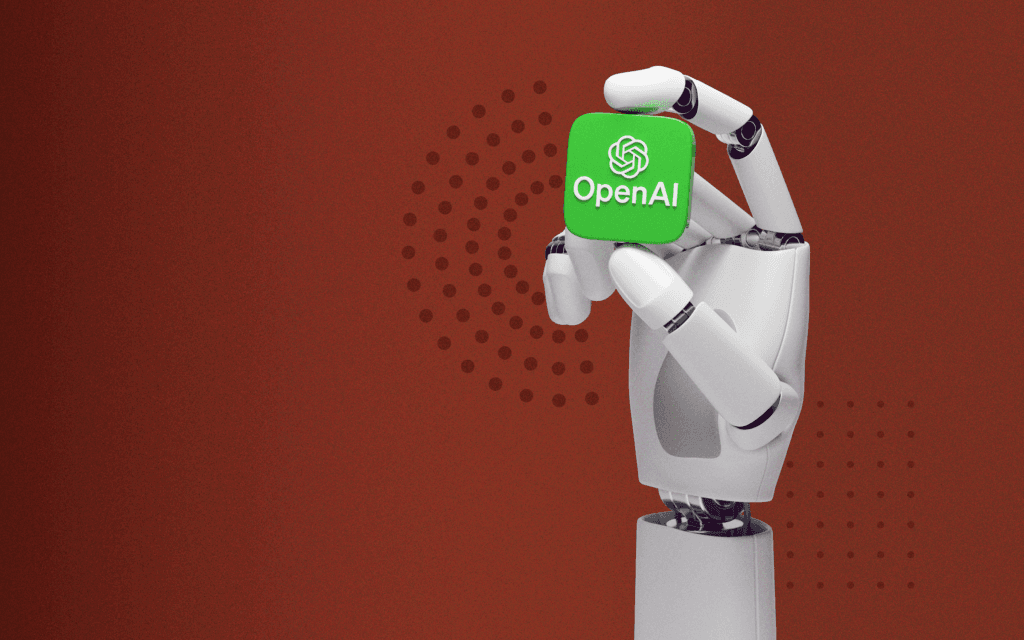
When OpenAI unveiled Jalapeño, its first custom AI inference chip developed with Broadcom, the announcement represented more than a hardware milestone. It highlighted a broader shift in the AI industry: the race to make intelligence faster, more affordable and more accessible at scale. As the cost of running large language models declines, product leaders face a new question—not simply what AI can do, but what products become possible when intelligence is inexpensive enough to operate continuously.For much of the generative AI era, product teams have designed around scarcity. They have limited model usage, shortened context windows, reduced reasoning steps and carefully managed AI interactions because every inference call carries a cost. But as custom silicon and AI infrastructure improvements drive down those constraints, AI can move from an occasional feature users activate to an always-present capability embedded throughout workflows. Research from McKinsey & Company estimates that generative AI could create trillions of dollars in annual economic value, but capturing that opportunity will require organizations to integrate AI into core business processes rather than treat it as a standalone tool.Members of the Senior Executive AI Think Tank believe the next generation of AI products will not simply be faster versions of today’s copilots. Below, they explore how OpenAI’s Jalapeño chip could reshape product design, unlock previously uneconomical AI applications and redefine the competitive landscape for organizations building the next generation of intelligent products.

expert panel
The current AI conversation has been dominated by software. Organizations have raced to deploy chatbots, copilots and generative AI tools that promise to boost productivity, improve decision-making and automate knowledge work. But what happens when AI leaves the screen and enters the physical world?That future is already taking shape. AI-powered robots are moving beyond controlled factory environments and into warehouses, hospitals, retail operations and even homes. Companies including Amazon, Tesla and Figure AI are investing billions in autonomous systems capable of navigating complex environments, collaborating with humans and performing tasks that once required manual labor. At the same time, labor shortages, rising operating costs and demographic shifts are creating strong economic incentives for automation. According to the International Federation of Robotics, global demand for industrial robots has more than doubled over the past decade, with more than 4.6 million robots now operating in factories worldwide.Yet despite the excitement, fundamental questions remain unanswered: What milestone will signal that AI-powered robotics has evolved from a promising technology into a mainstream commercial reality? Will it be a breakthrough in capability? A dramatic reduction in cost? Regulatory approval? Or something less obvious?To explore these questions, we turned to members of the Senior Executive AI Think Tank, a curated group of leaders and practitioners specializing in machine learning, generative AI and enterprise AI applications. Below, they share the signals they believe executives should be watching and the conditions that will determine when AI-powered robotics truly crosses into the mainstream.

expert panel
Artificial intelligence is often framed as a race: faster models, bigger investments, larger datasets and more powerful infrastructure. But beneath the headlines lies a more consequential question for business leaders, policymakers and investors alike: Who gets to compete?A growing share of the AI ecosystem is controlled by a relatively small number of organizations with access to the world's largest compute resources, proprietary datasets and distribution channels. This means the debate is no longer simply about what AI can do but about whether the next wave of innovation will emerge from an open marketplace of ideas or from a handful of dominant ecosystems.To explore that question, we asked members of the Senior Executive AI Think Tank—a curated community of leaders specializing in machine learning, generative AI, digital transformation and enterprise AI applications—what single rule they would change to improve AI competition.While their recommendations differ, a clear theme emerges: The future of AI should be shaped by innovation, trust and customer value rather than lock-in, opacity or concentrated control. The following insights offer a timely look at how technology and business leaders believe a more competitive—and in many cases safer—AI ecosystem can be built.

expert panel
For many organizations, AI training has become synonymous with productivity. Employees learn how to write better prompts, automate routine tasks and generate content faster than ever before. But as AI becomes embedded in everyday business decisions, a more important question is emerging: Are organizations teaching people how to use AI, or how to use it responsibly?AI can generate recommendations, summarize information and accelerate workflows, but it cannot assume accountability for outcomes. That responsibility still belongs to people. Yet many training programs spend far more time on tools than on judgment, ethics, governance and critical thinking.This concern is reflected in Deloitte's “The State of Generative AI in the Enterprise” research, which found that regulatory compliance concerns, risk management challenges and the lack of governance models rank among the leading barriers to scaling AI initiatives. As organizations move beyond experimentation, the challenge is no longer simply getting employees to use AI—it is ensuring they can use it responsibly.To explore what modern AI fluency should look like, we turned to members of the Senior Executive AI Think Tank, a curated community of experts in machine learning, generative AI and enterprise transformation. Their perspectives offer a roadmap for moving beyond AI tool proficiency and building the judgment, oversight and responsible-use practices that enable organizations to create lasting value from AI.