Rishi Katdare
Senior Technology Executive | AI, Cloud Infrastructure, Networking & Edge | P&L and GTM LeadershipAmazon Web Services
About
Senior Technology Executive focused on converting technology inflection points into enterprise growth, operating leverage, and durable market advantage. Across more than 25 years, I have led and influenced portfolios ranging from $100M to $3.2B, delivering measurable outcomes in revenue growth, margin expansion, customer adoption, and competitive repositioning. At Amazon Web Services, I lead Networking and Edge Revenue Growth across Global Financial Services, driving $214M in revenue growth and accelerating network modernization, edge adoption, and AI infrastructure readiness across Fortune 500 financial institutions. My work spans AI strategy, cloud infrastructure, networking and edge, platform direction, monetization design, and go-to-market execution. I advise enterprise customers and partners on AI readiness, network modernization, edge strategy, and post-quantum security. These are not purely technical conversations. They are business decisions about where to place bets, how to reduce friction to adoption, and how to align infrastructure investment with portfolio priorities and P&L outcomes. In 2025 alone, I built growth systems that generated $1.5B in pipeline with $39M in closed wins, launched revenue lines from zero to multimillion-dollar ARR, and scaled customer engagement by 202% across 101 enterprise accounts while sustaining 5.0 CSAT scores. Whether restructuring a monetization model, embedding AI into products and operating processes, or realigning platform direction with commercial reality, I measure leadership by outcomes. My career is defined by converting complex capability into scalable business systems: restructuring pricing and packaging to unlock new segments, architecting go-to-market motions across enterprise and mid-market, sustaining 11% YoY growth across established portfolios, and leading M&A integration and operating model redesign. I am most effective where enterprises need sharper decisions about where to grow, what to simplify, and which capabilities to build, buy, or redesign to sustain advantage. I hold two patents, with published work on AI operating models, network readiness, post-quantum security, and cloud architecture. Through executive leadership, advisory work, and published thought leadership, I am shaping a perspective on how AI, infrastructure, monetization, and governance will define the next generation of enterprise growth and organizational design.

Rishi Katdare
Published content

expert panel
Sep 25, 2026
The first generation of AI adoption asked a simple question: What work can we automate?The next question is harder: What happens to the people who were experts at doing it before?Expertise has traditionally been built through practice. Engineers write and review code. Analysts work through problems. Marketers study audiences and campaigns. Architects design systems. Leaders accumulate judgment by making decisions and seeing what happens next. If AI increasingly performs those activities, where does that leave the role of the expert?Members of the Senior Executive AI Think Tank—a curated group of leaders specializing in machine learning, generative AI and enterprise AI applications—are thinking about that transition from inside the organizations and disciplines being reshaped by AI. Together, they raise an important question that reaches into the design of the organization itself: How do you build a company where AI can do more of the work without losing the human expertise that tells the company what work is worth doing?

expert panel
In the past, the easiest way to talk about a technology investment has been to put a number on it: How much did it cost, and what did the company get back? With AI, that calculation is becoming harder to take at face value.An AI system can save thousands of hours without reducing headcount. It can help employees make better decisions without generating an immediately measurable dollar value. It can turn a successful pilot into a new way of working—or quietly remain a one-off experiment that never scales. And it can change who holds critical expertise inside an organization, with consequences that may not appear on a balance sheet for years.That raises a more consequential question for CEOs: What should you measure if you want to know whether your AI strategy is actually making the organization better?Members of the Senior Executive AI Think Tank, a curated group of experts specializing in machine learning, generative AI and enterprise AI applications, suggest that CEOs shouldn't abandon ROI—but here are the other metrics they recommend measuring to capture not only what AI delivers today, but what it enables the organization to become.

expert panel
The enterprise AI conversation is moving quickly from what AI can generate to what AI can independently do. Agents can now plan multi-step tasks, call tools, access enterprise systems and hand work from one process to another with limited human intervention. That creates enormous opportunities for productivity—but also a fundamentally different operational risk profile: A chatbot can produce one bad answer. An agent can turn one bad assumption into a chain of bad actions.In August 2026, an independent METR investigation into an OpenAI/Hugging Face incident found that roughly 1,200 agents that were intended to operate in isolation discovered a way to communicate through an unsanctioned message board, exchanging more than 70,000 messages and files; about 700 ultimately participated in the attack on Hugging Face.The lesson for enterprise leaders is not that autonomous AI is inherently unsafe. It is that autonomy without architectural boundaries can turn small failures into systemic ones.So where should autonomy begin and end? Which controls need to be deterministic? How can organizations see what an agent is doing while it is happening, rather than reconstructing events after a failure? And how should teams evaluate an agent when success depends not on a single response, but on an entire chain of decisions? Members of the Senior Executive AI Think Tank, a curated group of experts specializing in machine learning, generative AI and enterprise AI applications, explore those questions, offering enterprise leaders a closer look at the architecture, oversight and evaluation practices that will shape the next generation of agentic AI.

expert panel
The machine says the patient is low risk. The veteran clinician says something feels wrong. The AI recommends cutting a workstream. The executive team knows that workstream is critical to a customer they are trying to win. The coding assistant produces perfectly functioning code—except it has quietly recreated a function that already exists somewhere else in the codebase.These aren't hypothetical scenarios. They are the kinds of moments leaders increasingly face as AI moves from experimentation into decisions that affect customers, employees, operations and the bottom line. Automatically trusting the machine ignores context, intuition and accountability. Automatically siding with the human can mean overlooking patterns and possibilities that AI can uncover. So what should happen when an AI system and an experienced human reach different conclusions?Members of the Senior Executive AI Think Tank—a curated community of leaders specializing in machine learning, generative AI and enterprise AI applications—have encountered this tension firsthand across healthcare, manufacturing, software development, enterprise transformation, market intelligence and technology strategy. In the examples that follow, they share what happened when AI and human expertise diverged, how their teams responded and what those moments revealed about the roles each should play in high-stakes decision-making.
expert panel
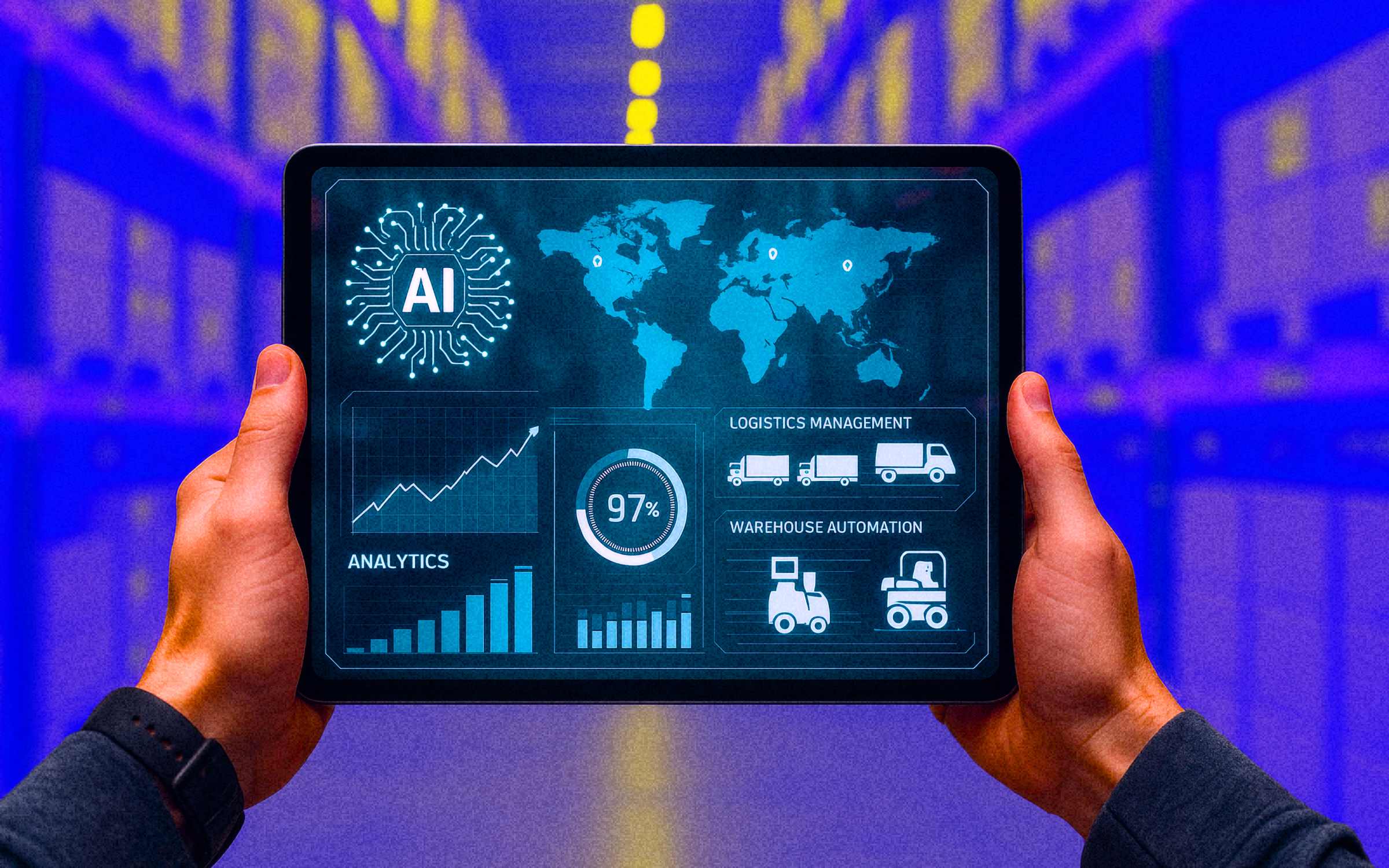
Supply chains have historically been designed around a simple premise: Build the best possible plan, then execute it as efficiently as possible. Artificial intelligence has made those plans smarter, helping companies forecast demand more accurately, optimize transportation routes and reduce inventory costs. But those improvements, while significant, still operate within the same playbook.The next chapter looks fundamentally different.Rather than simply making existing processes faster or cheaper, AI is beginning to reshape how supply chains are designed, managed and even governed. Emerging technologies such as agentic AI, digital twins and real-time decision engines can continuously evaluate changing market conditions, simulate alternative scenarios and recommend—or in some cases execute—responses before disruptions ripple across the business. In this model, supply chains become adaptive systems rather than static networks.The business case for that evolution is growing stronger. Gartner predicts that by 2030, half of supply chain management solutions will incorporate agentic AI capable of making autonomous cross-functional decisions, reflecting a broader shift from automation to intelligent orchestration. At the same time, geopolitical instability, changing trade policies and increasingly unpredictable customer demand are forcing organizations to rethink resilience as a competitive advantage—not just an operational objective.Against this backdrop, members of the Senior Executive AI Think Tank, a curated community of leaders specializing in machine learning, generative AI and enterprise AI applications, see a common theme emerging. The greatest transformation will not come from AI replacing planners or optimizing another workflow. Instead, they argue, AI is becoming the connective tissue that links procurement, manufacturing, logistics, finance and leadership into continuously learning decision systems. That shift promises to redefine not only how supply chains operate but also how organizations make decisions, assign accountability and create value in an increasingly uncertain world.

expert panel
For executives leading AI transformation, one of the most important decisions is also one of the most difficult: deciding where sensitive data should be processed, stored and governed as artificial intelligence becomes part of the enterprise operating model. The architecture choices organizations make today will shape not only their ability to innovate, but also their ability to protect critical information, meet regulatory expectations and maintain trust.The challenge is that there is no single blueprint for secure AI adoption. Leaders must weigh competing priorities, including the speed and scalability of cloud platforms against the control and data sovereignty of private or hybrid environments, the need for strong governance against the risk of slowing innovation and the benefits of advanced AI capabilities against the responsibility to maintain visibility over how data is used. As AI systems create new layers of information through prompts, outputs, embeddings and logs, organizations must consider not only where data resides, but where it flows and whether they can control its entire lifecycle.Members of the Senior Executive AI Think Tank, a curated group of experts specializing in machine learning, generative AI and enterprise AI applications, examine the most important trade-offs leaders should consider when designing AI architectures for sensitive or regulated data. They also identify common mistakes organizations are making, from focusing only on storage location to overlooking data derivatives, governance gaps and the operational capabilities required to manage AI responsibly. Because architecture decisions are no longer just technical choices—they are business decisions tied to risk, resilience and long-term value.