

Skills
About
Sarah Choudhary is a visionary leader, technologist, author, speaker, and CEO of ICE rideshare iChef.. With a PhD in Data Science and over 20 years of experience in AI, ML, and Quantum Computing, she specializes in cutting-edge AI applications for logistics, intelligent automation, and business transformation. Sarah has worked extensively in enterprise AI strategy, leveraging her expertise to build scalable, ethical, and high-impact AI-driven solutions. She has pioneered AI advancements in industries ranging from transportation, finance, and cloud technology to neuromorphic computing and quantum AI. Beyond technology, Sarah is a Forbes-approved thought leader, keynote speaker, and AI ethics advocate. She is passionate about bridging the confidence-competence gap for women in leadership, ensuring AI remains transparent, bias-free, and responsible, and mentoring the next generation of innovators. Her work has been featured in major platforms, and she actively contributes to AI governance, enterprise innovation, and the future of AI-driven leadership.

Sarah Choudhary
Published content
expert panel
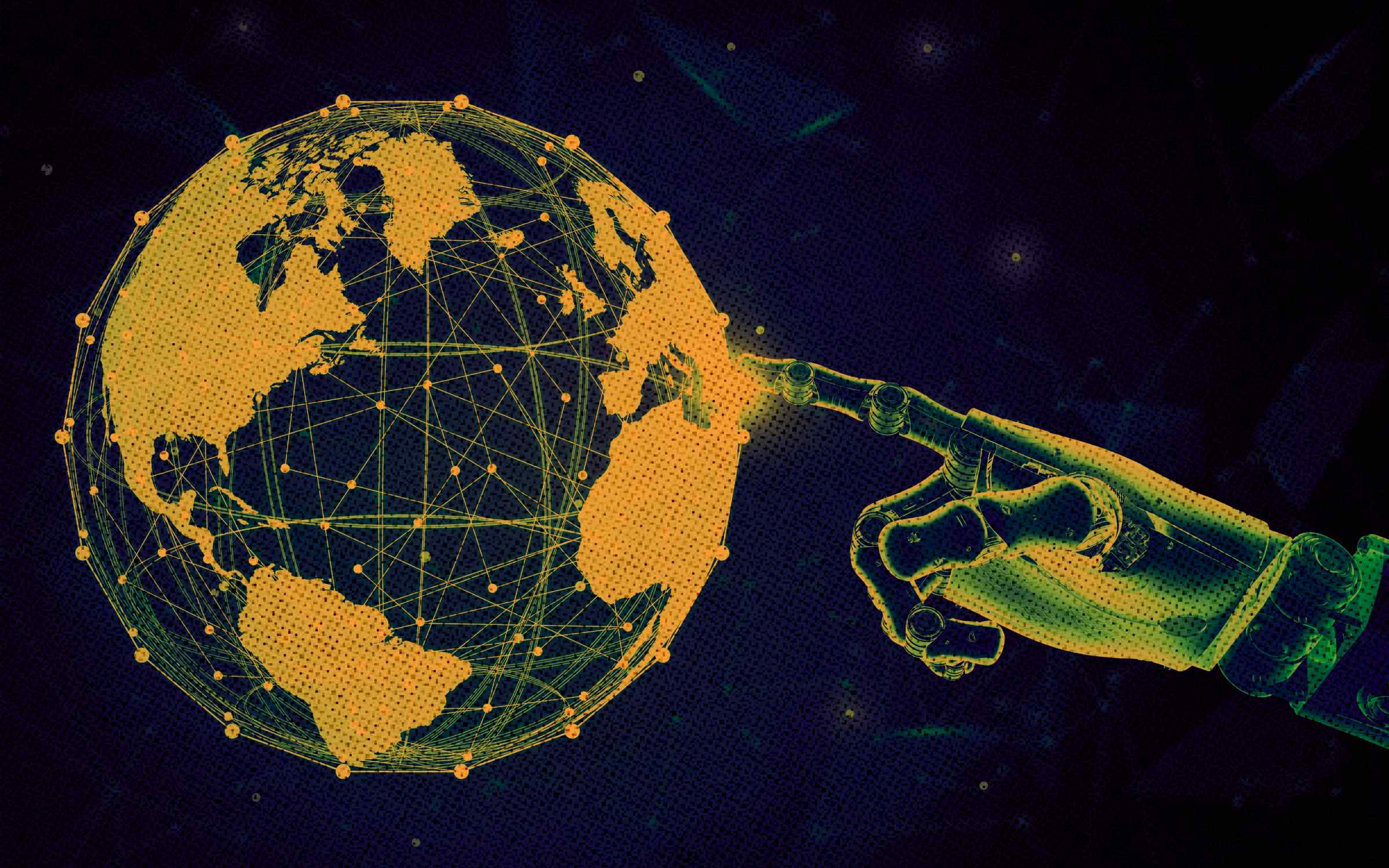
For decades, innovation hubs emerged through a relatively organic mix of academic excellence, entrepreneurial culture, venture capital and geographic density. Silicon Valley became the archetype because talent, capital and ambition concentrated naturally over time. That model is changing. Today, nations and hyperscalers are deliberately constructing AI ecosystems through multibillion-dollar infrastructure investments, workforce initiatives, cloud agreements and regulatory partnerships. Microsoft’s recent multibillion-dollar commitment to expand AI and cloud infrastructure in Australia illustrates how governments and technology companies are increasingly collaborating to shape national AI capacity and digital sovereignty. According to the Stanford AI Index Report, nations are increasingly treating AI infrastructure, semiconductor access and compute capacity as matters of economic and geopolitical strategy. Members of the Senior Executive AI Think Tank say this evolution signals something much larger than a technology boom. It reflects a geopolitical realignment in which compute, chips, data governance and workforce development are becoming instruments of economic and political influence. Here, they explore how engineered AI hubs are reshaping economic power, redefining digital sovereignty and determining which nations and organizations may ultimately control the future AI ecosystem.

expert panel
AI transformation rarely happens in isolation, often unfolding alongside broader digital modernization, cultural shifts and evolving business models. The challenge for senior leaders is not just deciding what to implement, but when and how fast. Poor sequencing can overwhelm teams, stall progress and create what many now call “pilot purgatory.” Insights from the Senior Executive AI Think Tank—a curated group of experts in machine learning, generative AI and enterprise-scale transformation—prove that momentum is not about speed alone. It’s about sequencing initiatives in a way that aligns with human capacity, organizational readiness and measurable value. A recent Forbes analysis on barriers to AI adoption highlights that many organizations struggle to fully integrate AI despite its promise, citing leadership inertia, skills gaps and unclear implementation strategies as persistent obstacles. In other words, the gap is rarely about the technology itself—it’s about how initiatives are staged, scaled and absorbed across the business. The following perspectives from Think Tank members offer an actionable roadmap for sequencing AI initiatives in a way that sustains momentum without overwhelming teams.

expert panel
The nature of teamwork is undergoing one of the most significant transformations since the rise of the digital workplace. As artificial intelligence moves from a supporting tool to an embedded collaborator, organizations are rethinking not only how work gets done, but what collaboration truly means. A widely cited report from McKinsey highlights that generative AI could automate up to 30 percent of hours worked across the U.S. economy by 2030, fundamentally reshaping roles and workflows. But this shift is not simply about efficiency—it is about redefining the human role within teams. Members of the Senior Executive AI Think Tank—a curated group of leaders specializing in machine learning, generative AI and enterprise applications—believe teams will not necessarily disappear, but will instead evolve into hybrid ecosystems where human judgment, creativity and ethical oversight intersect with AI-driven speed, scale and synthesis. The following insights explore how that evolution will unfold—and what leaders must do to stay ahead.
expert panel
As artificial intelligence advances at breakneck speed, the question of trust has become more urgent than ever. How do senior leaders ensure that innovation doesn’t outpace safety—and that every stakeholder, from customers to regulators and employees, retains confidence in rapidly evolving AI systems? Members of the Senior Executive AI Think Tank—a curated group of seasoned AI leaders and ethics experts—are confronting this challenge head-on. With backgrounds at Microsoft, Salesforce, Morgan Stanley and beyond, these executives are uniquely positioned to share practical, real-world strategies for building trust even in regulatory gray areas. And their insights come at a critical moment: A recent global study by KPMG found that only 46% of people worldwide are willing to trust AI systems, despite widespread adoption and optimism about AI’s benefits. That “trust gap” is more than just a perception issue—it’s a barrier to realizing AI’s full business potential. Against this backdrop, the Think Tank’s lessons are not theoretical, but actionable frameworks for leading organizations in a world where regulation lags, public concern mounts and the stakes for getting trust wrong have never been higher.

expert panel
As artificial intelligence continues its rapid advance—from foundational models to enterprise-scale deployments—questions about sustainability are taking on new urgency. While much of the discourse has centered on the carbon footprint of data centers and model training, sustainable AI must also address long-term economic, labor and societal impacts: How will value from AI be shared? Who bears the downstream risks? Well-designed systems matter not only for performance, but also for fairness, trust and longevity. The Senior Executive AI Think Tank brings together seasoned experts in machine learning, generative AI and enterprise AI applications who offer deep insight into these challenges and opportunities. Below, they explore what truly sustainable AI looks like—beyond energy metrics—and who should be accountable.

expert panel
As enterprises scale their use of artificial intelligence, a subtle but potent risk is emerging: employees increasingly turning to external AI tools without oversight. According to a 2025 report by 1Password, around one in four employees is using unapproved AI technology at work. This kind of “shadow AI” challenges traditional governance, security and alignment frameworks.But should this kind of AI use be banned outright? Or can its use be harnessed to spur innovation and encourage creativity and experimentation?The Senior Executive AI Think Tank—a curated group of senior leaders specializing in machine learning, generative AI and enterprise AI applications—has pooled its collective wisdom to help organizations transform unmanaged AI usage from a hidden threat into a structured lever of innovation, enhancing speed, agility and enterprise alignment.








Company details
Ice Innovations
Company bio
ICE Innovations is a cutting-edge technology company driving AI-powered solutions in mobility, automation, and intelligent systems. Our flagship platforms, ICE Ride (a next-gen ride-hailing ecosystem) and iChef (an AI-driven home-based chef food delivery to your door), are transforming industries by enhancing efficiency, accessibility, and user experience. With a focus on Quantum AI, Cloud Computing, and Ethical AI, we specialize in developing scalable, high-performance solutions that optimize decision-making, streamline operations, and elevate digital transformation. Our team of AI researchers, data scientists, and engineers is dedicated to pushing the boundaries of AI in logistics, automation, and enterprise intelligence. At ICE Innovations, we don’t just adopt emerging technologies; we create them.