About
Digital Enterprise Architect & Technology Strategist Driving transformation across Advanced Digital Manufacturing and Closed Loop Manufacturing with a proven track record in modernizing complex software ecosystems. Expert in Product Lifecycle Management, Digital Supply Chain and Digital Manufacturing, with deep experience in application modernization, integrations, AIOps, observability, and cybersecurity across On-Prem, Cloud, and Hybrid platforms. Passionate about building resilient, scalable digital enterprises that power innovation and operational excellence.

Sathish Anumula
Published content

expert panel
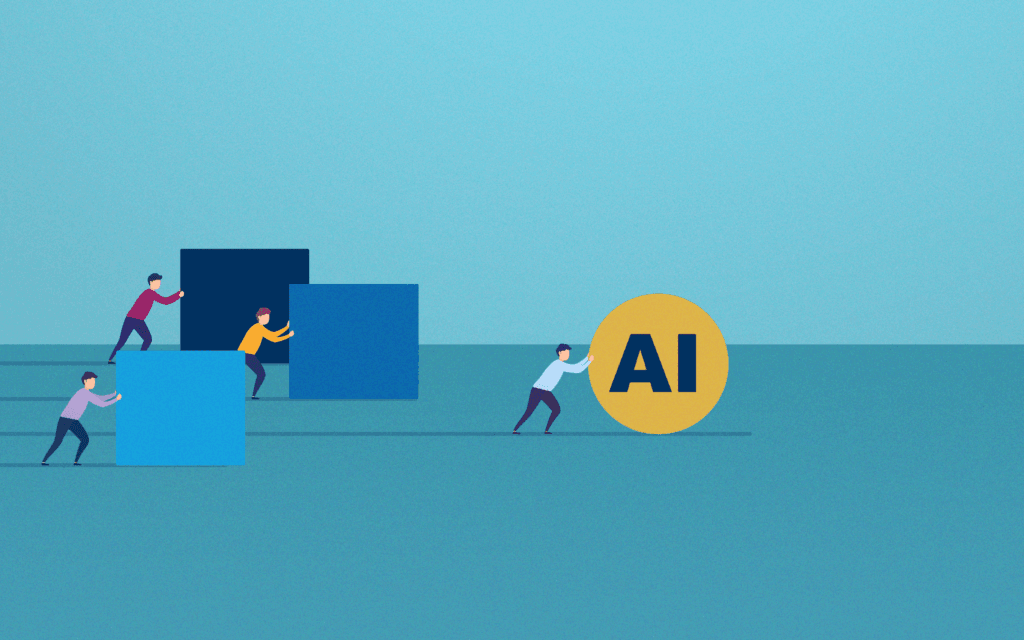
The machine says the patient is low risk. The veteran clinician says something feels wrong. The AI recommends cutting a workstream. The executive team knows that workstream is critical to a customer they are trying to win. The coding assistant produces perfectly functioning code—except it has quietly recreated a function that already exists somewhere else in the codebase.These aren't hypothetical scenarios. They are the kinds of moments leaders increasingly face as AI moves from experimentation into decisions that affect customers, employees, operations and the bottom line. Automatically trusting the machine ignores context, intuition and accountability. Automatically siding with the human can mean overlooking patterns and possibilities that AI can uncover. So what should happen when an AI system and an experienced human reach different conclusions?Members of the Senior Executive AI Think Tank—a curated community of leaders specializing in machine learning, generative AI and enterprise AI applications—have encountered this tension firsthand across healthcare, manufacturing, software development, enterprise transformation, market intelligence and technology strategy. In the examples that follow, they share what happened when AI and human expertise diverged, how their teams responded and what those moments revealed about the roles each should play in high-stakes decision-making.

expert panel
For executives leading AI transformation, one of the most important decisions is also one of the most difficult: deciding where sensitive data should be processed, stored and governed as artificial intelligence becomes part of the enterprise operating model. The architecture choices organizations make today will shape not only their ability to innovate, but also their ability to protect critical information, meet regulatory expectations and maintain trust.The challenge is that there is no single blueprint for secure AI adoption. Leaders must weigh competing priorities, including the speed and scalability of cloud platforms against the control and data sovereignty of private or hybrid environments, the need for strong governance against the risk of slowing innovation and the benefits of advanced AI capabilities against the responsibility to maintain visibility over how data is used. As AI systems create new layers of information through prompts, outputs, embeddings and logs, organizations must consider not only where data resides, but where it flows and whether they can control its entire lifecycle.Members of the Senior Executive AI Think Tank, a curated group of experts specializing in machine learning, generative AI and enterprise AI applications, examine the most important trade-offs leaders should consider when designing AI architectures for sensitive or regulated data. They also identify common mistakes organizations are making, from focusing only on storage location to overlooking data derivatives, governance gaps and the operational capabilities required to manage AI responsibly. Because architecture decisions are no longer just technical choices—they are business decisions tied to risk, resilience and long-term value.

expert panel
More than 200 economists, AI researchers and technology leaders recently signed the "We Must Act Now" statement, warning that artificial intelligence could reshape the global economy faster than the Industrial Revolution. While the statement calls for stronger institutions and guardrails, it also raises a more immediate question for executives: What should leaders actually do today?Members of the Senior Executive AI Think Tank believe the answer extends well beyond adopting the latest AI tools. Drawing on decades of experience leading enterprise AI, cloud infrastructure, digital transformation and technology strategy, these experts argue that organizations must rethink work itself—redesigning processes, investing in people and establishing governance before AI scales across the enterprise.Their advice comes as organizations accelerate adoption. According to McKinsey's latest State of AI research, AI adoption continues to expand rapidly across industries, with organizations increasingly reporting measurable business impact. Yet the same research also highlights persistent challenges around governance, workforce readiness and risk management, reinforcing the need for thoughtful leadership rather than technology-first decision-making.The following insights from members of the Senior Executive AI Think Tank reveal a consistent message: Organizations that treat AI as a catalyst for better decision-making, stronger employees and more resilient businesses—not simply a cost-cutting exercise—will be best positioned to thrive as AI transforms the economy.
expert panel
Jul 23, 2026
In AI, success is no longer determined solely by selecting the largest language model or achieving the highest benchmark score. Increasingly, organizations are deploying AI systems composed of multiple foundation models, retrieval systems, APIs, business applications and autonomous agents working together to complete complex tasks.As these systems become more autonomous, reliability becomes a systems engineering challenge rather than simply a model evaluation problem. According to the National Institute of Standards and Technology's AI Risk Management Framework, trustworthy AI requires organizations to continuously monitor, govern and manage risks throughout the lifecycle—not simply evaluate a model before deployment. Those principles become even more important as organizations adopt agentic AI capable of making decisions and invoking external tools.Members of the Senior Executive AI Think Tank, with expertise in machine learning, generative AI, and enterprise AI applications, believe orchestration is rapidly becoming the operational foundation that makes this possible. Rather than simply routing requests between models, orchestration determines how systems select models, validate outputs, monitor execution, recover from failures and balance competing priorities including latency, quality, security and cost.In the following sections, they explore the critical decisions leaders must make as AI systems become more autonomous—from improving routing and evaluation to strengthening observability, managing complexity and creating safeguards that allow organizations to scale AI with confidence.

expert panel
The current AI conversation has been dominated by software. Organizations have raced to deploy chatbots, copilots and generative AI tools that promise to boost productivity, improve decision-making and automate knowledge work. But what happens when AI leaves the screen and enters the physical world?That future is already taking shape. AI-powered robots are moving beyond controlled factory environments and into warehouses, hospitals, retail operations and even homes. Companies including Amazon, Tesla and Figure AI are investing billions in autonomous systems capable of navigating complex environments, collaborating with humans and performing tasks that once required manual labor. At the same time, labor shortages, rising operating costs and demographic shifts are creating strong economic incentives for automation. According to the International Federation of Robotics, global demand for industrial robots has more than doubled over the past decade, with more than 4.6 million robots now operating in factories worldwide.Yet despite the excitement, fundamental questions remain unanswered: What milestone will signal that AI-powered robotics has evolved from a promising technology into a mainstream commercial reality? Will it be a breakthrough in capability? A dramatic reduction in cost? Regulatory approval? Or something less obvious?To explore these questions, we turned to members of the Senior Executive AI Think Tank, a curated group of leaders and practitioners specializing in machine learning, generative AI and enterprise AI applications. Below, they share the signals they believe executives should be watching and the conditions that will determine when AI-powered robotics truly crosses into the mainstream.

expert panel
Artificial intelligence is often framed as a race: faster models, bigger investments, larger datasets and more powerful infrastructure. But beneath the headlines lies a more consequential question for business leaders, policymakers and investors alike: Who gets to compete?A growing share of the AI ecosystem is controlled by a relatively small number of organizations with access to the world's largest compute resources, proprietary datasets and distribution channels. This means the debate is no longer simply about what AI can do but about whether the next wave of innovation will emerge from an open marketplace of ideas or from a handful of dominant ecosystems.To explore that question, we asked members of the Senior Executive AI Think Tank—a curated community of leaders specializing in machine learning, generative AI, digital transformation and enterprise AI applications—what single rule they would change to improve AI competition.While their recommendations differ, a clear theme emerges: The future of AI should be shaped by innovation, trust and customer value rather than lock-in, opacity or concentrated control. The following insights offer a timely look at how technology and business leaders believe a more competitive—and in many cases safer—AI ecosystem can be built.