Skills
About
I am a technology leader with more than a decade of experience working with Fortune 500 and global healthcare organizations. I’ve spent most of my time building and delivering enterprise-scale platforms in healthcare and other highly regulated industries. My work focuses on designing scalable and reliable data interoperability systems using HL7 and FHIR standards. I also work on revenue cycle management platforms that help drive better decision-making across finance, operations, and clinical teams. I have led the development and evaluation of AI-enabled solutions, including claim posting systems that supported multimillion-dollar revenue outcomes for large healthcare organizations. I’ve also built solutions in payment processing, operational forecasting, and decision intelligence at scale. My core strength is in platform architecture, data engineering, and applied machine learning, with a strong focus on building systems that work reliably in compliance-heavy healthcare environments aligned with TEFCA and FHIR. I stay connected with the industry through conference contributions and by being part of professional and scientific communities. I also use my experience to review and evaluate AI and data science work in healthcare and finance. My technical background includes applied machine learning, cloud platforms, modern application frameworks, and enterprise data integration standards.

Sriharsha Chavali
Published content

expert panel
Healthcare organizations make countless decisions that shape how care is delivered: which technologies to adopt, how teams are staffed, how workflows are designed and where to invest for the future. Yet the people who work closest to patients are not always in the room when those decisions are being made.That disconnect can be costly. A decision that looks sensible on a spreadsheet may create unexpected friction in a clinical setting. A technology selected to improve efficiency may complicate a workflow. A staffing strategy that works operationally may look very different from the perspective of the people responsible for delivering care.The answer is not to put clinicians on every committee or require consensus on every decision. But simply asking for feedback after a plan is largely settled does not create genuine influence either. The challenge for healthcare leaders is finding the point between those extremes: How can clinicians have a meaningful voice in decisions that affect their work and their patients without creating another layer of bureaucracy?Members of the Senior Executive Healthcare Think Tank bring perspectives shaped by experience in patient experience, workforce strategy, policy, quality, equity and healthcare technology. They weigh in on what meaningful clinician influence should look like—and how leaders can build it into decision-making without sacrificing the ability to move.

expert panel
Healthcare marketing has a translation problem.Clinical experts think in diagnoses, treatment protocols, risk factors, outcomes and evidence. Patients often think in much more immediate terms: What does this mean for me? What happens next? Can I afford it? Who do I call? Do I need to do something today?The Agency for Healthcare Research and Quality notes that 88% of U.S. adults lack the health literacy skills needed to manage all the demands of the healthcare system, while 36% have limited personal health literacy. Bridging those two worlds requires more than simplifying medical terminology. It requires healthcare organizations to rethink what patient content is supposed to accomplish.The Senior Executive Healthcare Think Tank brings together leaders with expertise spanning patient experience, workforce strategy, policy, quality, equity and healthcare technology. They suggest that the most useful healthcare content is not simply easier to read, but more relevant, more contextual, more credible and more tightly connected to the decision a patient is trying to make. Below, they share how healthcare marketers can bridge the divide between complex clinical expertise and the patients who need to understand and act on it.

expert panel
Healthcare leaders have spent the past decade investing in AI, interoperability, telehealth, analytics and other technologies designed to improve care. Yet technology alone does not transform a healthcare system. The bigger challenge is deciding where innovation can make the greatest difference—and changing the processes, priorities and investments that stand in its way.That question is at the heart of insights from the Senior Executive Healthcare Think Tank, a group of experts spanning patient experience, workforce strategy, policy, quality, equity and healthcare technology. Rather than focusing on what healthcare could do someday, they consider where leaders can take meaningful action now and what needs to change in the way organizations approach transformation.Below, they explore the leadership choices behind better care—how to move from reactive treatment toward earlier intervention, connect fragmented systems, make AI useful without adding complexity, give patients a greater role in decisions and rethink how success is measured—offering a practical look at where healthcare leaders can focus their efforts to create lasting change over the decade ahead.

expert panel
Healthcare mergers and acquisitions are often built around a compelling financial or strategic thesis: expand market reach, add capabilities, improve scale or create efficiencies. Yet the hardest part of the transaction frequently begins after the paperwork is signed, when two organizations must actually function as one.That issue often comes down to the way work actually happens. Employees develop workarounds. Physicians build relationships and routines that aren't captured in organizational charts. Technology systems accumulate custom configurations. Data acquires its own definitions and dependencies. Products evolve along separate roadmaps. Leaders develop different approaches to decision-making and accountability. None of these realities necessarily makes an acquisition unattractive, but failing to understand them can make integration far more difficult than anticipated.So what should healthcare leaders be looking for before they close the deal?The members of the Senior Executive Healthcare Think Tank—a curated group of experts in healthcare operations, technology, workforce strategy, medical devices, data, AI and clinical systems—offer perspectives that collectively challenge the traditional due diligence checklist. The following insights explore where hidden operational risks tend to surface and, more importantly, the questions leaders should be asking while there is still time to act on the answers.

expert panel
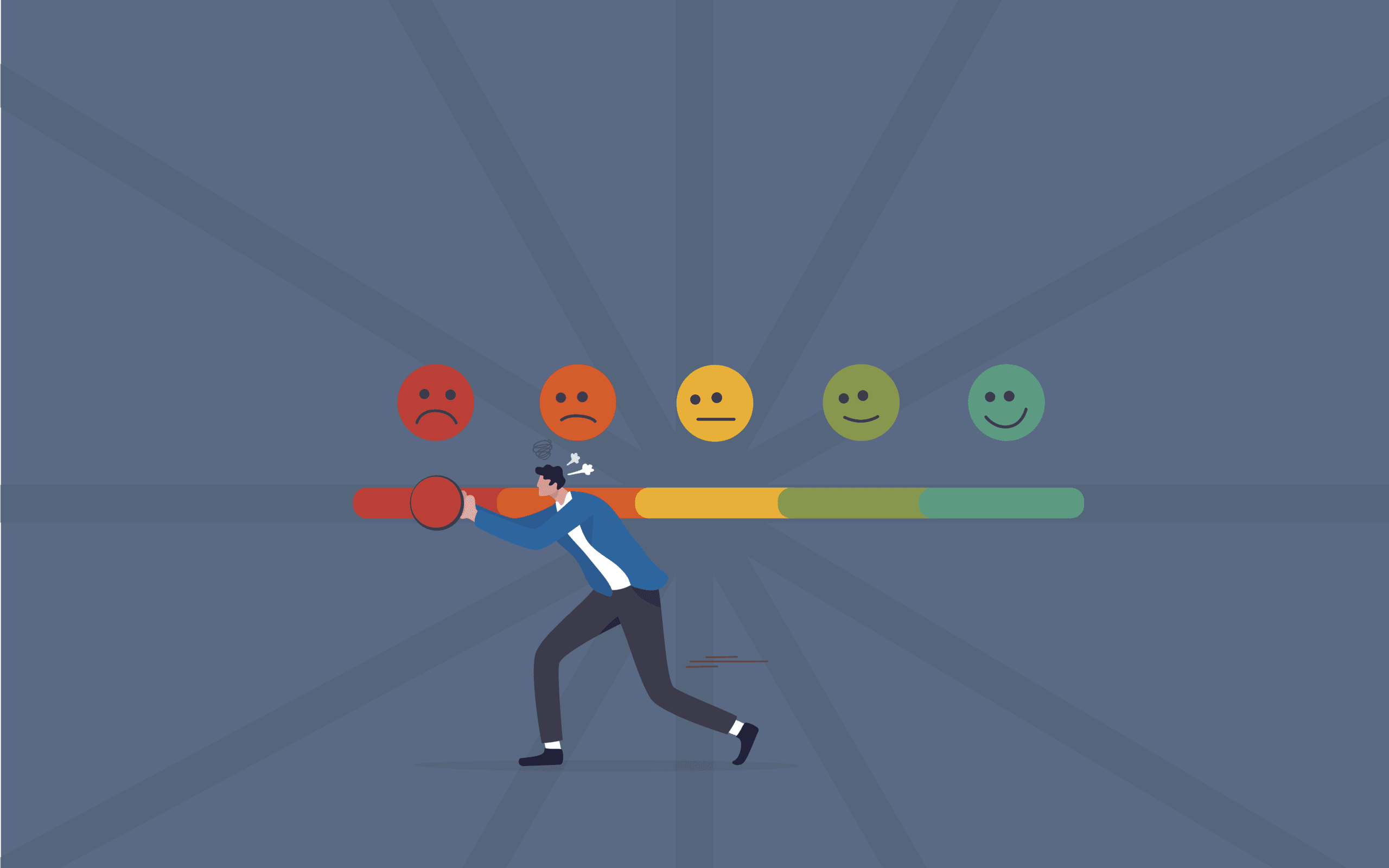
A healthcare organization can look healthy on paper right up until it doesn’t.The quarterly numbers may be on target. Patient satisfaction may still be holding steady. Revenue may look strong. But somewhere inside the organization, a different story may already be taking shape: Employees are calling out more often. Patients are missing appointments. Clinicians are finding workarounds. Claims are taking longer to resolve. Information is moving more slowly between systems. People who used to speak up have started keeping quiet.By the time those problems show up in the metrics most executives watch, the organization may already be responding to consequences rather than causes.Below, members of the Senior Executive Healthcare Think Tank—experts in healthcare transformation, workforce strategy, patient experience, technology, revenue cycle, medical devices, interoperability, AI and digital health—look beyond traditional financial and operational measures and identify the signals that can reveal emerging problems, offering healthcare leaders a closer look at what they can measure now to better understand where their organizations are headed next.

expert panel
Healthcare organizations have never had more opportunities to communicate directly with patients and the public. Social media allows clinicians to explain complex health topics in accessible language, organizations to respond to emerging concerns and healthcare leaders to build communities around prevention, wellness and better care.But the opportunity comes with real challenges. A confusing post can undermine understanding. An unsupported claim can spread misinformation. A poorly handled patient story can compromise privacy. And when a false claim gains traction, a slow response can leave patients looking elsewhere for answers. A 2025 study of 3,805 U.S. adults found an association between perceived exposure to substantial health misinformation on social media and lower trust in the healthcare system.The question for healthcare leaders, then, is not whether to engage on social media, but how to do so in a way that strengthens the patient experience and protects the trust on which effective care depends.Members of the Senior Executive Healthcare Think Tank bring perspectives spanning patient experience, healthcare technology, telehealth, clinical systems, workforce health, health administration and responsible innovation. They examine how healthcare organizations can approach social media governance, empower clinicians to participate, reach the right audiences, verify health information and respond effectively when misinformation emerges.