Healthcare organizations are facing a workforce crisis that shows little sign of easing. From hospitals to outpatient clinics, staffing shortages are straining care delivery, increasing burnout and threatening patient outcomes. According to a 2024 report from the Association of American Medical Colleges, the U.S. could face a physician shortage of up to 86,000 by 2036, highlighting the urgency of rethinking traditional care models. At the same time, broader workforce analyses suggest these gaps could be even more pronounced in primary care and rural settings, further complicating access and equity challenges.
Members of the Senior Executive Healthcare Think Tank, a curated group of leaders across workforce strategy, patient experience, policy and healthcare technology, argue that incremental fixes will not suffice. Instead, organizations must fundamentally redesign care teams—shifting from rigid, physician-centric models to flexible, capability-based systems powered by advanced practice providers (APPs), automation and continuous training pipelines.
In the sections that follow, Think Tank experts explore how such a redesign of care can help organizations expand access, sustain high-quality care and attract and retain top talent.
“The traditional physician-led, siloed model is being replaced by layered, interdisciplinary teams organized around capabilities rather than credentials.”

Advanced Practice Providers as the Backbone of Scalable Care
Feri Naseh, Founder and CEO of MeTime Healing LLC, emphasizes that the traditional physician-led model is no longer sustainable in today’s environment.
“The traditional physician-led, siloed model is being replaced by layered, interdisciplinary teams organized around capabilities rather than credentials,” Naseh says. “APPs represent about 41% of the provider workforce in the U.S. and continue to grow as physician shortages intensify.”
Naseh explains that forward-looking systems are expanding scope-of-practice and autonomy for nurse practitioners and physician assistants.
“Embedding APPs in primary, specialty and surgical pathways—and designing APP-led care models for routine and chronic care—allows physicians to shift toward complex, high-acuity decision-making,” she says.
This shift is already gaining traction. Research from the National Academy of Medicine shows that team-based care models incorporating APPs can improve access while maintaining or improving quality outcomes, particularly in primary care and chronic disease management.
“APPs become the backbone of scalable access,” Naseh adds. “Care becomes a coordinated service, not a series of physician encounters. Training becomes continuous and aligned with evolving care models—not static degrees.”
The result is a more flexible workforce that can expand capacity without overburdening physicians—an essential step in addressing both access and burnout.
“The staffing shortages in healthcare are so severe that organizations must commit to truly integrating technologies—and incorporating the insights delivered into patient care.”

Technology Integration as a Force Multiplier
Mark Francis, Founder and CEO of CaregiverZone, argues that technology must move from the periphery to the core of care delivery.
“The staffing shortages in healthcare are so severe that organizations must commit to truly integrating technologies—and incorporating the insights delivered into patient care,” Francis says.
He points to the growing role of wearables and remote monitoring: “The key is that data captured must be clinically accurate, relevant, actionable and accessible within standard workflows. Structured properly, such solutions have enabled an increase in the number of patients that can be managed by a single clinician.”
Francis also highlights the role of automation in reducing administrative burden.
“Couple this with ambient scribes, intelligent agents and trained digital clinical assistants—and the administrative burden on doctors and nurses decreases significantly,” he says. “Enabling clinicians to be clinicians will have the greatest positive impact on retention and acquisition.”
By removing friction from daily workflows, technology not only boosts productivity but also improves job satisfaction—making organizations more attractive to both current and prospective employees.
Rethinking Hiring Through Better System Design
Sriharsha Chavali, Enterprise Technology Leader at The Aspen Group, challenges a common assumption: that workforce shortages are primarily a hiring problem.
“Workforce shortages are not always a hiring problem—it can be a system design problem,” Chavali says.
He recalls implementing clinical surveillance platforms that monitored data across more than 175 hospitals. “These systems checked pharmacovigilance data every five minutes,” he says. “Previously, infection preventionists reviewed charts manually across 174 hospitals, which is humanly infeasible and time consuming.”
The lesson is clear: Technology can eliminate entire categories of work that drain human capacity.
“The best hiring strategy is giving staff modern tools that accelerate productivity,” Chavali says. “Repetitive paperwork and data entry are exactly what turn candidates away. Telling them you’ve automated that already changes the conversation.”
By redesigning systems rather than simply adding headcount, organizations can create more appealing roles and improve both recruitment and retention outcomes.
From Role-Based to Capability-Based Care Models
Dr. Sunil Kumar, Lifestyle Medicine Physician, Executive Health Coach and Founder of Dr. Sunil Kumar Consulting, believes the solution lies in fundamentally redesigning how care is delivered.
“Workforce shortages won’t be solved by hiring more of the same,” Kumar says. “They require a redesign of how care is delivered.”
He describes a shift from role-based to capability-based teams. “Advanced practitioners must work at the top of their license, while routine, repeatable tasks are offloaded to automation,” he explains. “New pipelines—health coaches, care navigators and community-based roles—support prevention and continuity.”
This approach allows physicians to focus on complexity rather than volume, improving both efficiency and outcomes.
Kumar also highlights the impact on talent. “Organizations that offer scope, support and a sustainable workload will attract and retain talent,” he says. “Those that don’t will continue to lose people—not just to competitors, but to exit.”
Burnout remains a critical issue, with studies from the Mayo Clinic and collaborators showing that nearly half of U.S. physicians report at least one symptom of burnout.
“Retention is no longer about the resilience of individuals, but the design of the system they work in,” Kumar says.
“By integrating consumer-facing diagnostic and therapeutic devices, remote monitoring and AI-driven automation, organizations can extend care beyond traditional settings.”
Extending Care Beyond Traditional Settings
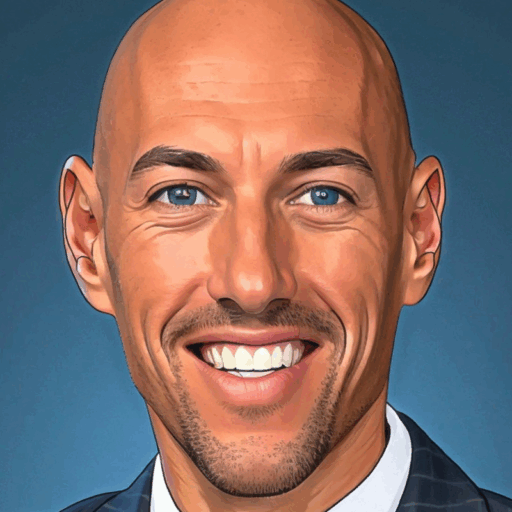
Eugene Zabolotsky, CEO of Health Helper, points to the growing role of consumer-facing technologies in expanding care capacity.
“By integrating consumer-facing diagnostic and therapeutic devices, remote monitoring and AI-driven automation, organizations can extend care beyond traditional settings,” Zabolotsky says. “This allows smaller, more efficient teams to deliver higher-quality outcomes.”
A report from PwC notes that virtual care and home-based diagnostics are among the fastest-growing segments in healthcare, driven by both patient demand and workforce constraints, as care models shift toward distributed, tech‑enabled systems that deliver care anywhere, anytime.
Zabolotsky emphasizes the talent implications. “Clinicians are empowered with better tools, less burnout and more meaningful work,” he says. “Technology-driven organizations become more attractive for recruitment and long-term retention.”
As care moves closer to the patient, organizations that embrace these tools will be better positioned to scale without compromising quality.
Building the Workforce of the Future Through Continuous Upskilling
Harikrishnan Muthukrishnan, Principal IT Developer at BCBS Florida, outlines a three-part strategy for redesigning care delivery.
“First, build teams around capability, not hierarchy,” he says. “Physicians focus on complex decisions, while APPs, nurses, pharmacists and digital roles expand access and continuity of care.”
Second, he stresses the importance of automation. “Use automation to remove friction—not meaning—by reducing documentation, inbox burden and routine administrative work,” he says.
Third, he highlights the need for modern training pipelines. “Create continuous upskilling so the workforce grows with new digital, virtual and team-based models of care,” he explains.
These elements work together to address multiple problem areas. “Together, these three moves improve capacity, protect quality and make healthcare organizations more attractive for talent acquisition and long-term retention,” Muthukrishnan says.
According to the World Economic Forum, nearly half of all workers will need reskilling by 2027, with healthcare among the sectors most affected by technological change—meaning continuous learning and updated training are no longer optional.
Practical Steps for Workforce Resilience
- Redesign teams around capabilities, not credentials. Shift responsibilities so APPs and interdisciplinary roles handle routine care while physicians focus on complexity.
- Integrate technology directly into clinical workflows. Ensure data from remote monitoring and AI tools is actionable and reduces administrative burden.
- Fix system inefficiencies before hiring more staff. Automating repetitive tasks can dramatically increase productivity and improve job satisfaction.
- Adopt capability-based care models. Introduce roles like health coaches and care navigators to support prevention and continuity.
- Extend care beyond traditional settings. Use remote monitoring and consumer-facing devices to scale care delivery with smaller teams.
- Invest in continuous training and upskilling. Build a workforce that evolves alongside digital and team-based care models.
Looking Ahead: Building Resilient Care Teams
Healthcare workforce shortages are not a temporary disruption—they are a structural challenge that demands a fundamental rethinking of care delivery. The insights from the Senior Executive Healthcare Think Tank show the solution lies not in incremental hiring but in redesigning teams, workflows and training models to align with modern realities.
Organizations that embrace capability-based teams, integrate automation and invest in workforce development will be better positioned to sustain growth, improve quality and compete for talent. Those that do not risk falling further behind in an increasingly constrained labor market.
MOST POPULAR

AI Is Commoditized—Here's What Sets Great Brands Apart

9 Ways to Measure the Success of Your DEI Strategy
Inspiring Ideas. Actionable Insights.
Senior Executive's Email Newsletters Deliver Fresh Solutions to Today's Leadership Challenges.
Subscribe Free
From Eyeballs to AI Agents: The New Economics of Marketing

Quiet Hiring Is Changing How Companies Build Workforce Capacity

Banks Feared Fintechs. Now Fintechs Need What Banks Have