
About
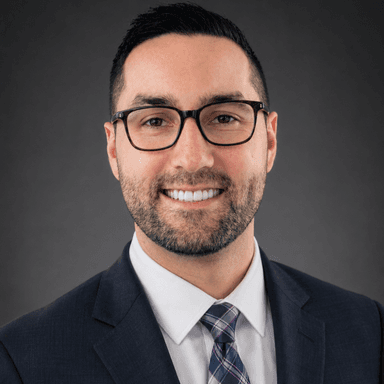
Tyler is the Founder & CEO of Crebar Career Consulting, where he helps mid-career to executive professionals secure new opportunities, advance their careers, and increase their earning potential. With a background in recruiting across finance, technology, healthcare, higher education, and nonprofit organizations, Tyler has worked for leading institutions including JPMorgan Chase, LinkedIn, and the National Collegiate Athletic Association. His experience spans helping organizations identify top talent while guiding professionals through career transitions, promotions, and strategic job searches. Tyler earned his bachelor’s degree from Western Washington University, where he competed as a track & field student-athlete, and later received a master’s degree in Leadership & Human Resource Development from Louisiana State University. Outside of work, he is passionate about community involvement, volunteering, and maintaining an active lifestyle.

Tyler Crebar
Published content

expert panel
Solopreneurs can replace the accountability of a traditional workplace with measurable goals, outside support, regular reviews and systems designed to make commitments harder to ignore. Insights from members of the Senior Executive HR Think Tank show how independent professionals can stay focused without becoming their own worst boss.Working without a manager offers greater freedom, but it also removes many of the structures that make follow-through easier. No supervisor is checking deadlines, no colleague is flagging a missed commitment and no team meeting is prompting a progress update.That makes self-accountability less about having extraordinary discipline and more about deliberately building the structures that a workplace would normally provide. Members of the Senior Executive HR Think Tank bring perspectives spanning organizational psychology, leadership, recruiting, culture and career development to the question of how independent professionals can create those structures for themselves.Recent Gallup research reinforces the importance of the issue: In a survey, creating accountability ranked as the lowest-rated of seven leadership competencies, with just 46% of leaders rating themselves "exceptional or outstanding" at holding people responsible for exceptional performance. If accountability can be difficult even inside organizations with managers and teams, solopreneurs have even more reason to intentionally design it into their work.The experts suggest several ways to do that, from building a personal support network and creating financial consequences to making goals public, tracking measurable outcomes and protecting time for meaningful work.

expert panel
As AI takes on more recruiting tasks, HR leaders must decide where automation should stop, and human accountability should begin. Members of the Senior Executive HR Think Tank explain when candidates deserve human judgment, communication, transparency and a meaningful opportunity to challenge an automated decision.Hiring has always involved a tension between efficiency and humanity, but artificial intelligence is pushing that tension into new territory. AI can now help screen resumes, identify candidates, generate job descriptions and automate communication. According to LinkedIn's 2025 Future of Recruiting report, 37% of recruiting organizations are actively integrating or experimenting with generative AI, while 73% of talent-acquisition professionals say AI will change the way organizations hire.That makes the question less about whether companies should use AI and more about where responsibility belongs when technology affects someone's opportunity. Members of the Senior Executive HR Think Tank bring perspectives spanning talent acquisition, organizational leadership, career coaching, workplace culture and HR technology.Across their responses, one principle emerges: AI can take on more of the process, but companies cannot automate accountability.

expert panel
Job stability can provide more than a paycheck. Members of the Senior Executive HR Think Tank explain how employees can use secure roles to develop portable skills, expertise, relationships and career options before they need them.A stable job can create a false sense of permanence. Employees may have a dependable salary, established responsibilities and a clear place in the organization, yet none of that guarantees the role will exist indefinitely.That makes career development more than a retention strategy. It can also be a form of career risk management.The Senior Executive HR Think Tank offers a consistent message: Employees should use periods of stability to build capabilities that remain valuable even when their current positions do not.The need is becoming more pressing as the skills required to perform many jobs continue to change. The World Economic Forum's Future of Jobs Report 2025 finds that employers expect 39% of workers' core skills to change by 2030, while creative thinking, resilience, flexibility and agility remain among the skills expected to grow in importance.For employees, that means the best time to prepare for a career transition may be long before one becomes necessary.

expert panel
Mental health at work cannot be addressed through benefits alone. Members of the Senior Executive HR Think Tank explain how leaders can design workloads, management practices, autonomy, psychological safety and workplace systems to support sustainable performance.Workplace mental health is increasingly recognized as a business and organizational design issue—not simply an employee benefit. SHRM's 2026 research found that stress and anxiety remain significant concerns among U.S. workers, while companies continue to wrestle with employee burnout and the underuse of mental health benefits.That raises a more fundamental question: What if organizations stopped asking employees to cope better with unhealthy conditions and instead examined the conditions themselves? Members of the Senior Executive HR Think Tank bring expertise in psychology, HR, organizational design, leadership, culture and workforce strategy to that question.Their answers point toward a common idea: A mentally healthy workplace is not created by adding another program to the benefits portfolio. It is created by deliberately designing work so people can perform without continually sacrificing their psychological well-being.

expert panel
Aug 10, 2026
Every summer, millions of working parents face the same logistical puzzle: school is out, camps fill quickly and reliable childcare becomes both harder to find and more expensive. For employers, the resulting strain often shows up as higher absenteeism, dipped productivity, disrupted schedules and, eventually, turnover.The scale of that strain is well documented. A Bright Horizons Modern Family Index survey of more than 2,000 U.S. adults found that 87% of working parents report challenges or disruptions when their children are home during the summer, and 76% say their focus at work depends directly on how reliable their kids' summer schedules are. Employers have reason to care beyond goodwill: a study from Boston Consulting Group and Moms First found that companies investing in childcare benefits saw returns ranging from 90% to 425%, with retaining as few as 1% of eligible employees covering the cost of the benefit for everyone who qualifies.To find out which benefit delivers the greatest return, we turned to members of the Senior Executive HR Think Tank, a curated group of human resources leaders and advisors. Their answers point to a nuanced truth: the benefit that pays off is the one employees can actually use.

expert panel
As AI reshapes daily work and engagement hits historic lows, members of the Senior Executive HR Think Tank explain why purpose—not perks or productivity alone—is emerging as the defining competitive advantage for organizations competing to attract, retain and inspire talent.Work is changing faster than most organizations can keep up with. Roles are shifting, AI is taking over entire categories of tasks, and employee engagement is stuck near record lows. Amid all this, one quieter question is emerging as the key difference-maker between organizations that keep their best people and those that lose them: Why does this work matter?Members of the Senior Executive HR Think Tank, a curated group of experts specializing in human resources, agree that purpose is no longer a soft concern to address after salary negotiations. It is becoming the new point of distinction once pay, benefits and flexibility become table stakes.The numbers back them up. Only 31% of employees in the U.S. and Canada region were actively engaged as of early 2026, according to Gallup’s State of the Global Workplace report. While engagement has many causes, leaders increasingly point to a lack of connection between day-to-day work and organizational purpose as one of the biggest contributors.







Company details
Crebar Career Consulting
Company bio
Crebar Career Consulting helps professionals navigate career transitions, accelerate growth, and position themselves for new opportunities with confidence. Founded by recruiter and career strategist Tyler Crebar, our approach is built on years of hiring experience across healthcare, technology, finance, higher education, sports, and corporate environments—including work with organizations such as LinkedIn, JPMorgan Chase, and the NCAA. We understand how hiring decisions are made because we’ve been on the other side of them. Our services support professionals from mid-career through executive leadership and include: • Career coaching & strategy • Resume writing and ATS optimization • LinkedIn profile positioning & personal branding • Interview preparation and recruiter insight • Salary negotiation support • Career transitions and job search planning • Executive and leadership-level career guidance • Personal positioning for promotions and advancement At Crebar Career Consulting, we believe career growth isn’t only about landing the next job—it’s about building long-term opportunities, increasing earning potential, and creating a career aligned with your goals. Our mission: Help people get hired, promoted, and paid more through honest, recruiter-backed career advice.