

Skills
About
Will Conaway is a distinguished leader with experience across multiple industries in executive roles. He has received the ONCON Icon Award in Global Healthcare and the Constellation's Business Transformation 150 Award. Recognized among Becker's Hospital Review's 100 Hospital and Health System CIOs to Know. Will teaches organizational strategies, leadership, and VUCA concepts, as well as healthcare, at Cornell University. He has a history of service on boards. He is a member of the World Economic Forum and the Forbes Technology Council. He is GenAI certified and has completed the MIT Artificial Intelligence in Health Care program. He is also a Lean Six Sigma Black Belt.

Will Conaway
Published content

expert panel
For a long time, the central challenge in robotics was teaching machines exactly what to do. Now, some of the most interesting advances are coming from robots that can learn what to do for themselves.That shift is changing expectations for how quickly robots could become genuinely useful. New systems can learn from demonstrations, adapt to unfamiliar situations and transfer what they’ve learned across tasks and machines—bringing robotics closer to the flexibility that made generative AI so disruptive.Members of the Senior Executive AI Think Tank—a curated group of experts specializing in machine learning, generative AI and enterprise AI applications—have been watching these developments from across technology, healthcare, infrastructure, transformation and enterprise AI. We asked them what development in AI robotics has been most interesting to them this year, what it changed their minds about and what it suggests about how quickly robots will become capable of doing more in the real world.

expert panel
When an AI system produces a disappointing answer, the first instinct is often to rewrite the prompt. Add more context. Give it an example. Spell out the rules. Try again. Sometimes that works—but there’s a point where prompt refinement becomes a way of avoiding the real problem. If an AI system still struggles after repeated rounds of instruction, leaders need to ask a different question: Is the prompt actually the bottleneck?That question matters because AI performance depends on far more than the words sent to a model. The quality and availability of data, the tools a system can access, the workflow surrounding it and the model’s own capabilities can all shape the result.For leaders, the challenge is knowing when to stop tweaking and start redesigning. If the problem is the way work gets done, the answer may be a new workflow. If the system lacks reliable information, better data may matter more. If the task requires actions or specialized capabilities, different tooling or a different model may be necessary. And sometimes the right answer is to rethink the product or process altogether. Members of the Senior Executive AI Think Tank—a curated group of executives and practitioners with expertise across machine learning, generative AI and enterprise AI applications—share how they recognize those inflection points and what leaders can do when a better prompt is no longer enough.

expert panel
The AI industry has been celebrating increasingly capable demonstrations: a model beats a benchmark, an autonomous vehicle completes a route, an AI agent handles a task that once required a person. But a successful demonstration answers only one question: Can the technology work?Commercialization demands much harder answers: Can it work every day? What happens when it fails? Who is responsible? Can the surrounding operation absorb those failures? And do the economics still work when real customers are paying for the result? Nevada’s recent approval of robotaxi networks for Tesla, Waymo and Uber opens the door to thousands of autonomous vehicles operating commercially, and brings those questions into sharp focus.Members of the Senior Executive AI Think Tank bring perspectives from machine learning, enterprise technology, product management, data architecture, financial services, infrastructure, healthcare and design to this next stage of the AI conversation. Below, they examine what it takes to move beyond a working model and build a system that can withstand real-world complexity—from managing failures and infrastructure to earning regulatory and public trust, establishing accountability and making the economics work at scale.

expert panel
The AI industry has embraced a simple idea about data centers: If AI needs more computing power, build bigger facilities and pack them with more chips. But as the infrastructure race accelerates, that assumption is becoming harder to defend. Power availability, grid capacity, cooling, water and the physical limits of getting new facilities online are emerging as constraints that raw compute cannot solve.The question matters because data centers are long-term investments being built around a technology that is changing at remarkable speed. The infrastructure designed for training enormous models may not be what businesses need as inference workloads grow, models become more efficient and AI moves closer to where data and users actually reside.There are also business questions hiding underneath the engineering one: How much compute does a company actually need? Where should it run? What happens when power costs change or a new generation of hardware makes today's architecture less attractive? And how should CEOs think about infrastructure that needs to remain useful even as the AI workloads it supports evolve?Members of the Senior Executive AI Think Tank, a curated group of experts specializing in machine learning, generative AI and enterprise AI applications, offer a range of perspectives on what should come next. In the discussion that follows, they examine whether bigger data centers are really the answer, where power and efficiency fit into the equation, why inference deserves a different infrastructure strategy and which overlooked factors—from memory and networking to reliability and data governance—could determine whether an AI investment delivers lasting business value.

expert panel
The machine says the patient is low risk. The veteran clinician says something feels wrong. The AI recommends cutting a workstream. The executive team knows that workstream is critical to a customer they are trying to win. The coding assistant produces perfectly functioning code—except it has quietly recreated a function that already exists somewhere else in the codebase.These aren't hypothetical scenarios. They are the kinds of moments leaders increasingly face as AI moves from experimentation into decisions that affect customers, employees, operations and the bottom line. Automatically trusting the machine ignores context, intuition and accountability. Automatically siding with the human can mean overlooking patterns and possibilities that AI can uncover. So what should happen when an AI system and an experienced human reach different conclusions?Members of the Senior Executive AI Think Tank—a curated community of leaders specializing in machine learning, generative AI and enterprise AI applications—have encountered this tension firsthand across healthcare, manufacturing, software development, enterprise transformation, market intelligence and technology strategy. In the examples that follow, they share what happened when AI and human expertise diverged, how their teams responded and what those moments revealed about the roles each should play in high-stakes decision-making.
expert panel
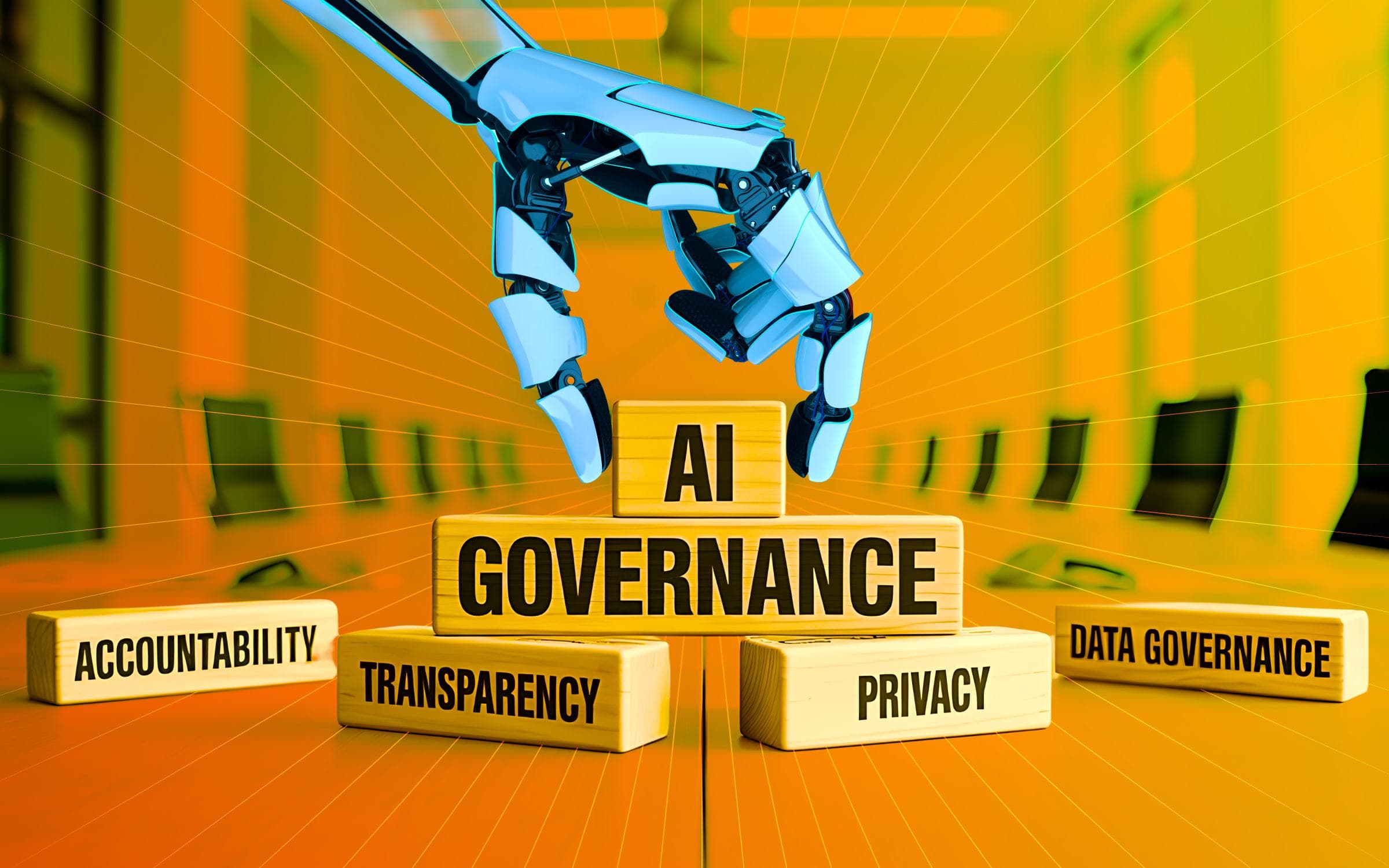
For many customers, the first question they have about an AI-powered product is no longer “What can it do?” It’s “What happens to my data when I use it?”That question is becoming harder for organizations to answer as AI moves deeper into everyday business processes. A customer using an AI assistant, a patient interacting with a healthcare platform or an employee relying on an AI-powered workflow may not know what systems are operating behind the scenes—but they increasingly want to understand how their information is being handled.Where is the data processed? Who has access to it? Is it being used to improve a model? What control does the customer have if they want to change their preferences? These questions are forcing executives to rethink what transparency means in the AI era. A privacy policy alone is no longer enough. Customers want clear explanations, practical choices and confidence that organizations are applying the same principles internally that they communicate externally.Members of the Senior Executive AI Think Tank—a curated group of experts specializing in machine learning, generative AI and enterprise AI applications—say trust will depend on more than meeting regulatory requirements. From stronger governance processes to clearer communication about data use, these leaders share how organizations can build trust while continuing to innovate.












Company details
Tuxedo Cat Consulting
Company bio
Our Approach We build future-ready AI programs tightly aligned with organizational strategy that deliver measurable improvements in both clinical and business outcomes. What We Offer Strategic AI Roadmapping We develop comprehensive AI roadmaps tailored to each organization’s unique needs and strategic priorities. Challenge Identification & Prioritization We identify and prioritize high-impact clinical and business challenges that can be effectively addressed through AI solutions. Strategic Alignment We ensure technology initiatives are fully aligned with business objectives to maximize value and return on investment. Capability Assessment We assess current data assets, IT infrastructure, and internal capabilities to support successful AI adoption. Technology Recommendations We recommend AI technologies and solutions with a rigorous focus on ROI and practical implementation. Regulatory & Ethical Guidance We navigate regulatory, compliance, and ethical considerations to ensure the responsible deployment of AI. Implementation Planning We define clear success metrics and implementation timelines to drive accountability and measurable results.