Skills
About
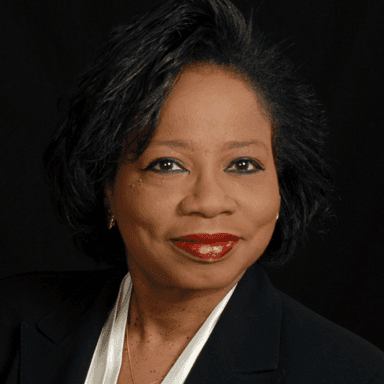
Donna P. Mitchell is The Transformation Authority™ — CEO of Mitchell Universal Network LLC, Forbes Business Council Member, and author of *Pivoting to Technology Adoption: Mind the Gap*. With 48 years of Fortune 500 experience across telecommunications, aviation, airline, healthcare/pharmaceutical, and emerging technology, she has enabled 150,000+ professionals through enterprise-scale technology adoption and organizational transformations — including managing a $7.2B global distribution portfolio at US Airways and 16 years engaging physicians and healthcare systems at Johnson & Johnson. She hosts the Pivoting to Technology Adoption podcast (112+ episodes across 38 countries), featuring executives from Oracle, EY, and Fortune 500 organizations, and advises corporate, healthcare, and mission-driven leaders on closing the technology adoption gap. Her early work in blockchain and Web3 enterprise adoption informs her perspective on emerging technology as the next frontier of the adoption challenge.

Donna Mitchell
Published content

expert panel
Patients do not experience healthcare in isolation. Their expectations are shaped by every other part of their lives—from the speed of a fintech transaction to the ease of online shopping and the proactive communication of a hotel—and the digital healthcare experience is lagging behind. Healthcare leaders may be able to glean key insights from other industries, but which lessons are worth borrowing, and where should they draw the line?In healthcare, patients make decisions that can be emotionally charged, financially consequential and deeply personal, with privacy, clinical judgment and safety influencing every interaction. A tactic that drives conversion in retail can have a very different meaning when applied to someone deciding when and where to seek care. For leaders, the key is to identify what makes other industries' experiences effective and adapt those principles without losing sight of healthcare's higher stakes.Members of the Senior Executive Healthcare Think Tank bring expertise across technology, digital health, systems engineering, telehealth, workforce health and transformation. Their perspectives examine how healthcare can rethink everything from patient navigation and pricing transparency to personalization, communication and data—while also identifying tactics that could undermine patient trust.
expert panel
Healthcare leaders are constantly being asked to do more: adopt new technology, improve efficiency, expand access and deliver better outcomes. But what if the better question is what they should stop doing, rethink or redesign?Members of the Senior Executive Healthcare Think Tank are challenging leaders to look beyond the usual measures of progress. Their perspectives examine whether healthcare processes are designed around patients, whether technology is actually reducing burden, whether clinicians are spending time on work that matters and whether organizations are willing to question structures and practices that no longer serve their purpose.Taken together, their answers make a compelling case for a different approach to healthcare leadership: Before asking how to do more, ask what is worth doing at all. Below, they offer up 11 questions they think healthcare leaders need to be asking, and how those questions could fundamentally improve care.

expert panel
When the COVID-19 pandemic accelerated virtual care adoption almost overnight, healthcare organizations did what they had to do: keep patients connected while protecting them from unnecessary exposure. Video platforms were deployed in weeks instead of years, regulations temporarily relaxed and health systems invested billions of dollars building digital front doors that could sustain care during an unprecedented crisis.Five years later, the conversation has changed. Rather than asking how quickly healthcare can deploy telehealth, leaders are asking whether those investments produced sustainable improvements in patient outcomes, clinician experience and operational performance.Members of the Senior Executive Healthcare Think Tank, a curated community of executives and innovators spanning patient experience, healthcare technology, AI, policy, workforce strategy and care delivery, believe the industry's next chapter depends less on expanding virtual visits and more on redesigning how care is delivered. Below, they discuss where they think the industry overinvested and underinvested in telehealth, and what they’d do differently if they had the opportunity to build it again from scratch.

expert panel
Healthcare organizations face unprecedented pressure to do more with less. Labor shortages, rising costs, shrinking reimbursements and increasing patient expectations are forcing leaders to examine every operational process through the lens of efficiency. Automation, artificial intelligence and outsourcing have become critical tools for preserving margins while maintaining access to care.Yet amid the drive toward optimization, healthcare leaders must answer a fundamental question: What should never be outsourced or automated?Members of the Senior Executive Healthcare Think Tank—a group of experts specializing in patient experience, workforce strategy, healthcare technology, quality, policy and innovation—largely converge on a common answer. While administrative functions, repetitive workflows and operational processes may benefit from automation, the human judgment and relationships at the center of care must remain protected.Their perspectives align with a growing body of research showing that trust, continuity of care and clinician oversight remain critical determinants of patient outcomes even as technology becomes more sophisticated. The challenge for healthcare leaders is not deciding whether to automate, but determining where automation should stop. Think Tank members share their perspectives on the functions that should remain in-house, the risks of removing human oversight from care delivery and the practical steps organizations can take to improve efficiency without compromising patient trust, clinician engagement or quality outcomes.

expert panel
Healthcare organizations are investing billions of dollars in artificial intelligence, automation, analytics and digital transformation. Yet many health systems continue to struggle with implementation, workforce shortages and operational complexity. The challenge is no longer simply acquiring technology but finding professionals who can translate emerging technologies into practical improvements for clinicians, staff and patients.According to the U.S. Bureau of Labor Statistics, healthcare occupations are projected to grow much faster than average over the next decade, creating roughly 1.9 million openings annually. At the same time, healthcare leaders face mounting pressure to improve patient outcomes, reduce administrative burden and integrate rapidly evolving technologies into everyday workflows.To better understand which roles will be most critical by the end of the decade, members of the Senior Executive Healthcare Think Tank shared their perspectives. While their titles for these future positions differ, a common theme emerges: Healthcare's most valuable professionals will be those who bridge clinical care, operations, governance, data and technology.

expert panel
Healthcare investment is no longer flowing evenly across the market. Investors are concentrating capital into a smaller group of healthcare companies that can prove operational maturity, measurable outcomes and scalable economics. According to a 2025 digital health funding overview from Rock Health, fewer companies are capturing larger investments as mega-deals and AI-focused healthcare startups increasingly dominate venture funding.That shift has raised the stakes for both legacy healthcare organizations and emerging startups alike. Companies can no longer rely on broad AI claims, ambitious growth projections or pilot programs without measurable results. Instead, investors are prioritizing reimbursement alignment, interoperability, governance, operational discipline and leadership teams capable of driving adoption at scale.Members of the Senior Executive Healthcare Think Tank—a curated group of leaders specializing in healthcare technology, workforce strategy, patient experience, AI, analytics, policy and operational transformation—say the market now rewards healthcare organizations that demonstrate durable business fundamentals alongside innovation. Their insights reveal how both established healthcare enterprises and up-and-coming disruptors can compete for capital in a market increasingly defined by scrutiny and selectivity.









Company details
Mitchell Universal Network, LLC
Company bio
Mitchell Universal Network, LLC is a media company, PR distribution firm, executive advisory practice, and keynote speaker operation specializing in technology adoption and change management. 70% of technology transformations fail — not because of the technology, but because of adoption. We educate leadership teams on how to close that gap. CEO Donna P. Mitchell, The Transformation Authority™, brings 48 years of Fortune 500 experience across five industries, including a $7.2B portfolio at US Airways and 16 years at Johnson & Johnson. She has enabled 150,000+ professionals through major technology transformations. We serve three pillars: Corporate (Fortune 500 operations), Healthcare (hospital systems, physician networks), and Mission-Driven organizations (faith-based institutions, nonprofits). Services include executive advisory, keynote speaking, podcast and media production (Pivoting to Technology Adoption, 112+ episodes), and press release distribution to 500+ media outlets, including Business Insider, Yahoo Finance, and Bloomberg Terminals, with AI chatbot indexing. Author: Pivoting to Technology Adoption: Mind the Gap (2026)