
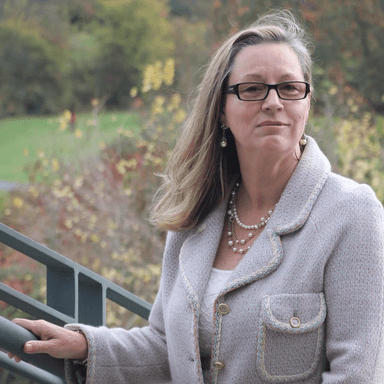
JK Dickinson
Author, Strategic Advisor, and Creator of The Invisible Anatomy™JK Dickinson & Associates
Skills
About
JK Dickinson is an Author, Strategic Advisor, and Creator of The Invisible Anatomy™, with more than 35 years of experience working with startup founders, senior executives, upper-level management, and individuals carrying significant decision-making responsibility. Her work spans medicine, science, technology, finance, business, hospitality, professional sports, entertainment, and the music industry. Much of her private advisory work is conducted with strict confidentiality and discretion. Through decades of observation, experience, and intuitive insight, Dickinson developed The Invisible Anatomy™, a foundation of learning that explores the body’s intuitive sensory system, the influence of the stories we carry, and the extraordinary power of the Human Spirit. A significant part of Dickinson’s work explores how life experiences are received, processed, and carried through the human system, and how memories and experiences can influence stress, behavior, decision-making, relationships, and recurring patterns. Her work examines the relationship between sensory awareness, intuition, internal stories, neural pathways, the vagus nerve, and the body’s response to what we experience throughout life. Dr. Huy Hoang, MD, who contributed the foreword to The Invisible Anatomy™, has written about the relationship between life experiences and the physical, emotional, spiritual, and mental aspects of the human experience, while emphasizing the role of the vagus nerve and neurons within the human system. As Dr. Hoang has stated, “True wellbeing requires attention to the whole person, not simply the symptoms they present.” Dickinson has contributed more than 35 published articles and expert perspectives through Forbes, addressing intuitive leadership, executive decision-making, business strategy, organizational change, human behavior, sensory awareness, and personal leadership. Her professional work has included strategic advisory, leadership development, workshops, training, and speaking engagements with individuals and organizations in the United States and internationally. Organizations connected to her professional work have included Microsoft, Google, Columbia University, Johns Hopkins Medicine, Vulcan, Disney, Pixar, Seattle Sounders, LA Galaxy, YMCA, Bayer Crop Science, Johnson & Johnson, and Giannina Gaslini Institute in Italy. At the center of Dickinson’s work is a simple principle: Human beings possess an extraordinary internal sensory system that deserves to be understood, trusted, and strengthened. Her mission is to help people better understand what already exists within them—their intuition, inner wisdom, Human Spirit, strengths, hopes, stored experiences, and capacity to move through life with greater clarity and confidence.

JK Dickinson
Published content
expert panel
Job stability can provide more than a paycheck. Members of the Senior Executive HR Think Tank explain how employees can use secure roles to develop portable skills, expertise, relationships and career options before they need them.A stable job can create a false sense of permanence. Employees may have a dependable salary, established responsibilities and a clear place in the organization, yet none of that guarantees the role will exist indefinitely.That makes career development more than a retention strategy. It can also be a form of career risk management.The Senior Executive HR Think Tank offers a consistent message: Employees should use periods of stability to build capabilities that remain valuable even when their current positions do not.The need is becoming more pressing as the skills required to perform many jobs continue to change. The World Economic Forum's Future of Jobs Report 2025 finds that employers expect 39% of workers' core skills to change by 2030, while creative thinking, resilience, flexibility and agility remain among the skills expected to grow in importance.For employees, that means the best time to prepare for a career transition may be long before one becomes necessary.

expert panel
Members of the Senior Executive HR Think Tank explore why empathy, self-awareness and compassion are becoming essential leadership competencies and what the shift means for developing and evaluating leaders.Leadership has never been only about strategy, execution or financial results. But as employee expectations continue to change, the way leaders create those results is receiving greater scrutiny. Employees increasingly expect leaders to understand their own impact, recognize the experiences of others and create environments where people can perform without sacrificing trust or humanity.That makes the distinction between “soft skills” and business skills increasingly difficult to defend. Members of the Senior Executive HR Think Tank bring experience across executive leadership, HR, talent acquisition, leadership development and organizational consulting to examine what this means for organizations and how companies can make these competencies part of how leaders are developed, assessed and promoted.The timing matters. Gallup's 2026 State of the Global Workplace report found that global employee engagement fell to 20% in 2025, its lowest level since 2020, while manager engagement fell to 22%. At the same time, a recent Forbes article on workplace trust highlights how trust is built through the everyday ways leaders communicate, connect and follow through. Together, these dynamics raise an increasingly important question: Are self-awareness, empathy and compassion simply “soft skills,” or are they now essential leadership competencies?

expert panel
Aug 31, 2026
Hybrid and distributed work have changed how employees experience connection. Members of the HR Think Tank share how managers can make belonging part of everyday leadership through intentional communication, equitable access, stronger relationships and better work design.For years, organizations could confuse physical proximity with connection. Employees saw one another in hallways, gathered before meetings and absorbed informal information simply by being nearby. Hybrid and distributed work have made it much harder to assume those experiences will happen naturally.That matters because hybrid work remains a durable part of the workplace. Gallup's 2026 tracking shows that 52% of U.S. employees in remote-capable jobs work in hybrid arrangements, while 26% work exclusively remotely.Members of the Senior Executive HR Think Tank say the answer is not to recreate the office online. Instead, managers must deliberately build belonging into how they communicate, distribute opportunities, recognize contributions and design the work itself.
Company details
JK Dickinson & Associates
Company bio
Our company brings together three strategic leadership executives and two medical professionals, offering a multidisciplinary approach to leadership, business, human behavior, wellness, and personal development. We work globally, with a primary focus across the United States, Asia, and Europe, supporting executives, organizations, and individuals navigating leadership, performance, change, and personal growth.