Leadership has never been only about strategy, execution or financial results. But as employee expectations continue to change, the way leaders create those results is receiving greater scrutiny. Employees increasingly expect leaders to understand their own impact, recognize the experiences of others and create environments where people can perform without sacrificing trust or humanity.
That makes the distinction between “soft skills” and business skills increasingly difficult to defend. Members of the Senior Executive HR Think Tank bring experience across executive leadership, HR, talent acquisition, leadership development and organizational consulting to examine what this means for organizations and how companies can make these competencies part of how leaders are developed, assessed and promoted.
The timing matters. Gallup’s 2026 State of the Global Workplace report found that global employee engagement fell to 20% in 2025, its lowest level since 2020, while manager engagement fell to 22%. At the same time, a recent Forbes article on workplace trust highlights how trust is built through the everyday ways leaders communicate, connect and follow through. Together, these dynamics raise an increasingly important question: Are self-awareness, empathy and compassion simply “soft skills,” or are they now essential leadership competencies?
“Each leader needs to develop self-awareness, self-acceptance and self-alignment to ensure they can connect with another person.”

Leadership Starts With the Leader
For Dr. Gregory Stebbins, Founder of PeopleSavvy Inc., human-centered leadership begins internally. Stebbins brings more than four decades of senior business leadership experience, a doctorate from Pepperdine University’s School of Education and Psychology and an MBA in Finance from USC Marshall. His work also draws on decades of studying leadership, human dynamics and wisdom traditions.
“Connecting with another human being, especially someone you are leading, happens through the development of wisdom,” Stebbins says. “Wisdom emerges from within the leader.”
That inward focus matters because empathy without self-awareness can be difficult to sustain. Leaders need to understand their own reactions and motivations before they can consistently respond constructively to others.
“So three aspects need to take place for human-centered leadership,” Stebbins says. “Each leader needs to develop self-awareness, self-acceptance and self-alignment to ensure they can connect with another person.”
He also places compassion and care alongside those capabilities, describing them as essential leadership competencies. The implication for organizations is that leadership development cannot begin and end with technical expertise or functional knowledge. It has to create opportunities for reflection, feedback and greater awareness of how leaders affect the people around them.
These Skills Are Not New, But They Are Hard to Measure
John Cleveland, Advisor and former Chief Human Resources Officer for a global high-tech company, offers an important qualification: Organizations should be careful about describing these competencies as an entirely new leadership requirement.
“Not sure I would consider this a shift,” Cleveland says. “These ‘soft skills’ have always been a leadership competency.”
His perspective is grounded in experience with executive selection and development. Cleveland has worked extensively in total rewards and performance management and has advised organizations on human resources strategy.
“In my experience, we sought executives, via in-depth interviews, with these competencies as well as developed them utilizing professional coaches and feedback tools,” he says.
That distinction matters. The challenge may not be persuading organizations that empathy and self-awareness matter. It may be making them as visible, measurable and developable as the technical competencies traditionally used to select leaders.
“The hard skills are easy to identify, the soft skills more challenging,” Cleveland says.
Organizations therefore have an opportunity to improve the way they assess leadership potential. Structured interviews, 360-degree feedback, coaching and behavioral assessments can help turn qualities that once seemed subjective into observable leadership behaviors.
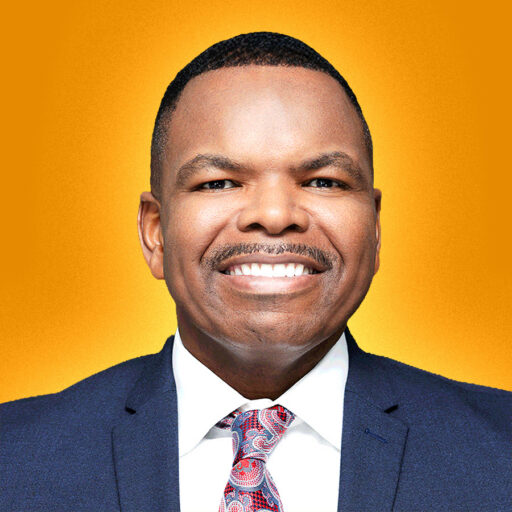
“In today’s high-stakes market, human-centric leadership directly dictates retention, team velocity and enterprise growth trajectory.”
Make Human-Centered Leadership a Business Differentiator
Michael D. Brown, Senior Managing Partner at Global Recruiters of Buckhead, takes the discussion from leadership philosophy to business performance. Brown leads executive search, leadership search, sales and marketing search and human capital coaching and consulting for the firm, bringing more than 20 years of experience across industries including oil and gas, food and beverage, retail and talent development.
Brown says self-awareness, empathy and compassion have moved beyond optional attributes.
“Self-awareness, empathy and compassion are no longer optional ‘soft skills’—they have evolved into core strategic multipliers and non-negotiable elite differentiators for modern leaders,” Brown says.
His argument is particularly relevant for organizations trying to connect leadership behavior to business outcomes.
“In today’s high-stakes market, human-centric leadership directly dictates retention, team velocity and enterprise growth trajectory,” Brown says.
That changes the leadership-development equation. Brown recommends moving away from passive, classroom-style training toward immersive coaching tied to business objectives.
The same principle should apply to evaluation. Rather than judging leaders primarily on immediate output, organizations can examine longer-term indicators such as retention, talent development and sustainable performance.
“Organizations must stop treating these traits as peripheral attributes and start measuring them as essential drivers of enterprise value,” Brown says.
The shift, then, is not about replacing performance expectations with empathy. It is about recognizing that leadership behavior can influence whether organizations retain talent, develop people and sustain performance.
Empathy Must Include Accountability
If self-awareness and empathy are increasingly important, the next question is how organizations avoid reducing human-centered leadership to simply being agreeable.
Steve Degnan, Advisor, Board Member and Former CHRO, emphasizes that empathy is not a new leadership expectation. Degnan spent 20 years as a Chief Human Resources Officer with a leading food and pet food company and now advises organizations and serves on nonprofit boards.
“Leaders may want to revisit Daniel Goleman’s book, Emotional Intelligence: Why it can matter more than IQ, which covers the benefits of empathy at length,” Degnan says.
For him, the need for empathy becomes even more relevant as workplaces navigate growing complexity.
“Increasing mental health concerns at work and the many reported generational differences—some real, others questionable—demand we lead with empathy,” he says.
Degnan also resists the idea that these competencies are simply a response to a temporary workplace trend.
“I think this is an evergreen struggle—these traits were needed in the past, more so now and ever more so as change intensifies,” he says.
That perspective is useful for organizations building leadership systems. Empathy should not be treated as a temporary response to hybrid work, generational change or organizational disruption. It belongs in the broader definition of effective leadership.
Stop Calling Them Soft Skills
Gigi Garcia, Founder and CEO of HR Couch, makes the language issue explicit. An experienced HR executive, consultant and people strategist, Garcia works across organizational development, employee relations, leadership coaching, change management and HR technology. HR Couch is a people-first consulting and coaching firm focused on healthier workplaces, leadership development and organizational transformation.
“They’re not ‘soft skills’ anymore,” Garcia says. “They’re leadership skills.”
That distinction affects what organizations choose to measure. If empathy, self-awareness and emotional intelligence remain categorized as secondary traits, they can easily disappear when promotion decisions become focused on revenue, productivity or other quantitative measures.
“Employees no longer evaluate leaders solely on results,” Garcia says. “They evaluate them on trust, empathy, self-awareness and emotional intelligence.”
Her final point brings the issue directly into performance management.
“Organizations that continue measuring leadership by productivity alone will miss the one metric that matters most: how leaders make people feel while getting results,” Garcia says.
That does not mean organizations should abandon business metrics. It means leadership evaluation needs another dimension: the employee experience created in pursuit of those results.
Build Empathy Without Losing Accountability
Britton Bloch, VP, Global Talent Acquisition Strategy and Head of Recruiting at Navy Federal Credit Union, adds an important layer to the discussion. Her experience in global talent acquisition gives her a direct view into how leadership behavior affects employees’ perceptions of trust, inclusion and opportunity.
“Self-awareness, empathy and compassion are no longer optional ‘soft skills’; they are table stakes for credible leadership,” Bloch says.
But she cautions against interpreting human-centered leadership as avoiding difficult decisions.
“Wholehearted leadership does not mean leading without boundaries or avoiding difficult decisions,” she says. “It means combining emotional connection with clarity, accountability and sound judgment.”
That balance is critical. Employees do not necessarily expect leaders to make every decision they want or eliminate workplace conflict. They expect leaders to handle those moments with fairness, awareness and respect.
Bloch also provides a practical development model.
“Development should include feedback, reflection, coaching, perspective-taking and practice navigating emotionally complex situations,” she says.
Evaluation should follow the same principle.
“Evaluation must also examine how leaders achieve results: whether they build trust, foster inclusion, establish appropriate boundaries, address performance fairly and create conditions in which people and the enterprise can thrive,” Bloch says.
This shifts leadership evaluation from simply asking Did the leader deliver? to also asking How did the leader deliver?
Measure How Leadership Is Experienced
David Grossman, Founder and CEO of The Grossman Group, brings a measurement and communication perspective to the discussion. Grossman is an award-winning author, executive coach and leadership communications expert whose firm advises organizations on internal communications, change management, strategy activation, leadership development and organizational culture.
“Yes, and the data backs this up,” Grossman says. “In research my firm conducted with The Harris Poll, only about 30% of leaders were rated exceptional by their employees.”
The significance, he says, is not simply whether leaders possess empathy but how employees experience their leadership.
“The exceptional ones stood out because of how they made people feel: seen, safe, trusted and connected to a bigger purpose,” Grossman says.
He also rejects the “soft skills” label.
“I’ve stopped calling these soft skills,” he says. “In my experience, they’re the hardest skills to master, and employees consistently tell us they’re what they need most from leaders today.”
For organizations, that means development needs to be experiential, not theoretical.
“Develop these competencies with the same rigor as any business skill, through practice, feedback and accountability,” Grossman says.
And when it comes to evaluation, he recommends looking beyond conventional performance indicators.
“Look at how their people experience them day to day, not just the results they deliver,” Grossman says.
That approach also aligns with current workforce research. Gallup’s 2026 data found that manager engagement fell substantially, with managers accounting for much of the recent decline in overall employee engagement. Gallup also reports that managers play a central role in employee engagement and workplace change.
“The strongest asset an executive leader can possess is a well-balanced mental, emotional and physical foundation. ”

Make Leadership a Whole-Person Discipline
JK Dickinson, CEO, Founder and originator of The Invisible Anatomy, brings the discussion to the broader human experience of leadership. Dickinson has more than 35 years of experience working with senior executives, founders and high-level decision-makers across industries including medicine, science, technology, finance, hospitality, professional sports and entertainment.
“Yes,” Dickinson says. “Self-awareness, empathy and compassion are no longer ‘soft skills’; they are essential leadership competencies.”
She frames these competencies as part of a larger leadership foundation.
“The strongest asset an executive leader can possess is a well-balanced mental, emotional and physical foundation,” Dickinson says. “These qualities are not simply words or personality traits. They require reflection, training, emotional regulation and an understanding of one’s own behavior and impact on others.”
That has implications for both development and evaluation. Organizations can incorporate reflection, emotional regulation, interpersonal judgment and resilience into leadership development instead of treating them as optional personal-growth exercises.
Dickinson also connects leadership behavior to retention.
“Organizations should evaluate leaders not only by results, but by how those results are achieved,” she says.
“The leaders who will stand out are those who not only deliver strong bottom-line results, but also create environments where talented people choose to stay,” Dickinson says.
That provides a fitting endpoint for the discussion. Leadership competencies are not valuable simply because they make leaders appear more empathetic. They matter because they influence trust, culture, performance and whether people want to continue contributing to the organization.
Turning Human-Centered Leadership Into Practice
- Define leadership competencies as observable behaviors. Translate self-awareness, empathy and compassion into behaviors that can be coached, observed and evaluated rather than leaving them as vague personality traits.
- Build reflection and feedback into leadership development. Use coaching, 360-degree feedback, perspective-taking and practice with difficult conversations to help leaders strengthen these capabilities over time.
- Evaluate how results are achieved. Add indicators such as trust, inclusion, fairness, psychological safety, talent development and employee experience to traditional performance measures.
- Keep empathy connected to accountability. Human-centered leadership should include clear expectations, appropriate boundaries, sound judgment and the willingness to make difficult decisions.
- Measure the employee experience of leadership. Regularly gather feedback about how employees experience their leaders, not just whether leaders meet operational or financial targets.
- Treat retention as a leadership signal. Persistent turnover, disengagement or declining trust can reveal leadership problems that conventional performance metrics may miss.
- Prepare leaders for a more human role in AI-enabled work. As technology takes on more execution, leaders will need to spend more time exercising judgment, communicating purpose, supporting change and helping people navigate uncertainty.
- Make these competencies part of the leadership system. If empathy and self-awareness matter, they should influence hiring, promotion, succession planning and performance reviews—not simply appear in leadership workshops.
The New Standard Is How Leaders Deliver Results
Self-awareness, empathy and compassion are not replacing strategy, accountability or performance. The HR Think Tank’s insights point to something more practical: Organizations increasingly need leaders who can deliver results while understanding the human consequences of how those results are achieved.
That makes these competencies less “soft” than they have ever been. As work becomes more complex and technology takes over more execution, the distinctly human dimensions of leadership—judgment, connection, trust, empathy and purpose—may become increasingly central to organizational performance.
MOST POPULAR

AI Is Commoditized—Here's What Sets Great Brands Apart

9 Ways to Measure the Success of Your DEI Strategy
Inspiring Ideas. Actionable Insights.
Senior Executive's Email Newsletters Deliver Fresh Solutions to Today's Leadership Challenges.
Subscribe Free
How AI Companies Can Turn Limited Compute Into an Advantage

9 Great New Ideas for a Better Annual Company Meeting

How to Balance AI Fluency With Human Insight in Marketing Teams