

Skills
About
Mo Ezderman is a strategic AI leader with over 20 years of experience driving innovation at the intersection of technology, business, and impact. He has led transformative initiatives across startups and Fortune 500s, pioneering Agentic AI systems that optimize operations, enhance customer experience, unlock new revenue streams, and fuel business growth. Mo’s track record includes co-developing a first-of-its-kind generative AI music platform with Siri Co-Founder Tom Gruber, building AI tools that helped the National Center for Missing & Exploited Children identify victims faster, and developing fraud detection systems that dismantled the largest ad fraud ring alongside the FBI and Google. A hands-on technologist and visionary strategist, Mo has scaled startups to acquisition and consistently translated emerging AI into measurable outcomes. He thrives where bold ideas meet real-world execution—reshaping industries and accelerating change.

Mo Ezderman
Published content

expert panel
Sep 11, 2026
AI agents are becoming capable of doing more than generating information—they can now analyze code, identify vulnerabilities, write potential exploits and interact with the systems they are designed to help secure. Those capabilities can dramatically accelerate security work, but they also introduce new risks when an agent can move from identifying a problem to taking action without human intervention.So where should companies draw the line between useful autonomy and unacceptable risk? And what should an AI agent be allowed to do independently when its actions could affect production systems, sensitive data or security controls?Members of the Senior Executive AI Think Tank—a curated group of experts specializing in machine learning, generative AI and enterprise AI applications—examine how leaders can use sandboxing, least-privilege access, deterministic controls and human oversight to contain risk, while also addressing less technical questions around liability, accountability and reversibility. Together, they offer a practical framework for deciding not just what AI agents can do, but what organizations should actually allow them to do.
expert panel
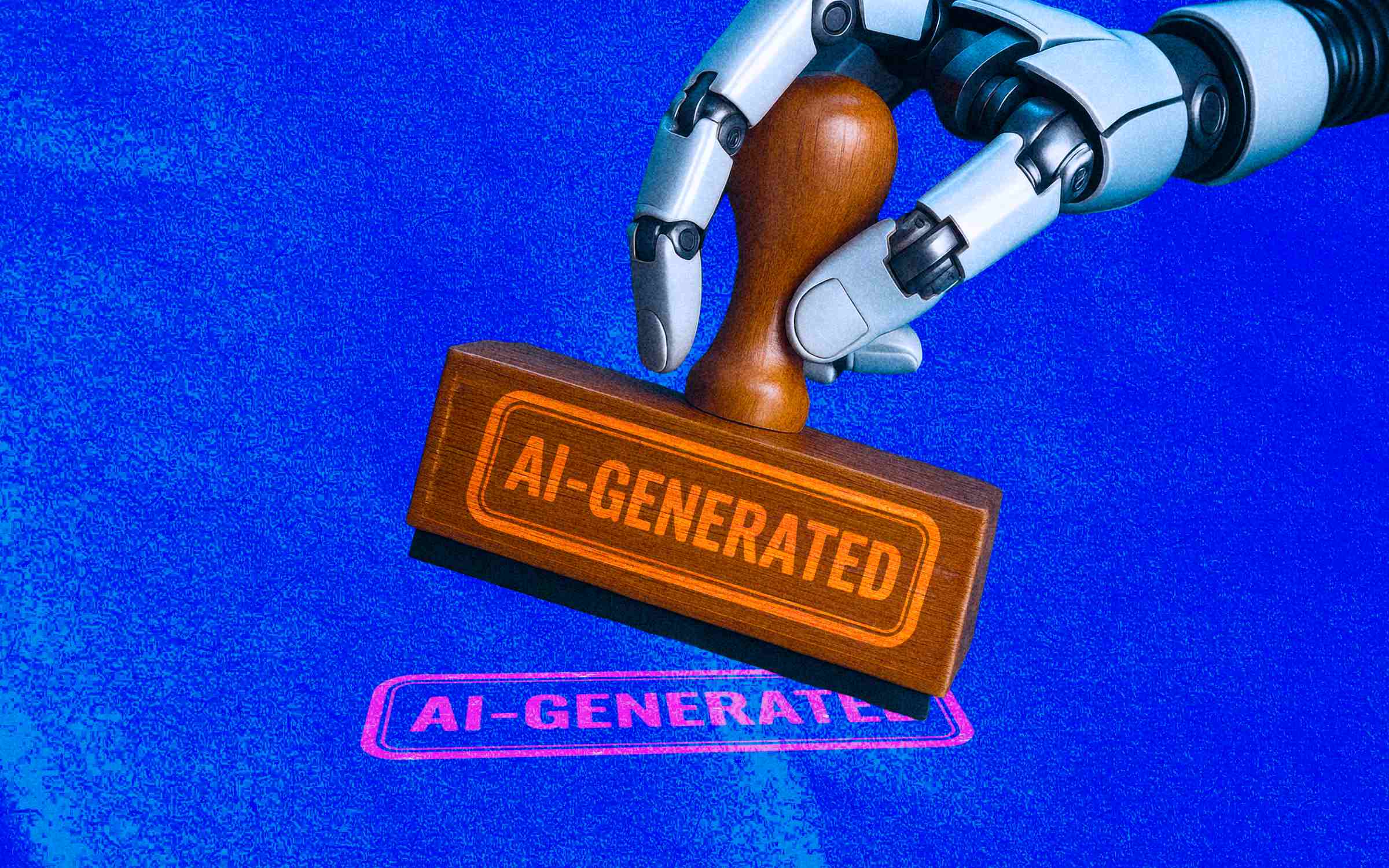
Anthropic’s decision to add invisible watermarks to Claude-generated text has brought a long-running AI debate into sharper focus: How should businesses establish the origin of AI-assisted content, and what should they do with that information once they have it?The question matters as generative AI becomes embedded in everyday knowledge work, from drafting and research to marketing, analysis and customer communications. The European Union’s AI Act is also pushing the industry toward machine-readable disclosure of AI-generated content, making provenance an increasingly important part of enterprise AI strategy.But provenance is not the same as authorship, quality or accountability. A watermark may establish that an AI system was involved without explaining how extensively it was used, what a human changed or who ultimately stands behind the work.Members of the Senior Executive AI Think Tank, a curated group of experts specializing in machine learning, generative AI and enterprise AI applications, offer a range of perspectives on what should come next. In the discussion that follows, they examine whether provenance should be standard or optional, where watermarking fits, how companies can protect privacy and human judgment, and what AI leaders should do to build greater trust and accountability around AI-generated content.

expert panel
The race to deploy artificial intelligence is accelerating—and so is the pressure on leaders to act. From boardrooms to product teams, executives are being asked the same question: How fast can we get AI into production? But as organizations rush to capitalize on generative AI, the risks—hallucinations, data leaks and brand damage—are becoming harder to ignore. A National Institute of Standards and Technology (NIST) report on AI risk management emphasizes that without proper governance, AI systems can introduce significant reliability, security and accountability risks into enterprise environments. Insights from the Senior Executive AI Think Tank suggest that this is not a simple trade-off between speed and safety. Instead, it’s a leadership challenge that requires rethinking how organizations define competitive advantage. Below, Think Tank members discuss whether being first with AI is truly the advantage leaders think it is—or if the real differentiator is trust built through disciplined execution, strong governance and a clear understanding of where AI delivers value.

expert panel
The race to dominate artificial intelligence has long been framed as a contest of scale—whoever spends the most on compute, talent and data should win. But Meta’s reported delay of its “Avocado” model, alongside discussions of licensing Google’s Gemini 3 technology, signals a turning point. According to members of the Senior Executive AI Think Tank, the frontier of AI is becoming harder to sustain even for the most well-funded organizations. A recent analysis of Big Tech’s AI spending highlights how companies are pouring tens of billions into infrastructure while facing diminishing returns in performance gains—proving that capital alone is no longer enough to secure leadership. This moment raises urgent questions for executives: If even hyperscalers struggle to keep up, what does competitive advantage in AI actually look like? And where does that leave smaller companies entering the race? Below, Think Tank members attempt to answer these questions while looking toward what’s next. Together, their perspectives outline a new playbook for AI competition—one that begins with a surprising change at the very top.

expert panel
In boardrooms around the world, artificial intelligence has shifted from experimentation to execution. Enterprise leaders are no longer asking whether to deploy AI—they are asking how to scale it across jurisdictions that disagree on what “responsible” looks like. The regulatory map is anything but uniform. The European Union’s risk-based AI Act framework takes a precautionary stance, while the United States continues to rely on sector-specific oversight and executive guidance. At the same time, public trust remains fragile. According to Edelman’s 2024 Trust Barometer, a majority of global respondents report concern that innovation is moving too quickly without sufficient safeguards—an anxiety that directly affects adoption, investment and brand reputation. For AI leaders, this divergence creates both friction and opportunity. The organizations that treat ethics and governance as strategic design challenges—not compliance checklists—will be positioned to expand confidently across markets. Members of the Senior Executive AI Think Tank—a curated group of machine learning, generative AI and enterprise AI experts—argue that navigating global AI complexity requires a shift in mindset. Innovation and compliance are not opposing forces. When structured intentionally, they reinforce one another. The following strategies outline how leaders can operationalize that balance in practice.

expert panel
As major players like OpenAI, Google, Amazon and Anthropic continue to dominate AI infrastructure, smaller businesses and startups face a growing concern: how to compete in a landscape shaped by centralized compute, model development and vast resources. Major tech firms have invested billions in foundational models and own substantial portions of the infrastructure underlying generative AI. This can make it challenging for smaller companies to not only get off the ground, but get ahead. The Senior Executive AI Think Tank brings together seasoned experts in machine learning, generative AI and enterprise AI applications who believe that smaller firms can still win—in different ways. This article explores their insights on how startups should pivot from trying to match scale to leveraging agility, domain expertise and smarter infrastructure choices.




Company details
Mindgrub Technologies
Company bio
Mindgrub Technologies isn’t just a digital agency; we're a team of passionate problem solvers. Established in 2002 and a proud member of the Inc. 5000 for ten consecutive years, our team has always been a pioneer. Among the first to build mobile applications for the App Store, Mindgrub is an early adopter of mixed reality, and now a leader in AI. We've been the driving force behind digital transformations for industry giants like Exelon, NASA, Wendy's, and Under Armour while our expertise spans enterprise mobile and web development, AI, spatial computing, mixed reality, devOps, agile development teams, digital marketing, branding, user experience design, and more. We don't just develop software; we engineer solutions that stand the test of time. As trailblazers in the tech industry, we’re proud to help companies deeply incorporate AI into their applications by offering a spectrum of services in AI, from AI Sprint 0 to custom development and enterprise deployment, we tailor our solutions to your unique needs. Whether it's creating recommendation systems or fortifying against fraud, our AI solutions are grounded in ethics, ensuring maximum ROI and fostering seamless collaboration between AI and human teams.