

Skills
About
By listening deeply, I help clients get to the heart of their challenges and passions. You can count on my energy, authenticity, humor, and humility. I started my career working in organizational design and development and spent over 28 years in both corporate and consulting leadership roles before earning a coaching certification from the Coaches Training Institute and becoming a PCC credentialed coach with the International Coach Federation. My business experience adds instant value for my clients. Favorite Project: Founding LEVATA with my partners. We've built a company that operates based on our shared belief in the power of people and the outcomes that come from placing people first. We invite our people to bring their whole selves to work in service of others. Even our hardest days together are full of moments that matter...making me smile.

Amy Douglas
Published content

expert panel
Members of the Senior Executive HR Think Tank share employee recognition strategies that help leaders make appreciation timely, personal and meaningful while connecting everyday contributions to employee growth and retention.Employee recognition is easy to celebrate during an annual awards ceremony. The greater leadership challenge is making people feel valued on an ordinary Tuesday, when a colleague solves a difficult problem, a team member helps someone succeed or an employee quietly prevents a setback. Those contributions may never earn a trophy, but they can shape how people experience their work and whether they feel their efforts matter.Research supports the importance of getting recognition right. A Gallup and Workhuman study found that employees who feel well-recognized are 45% less likely to have left their organizations two years later. Recognition, then, is more than a morale booster. It can help organizations retain talent and reinforce the behaviors they want to see.Members of the Senior Executive HR Think Tank, a curated group of human resources and leadership experts, emphasize that meaningful recognition does not depend on an elaborate program or expensive rewards. It starts with leaders who pay attention, understand individual preferences, acknowledge contributions promptly and ensure that appreciation translates into lasting opportunities.

expert panel
Workplace loyalty has evolved beyond long tenure and unquestioning commitment. Members of the Senior Executive HR Think Tank explain why trust, fair treatment, career development and reciprocal accountability are essential to building lasting employee relationships in today's changing job market.For generations, workplace loyalty was measured by how long employees stayed with an employer. Long tenure signaled commitment and employers were expected to offer stability, advancement and security in return. Today, restructuring, layoffs, changing career expectations and evolving business models have made that traditional arrangement less predictable. Employers still need committed employees, but they can no longer assume lasting loyalty comes automatically with a job offer.Research reinforces the need to rethink the employee-employer relationship. A Pew Research Center survey found that only 30% of U.S. workers were highly satisfied with their pay and just 26% were highly satisfied with their opportunities for promotion. Those figures point to areas where employers can strengthen the employee experience rather than rely on tenure as evidence of commitment.Members of the Senior Executive HR Think Tank, a curated group of human resources and leadership experts, see loyalty as a two-way relationship grounded in trust, fairness, development and meaningful work. Their insights offer a practical framework for leaders seeking to retain valuable talent, preserve institutional knowledge and build workplaces where employees choose to contribute because the relationship continues to serve both sides.

expert panel
Solopreneurs can replace the accountability of a traditional workplace with measurable goals, outside support, regular reviews and systems designed to make commitments harder to ignore. Insights from members of the Senior Executive HR Think Tank show how independent professionals can stay focused without becoming their own worst boss.Working without a manager offers greater freedom, but it also removes many of the structures that make follow-through easier. No supervisor is checking deadlines, no colleague is flagging a missed commitment and no team meeting is prompting a progress update.That makes self-accountability less about having extraordinary discipline and more about deliberately building the structures that a workplace would normally provide. Members of the Senior Executive HR Think Tank bring perspectives spanning organizational psychology, leadership, recruiting, culture and career development to the question of how independent professionals can create those structures for themselves.Recent Gallup research reinforces the importance of the issue: In a survey, creating accountability ranked as the lowest-rated of seven leadership competencies, with just 46% of leaders rating themselves "exceptional or outstanding" at holding people responsible for exceptional performance. If accountability can be difficult even inside organizations with managers and teams, solopreneurs have even more reason to intentionally design it into their work.The experts suggest several ways to do that, from building a personal support network and creating financial consequences to making goals public, tracking measurable outcomes and protecting time for meaningful work.

expert panel
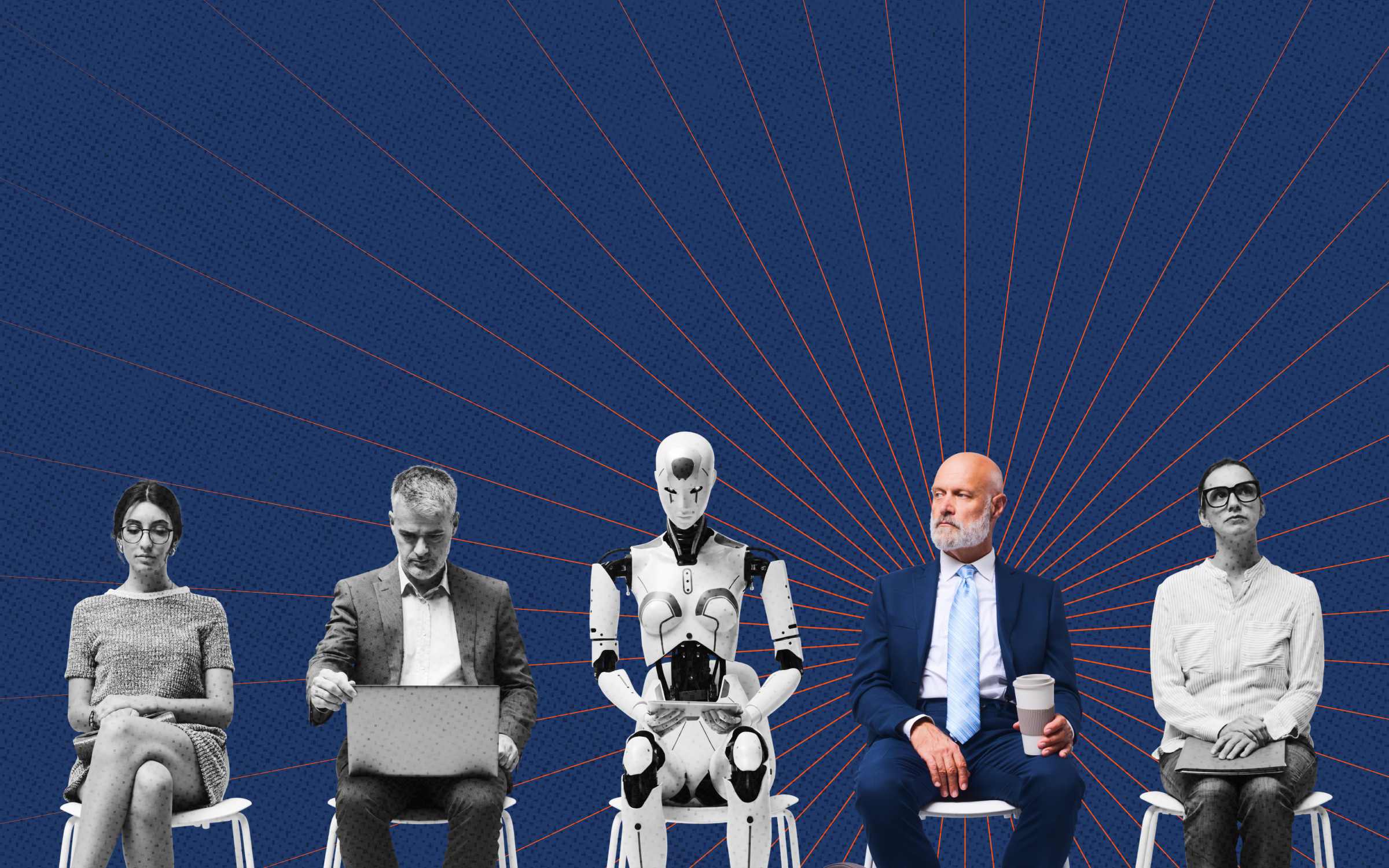
As AI takes on more recruiting tasks, HR leaders must decide where automation should stop, and human accountability should begin. Members of the Senior Executive HR Think Tank explain when candidates deserve human judgment, communication, transparency and a meaningful opportunity to challenge an automated decision.Hiring has always involved a tension between efficiency and humanity, but artificial intelligence is pushing that tension into new territory. AI can now help screen resumes, identify candidates, generate job descriptions and automate communication. According to LinkedIn's 2025 Future of Recruiting report, 37% of recruiting organizations are actively integrating or experimenting with generative AI, while 73% of talent-acquisition professionals say AI will change the way organizations hire.That makes the question less about whether companies should use AI and more about where responsibility belongs when technology affects someone's opportunity. Members of the Senior Executive HR Think Tank bring perspectives spanning talent acquisition, organizational leadership, career coaching, workplace culture and HR technology.Across their responses, one principle emerges: AI can take on more of the process, but companies cannot automate accountability.

expert panel
Job stability can provide more than a paycheck. Members of the Senior Executive HR Think Tank explain how employees can use secure roles to develop portable skills, expertise, relationships and career options before they need them.A stable job can create a false sense of permanence. Employees may have a dependable salary, established responsibilities and a clear place in the organization, yet none of that guarantees the role will exist indefinitely.That makes career development more than a retention strategy. It can also be a form of career risk management.The Senior Executive HR Think Tank offers a consistent message: Employees should use periods of stability to build capabilities that remain valuable even when their current positions do not.The need is becoming more pressing as the skills required to perform many jobs continue to change. The World Economic Forum's Future of Jobs Report 2025 finds that employers expect 39% of workers' core skills to change by 2030, while creative thinking, resilience, flexibility and agility remain among the skills expected to grow in importance.For employees, that means the best time to prepare for a career transition may be long before one becomes necessary.

expert panel
Customers increasingly expect companies to anticipate their needs and make interactions seamless. Members of the HR Think Tank explain how employers can apply those principles to the employee experience while preserving human connection, autonomy, trust and belonging.Consumers have become accustomed to experiences that anticipate their needs, remove unnecessary friction and adapt to individual preferences. That expectation is increasingly finding its way into the workplace, where employees encounter everything from personalized learning recommendations to flexible benefits and technology-enabled HR services.But applying customer experience principles to employees has an important limit: Employees are not simply consumers of an internal service. They are participants in an ongoing relationship with their organizations.That distinction is central to the advice from members of the Senior Executive HR Think Tank, a curated group of HR leaders, consultants and workplace experts. Their perspectives suggest that the best employee experiences borrow the principles of customer experience, such as clarity, responsiveness, personalization and ease, without adopting a transactional mindset.Deloitte's 2025 Global Human Capital Trends research supports that balance. The report found that 67% of leaders consider customizing work and workforce practices around employees' skills, motivations, passions and work styles important. Yet only 5% said their organizations were leading in using technology to hyper-personalize how they influence workers. Deloitte also emphasizes that personalization must be balanced with employee autonomy and responsible data practices.













Company details
Levata Human Performance
Company bio
At LEVATA Human Performance®, our integrated approach is built on four essential ingredients: the people who drive your mission, the work that needs structure and flow, the change you’re navigating, and the culture and systems that shape every experience. We partner with forward-thinking leaders to turn human potential into real-world impact, because when people thrive, transformation follows.