

Skills
About
Divya Parekh, a Thinkers50-recognized leadership coach and AI adoption advisor, is a strategic founder and executive partner who helps leaders and organizations build future-ready performance in an AI-accelerated world. She blends executive coaching, leadership development, and practical AI integration to increase decision velocity, strengthen execution, and create cultures built on clarity and accountability. Her work bridges strategy and psychology with real-world systems leaders can actually use, turning complexity into focused action and measurable results.

Divya Parekh
Published content

expert panel
AI progress is often reduced to a leaderboard: a model scores higher on reasoning, coding or multimodal benchmarks, and the industry moves on to the next release. But benchmarks are snapshots of what a model can demonstrate under controlled conditions. They do not always capture what happens when increasingly capable models are connected to an organization’s data, software, physical environments and decision-making processes.The 2026 AI Index from Stanford HAI reports that frontier AI capabilities are advancing faster than many established benchmarks can measure, with some evaluations reaching saturation within months.Members of the Senior Executive AI Think Tank see a similar pattern from the front lines of enterprise AI, machine learning, robotics, cybersecurity, cloud technology and digital product development. They point to a broader question for business leaders: What are today’s most capable AI models beginning to do that could matter far more than benchmark gains suggest? Here, they explore the emerging capabilities they believe deserve closer attention—and what those developments could mean for the way organizations build products, make decisions and operate in the years ahead.
expert panel
Sep 18, 2026
Startup fundraising has always followed a familiar formula: build the product, prove traction, raise enough money to reach the next milestone.But AI is disrupting that formula. Models change quickly, inference costs fluctuate, enterprise sales cycles can stretch for months and today’s breakthrough feature can become tomorrow’s commodity. The assumptions behind a traditional runway or growth plan can change before a company reaches its next round.That means AI founders need to rethink what they are raising capital to prove. Is it customer demand? Technical feasibility? Sustainable unit economics? Enterprise readiness? Or a durable advantage that can survive the next model release?Founders shouldn’t just consider how much money their startup can raise, but what that capital needs to accomplish—and what evidence it should produce along the way.Members of the Senior Executive AI Think Tank—a curated group of executives and practitioners working across machine learning, generative AI and enterprise AI applications—share the fundraising advice they believe AI founders should leave behind, from chasing maximum capital to relying too heavily on traditional traction, and what investors should see instead.

expert panel
In the past, the easiest way to talk about a technology investment has been to put a number on it: How much did it cost, and what did the company get back? With AI, that calculation is becoming harder to take at face value.An AI system can save thousands of hours without reducing headcount. It can help employees make better decisions without generating an immediately measurable dollar value. It can turn a successful pilot into a new way of working—or quietly remain a one-off experiment that never scales. And it can change who holds critical expertise inside an organization, with consequences that may not appear on a balance sheet for years.That raises a more consequential question for CEOs: What should you measure if you want to know whether your AI strategy is actually making the organization better?Members of the Senior Executive AI Think Tank, a curated group of experts specializing in machine learning, generative AI and enterprise AI applications, suggest that CEOs shouldn't abandon ROI—but here are the other metrics they recommend measuring to capture not only what AI delivers today, but what it enables the organization to become.

expert panel
For AI companies operating across borders, the question of where data lives is getting harder to separate from the question of how AI gets built and delivered.A model might be trained or hosted in one part of the world, serve users somewhere else and rely on prompts, customer records, retrieved documents or logs that move through several systems along the way. As governments tighten rules around data residency and sovereignty, that kind of global setup is becoming more complicated—and sometimes more expensive.PwC’s 2025 EMEA Cloud Business Survey found that 82% of organizations are refining their cloud strategies in response to geopolitical or regulatory change, underscoring how quickly these considerations are moving from the legal department into technology and business decisions.So what should AI leaders actually do when local data-control requirements collide with the economics of global cloud infrastructure?Members of the Senior Executive AI Think Tank—a curated group of experts specializing in machine learning, generative AI and enterprise AI applications—approach the question from different angles. Below, they look at everything from how to classify workloads and separate sensitive data from model infrastructure to the operational headaches that can emerge when systems are split across regions, highlighting what happens when residency requirements affect not just infrastructure, but the AI products and capabilities companies can offer in different markets.
expert panel
Anthropic’s decision to add invisible watermarks to Claude-generated text has brought a long-running AI debate into sharper focus: How should businesses establish the origin of AI-assisted content, and what should they do with that information once they have it?The question matters as generative AI becomes embedded in everyday knowledge work, from drafting and research to marketing, analysis and customer communications. The European Union’s AI Act is also pushing the industry toward machine-readable disclosure of AI-generated content, making provenance an increasingly important part of enterprise AI strategy.But provenance is not the same as authorship, quality or accountability. A watermark may establish that an AI system was involved without explaining how extensively it was used, what a human changed or who ultimately stands behind the work.Members of the Senior Executive AI Think Tank, a curated group of experts specializing in machine learning, generative AI and enterprise AI applications, offer a range of perspectives on what should come next. In the discussion that follows, they examine whether provenance should be standard or optional, where watermarking fits, how companies can protect privacy and human judgment, and what AI leaders should do to build greater trust and accountability around AI-generated content.
expert panel
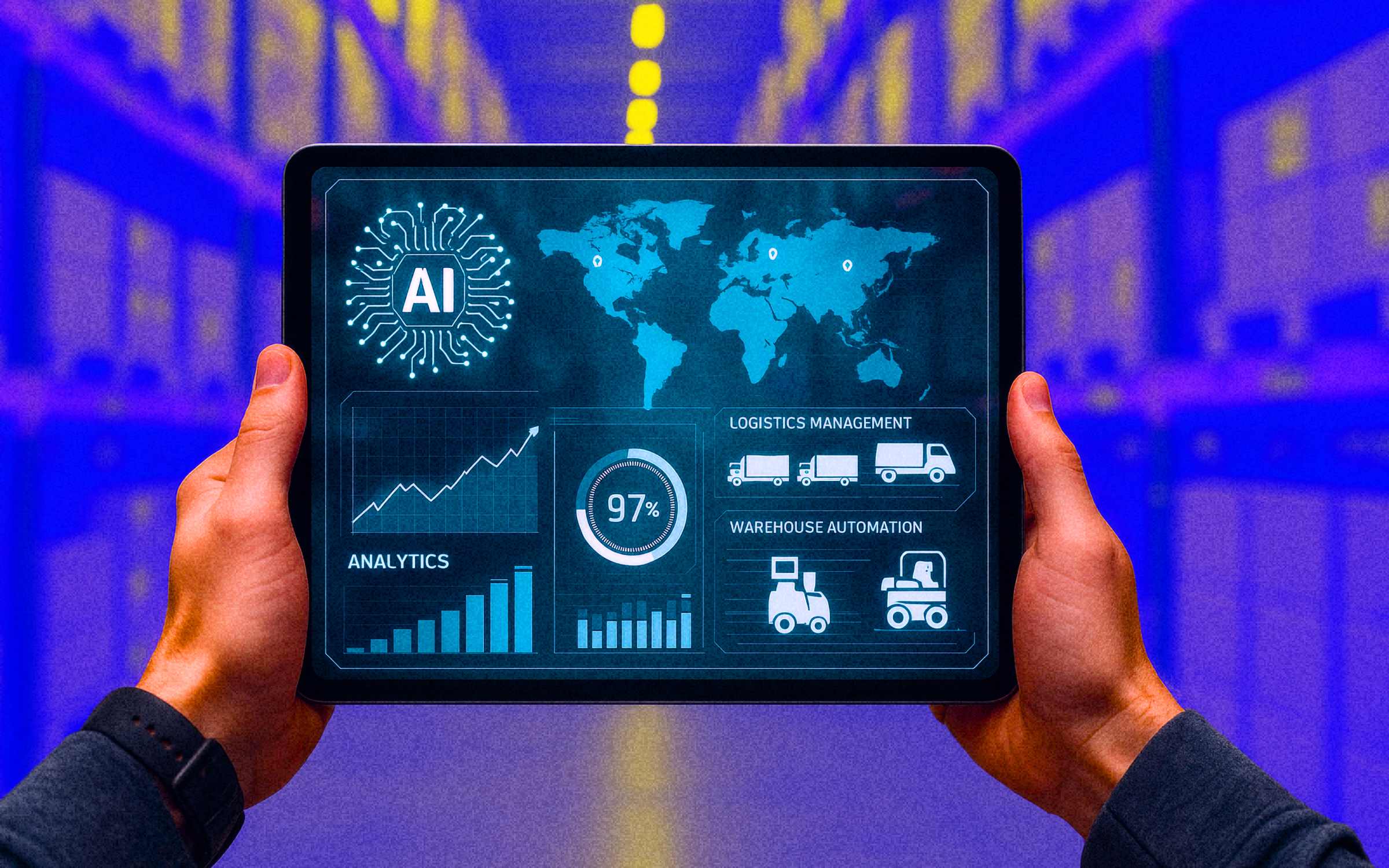
Supply chains have historically been designed around a simple premise: Build the best possible plan, then execute it as efficiently as possible. Artificial intelligence has made those plans smarter, helping companies forecast demand more accurately, optimize transportation routes and reduce inventory costs. But those improvements, while significant, still operate within the same playbook.The next chapter looks fundamentally different.Rather than simply making existing processes faster or cheaper, AI is beginning to reshape how supply chains are designed, managed and even governed. Emerging technologies such as agentic AI, digital twins and real-time decision engines can continuously evaluate changing market conditions, simulate alternative scenarios and recommend—or in some cases execute—responses before disruptions ripple across the business. In this model, supply chains become adaptive systems rather than static networks.The business case for that evolution is growing stronger. Gartner predicts that by 2030, half of supply chain management solutions will incorporate agentic AI capable of making autonomous cross-functional decisions, reflecting a broader shift from automation to intelligent orchestration. At the same time, geopolitical instability, changing trade policies and increasingly unpredictable customer demand are forcing organizations to rethink resilience as a competitive advantage—not just an operational objective.Against this backdrop, members of the Senior Executive AI Think Tank, a curated community of leaders specializing in machine learning, generative AI and enterprise AI applications, see a common theme emerging. The greatest transformation will not come from AI replacing planners or optimizing another workflow. Instead, they argue, AI is becoming the connective tissue that links procurement, manufacturing, logistics, finance and leadership into continuously learning decision systems. That shift promises to redefine not only how supply chains operate but also how organizations make decisions, assign accountability and create value in an increasingly uncertain world.
























Company details
THE DP GROUP, LLC
Company bio
The DP Group is a leadership and management consulting firm that helps executives and organizations build AI-ready performance systems while protecting the human core that drives results. We partner with CEOs and senior leaders to reduce noise, accelerate decision-making, and embed practical AI into everyday execution, from communication and planning to performance management and strategic delivery. The work is both strategic and deeply human: we strengthen clarity, accountability, and culture so leaders can drive outcomes without burning out their people or eroding trust. The result is measurable and felt: faster execution, sharper priorities, stronger leadership presence, and teams that can move with confidence in an AI-accelerated world.