About
Jim Liddle is a serial entrepreneur, executive leader, and technologist with 25+ years building and scaling companies from the ground up, from early product code to global market success. Liddle successfully exited a previous venture to a leading cloud storage / data management unicorn. Experienced across full business lifecycles: founding, fundraising, scaling, and exit. A seasoned speaker on AI and Data Strategy, he focuses on how organizations can responsibly and effectively implement AI, from initial data strategy to AI Use Cases, Infrastructure and Governance. Hands-on with emerging technology, Liddle stays close to the detail of how AI, data, and architecture converge to drive innovation, efficiency, and growth in the enterprise.

Jim Liddle
Published content
expert panel
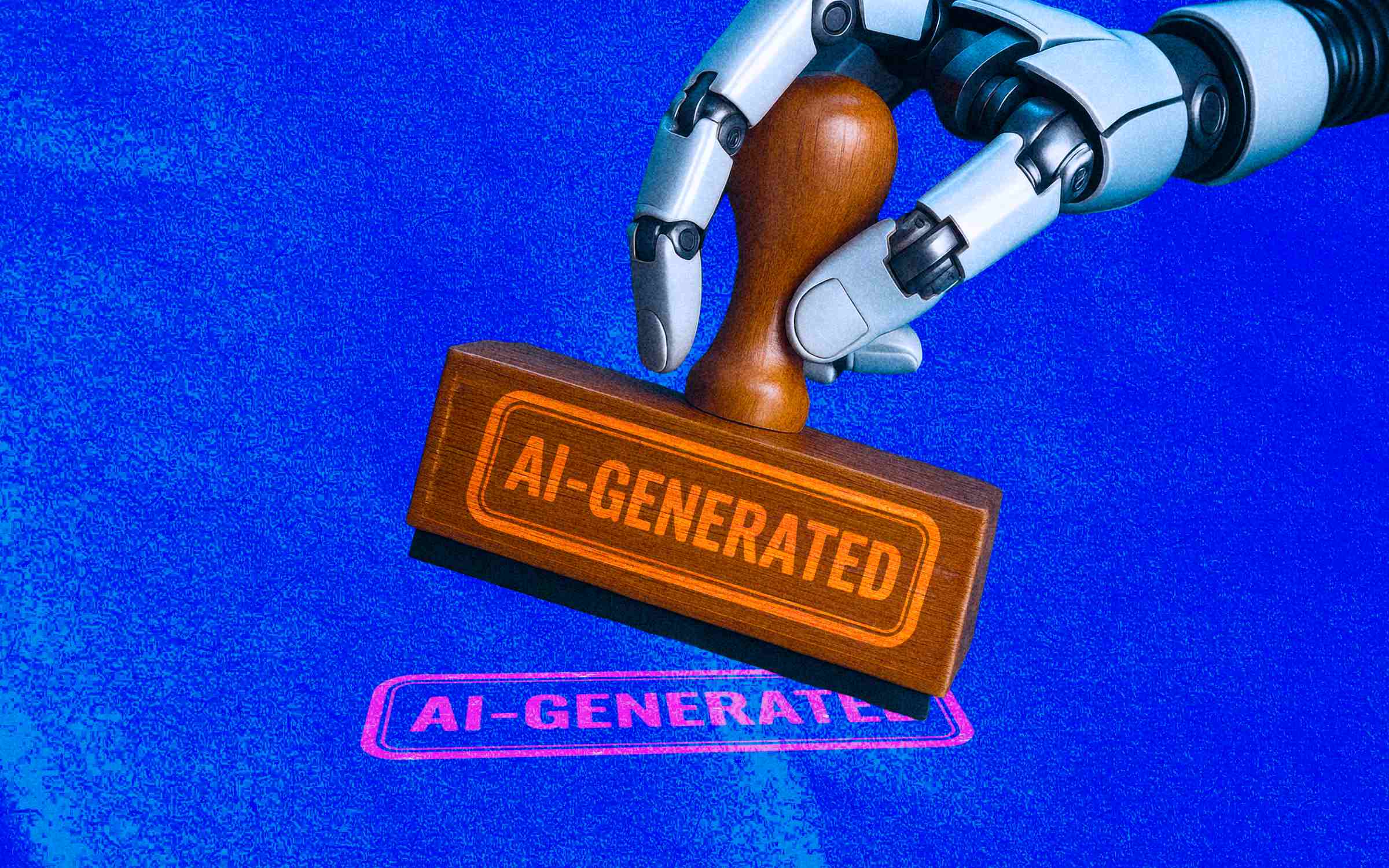
Anthropic’s decision to add invisible watermarks to Claude-generated text has brought a long-running AI debate into sharper focus: How should businesses establish the origin of AI-assisted content, and what should they do with that information once they have it?The question matters as generative AI becomes embedded in everyday knowledge work, from drafting and research to marketing, analysis and customer communications. The European Union’s AI Act is also pushing the industry toward machine-readable disclosure of AI-generated content, making provenance an increasingly important part of enterprise AI strategy.But provenance is not the same as authorship, quality or accountability. A watermark may establish that an AI system was involved without explaining how extensively it was used, what a human changed or who ultimately stands behind the work.Members of the Senior Executive AI Think Tank, a curated group of experts specializing in machine learning, generative AI and enterprise AI applications, offer a range of perspectives on what should come next. In the discussion that follows, they examine whether provenance should be standard or optional, where watermarking fits, how companies can protect privacy and human judgment, and what AI leaders should do to build greater trust and accountability around AI-generated content.

expert panel
More than 200 economists, AI researchers and technology leaders recently signed the "We Must Act Now" statement, warning that artificial intelligence could reshape the global economy faster than the Industrial Revolution. While the statement calls for stronger institutions and guardrails, it also raises a more immediate question for executives: What should leaders actually do today?Members of the Senior Executive AI Think Tank believe the answer extends well beyond adopting the latest AI tools. Drawing on decades of experience leading enterprise AI, cloud infrastructure, digital transformation and technology strategy, these experts argue that organizations must rethink work itself—redesigning processes, investing in people and establishing governance before AI scales across the enterprise.Their advice comes as organizations accelerate adoption. According to McKinsey's latest State of AI research, AI adoption continues to expand rapidly across industries, with organizations increasingly reporting measurable business impact. Yet the same research also highlights persistent challenges around governance, workforce readiness and risk management, reinforcing the need for thoughtful leadership rather than technology-first decision-making.The following insights from members of the Senior Executive AI Think Tank reveal a consistent message: Organizations that treat AI as a catalyst for better decision-making, stronger employees and more resilient businesses—not simply a cost-cutting exercise—will be best positioned to thrive as AI transforms the economy.

expert panel
For decades, innovation hubs emerged through a relatively organic mix of academic excellence, entrepreneurial culture, venture capital and geographic density. Silicon Valley became the archetype because talent, capital and ambition concentrated naturally over time. That model is changing. Today, nations and hyperscalers are deliberately constructing AI ecosystems through multibillion-dollar infrastructure investments, workforce initiatives, cloud agreements and regulatory partnerships. Microsoft’s recent multibillion-dollar commitment to expand AI and cloud infrastructure in Australia illustrates how governments and technology companies are increasingly collaborating to shape national AI capacity and digital sovereignty. According to the Stanford AI Index Report, nations are increasingly treating AI infrastructure, semiconductor access and compute capacity as matters of economic and geopolitical strategy. Members of the Senior Executive AI Think Tank say this evolution signals something much larger than a technology boom. It reflects a geopolitical realignment in which compute, chips, data governance and workforce development are becoming instruments of economic and political influence. Here, they explore how engineered AI hubs are reshaping economic power, redefining digital sovereignty and determining which nations and organizations may ultimately control the future AI ecosystem.

expert panel
Across industries, executives are investing aggressively in artificial intelligence. Yet despite billions spent on experimentation, relatively few organizations have turned AI pilots into scalable platforms that generate repeatable value. According to PwC’s Global CEO Survey, 56% of CEOs report they’ve seen neither revenue nor cost benefits from investments in AI—a signal that experimentation alone is not enough to create enterprise impact. Members of the Senior Executive AI Think Tank—a curated group of leaders specializing in enterprise AI, machine learning and digital transformation—say the problem is rarely technical. Instead, organizations struggle with leadership alignment, operating models, governance and cultural change. Below, their insights reveal a consistent theme: Scaling AI requires redesigning how companies operate—not simply deploying more technology.

expert panel
AI tools are proliferating across enterprises at unprecedented speed. Yet implementation does not guarantee adoption. According to a McKinsey report on generative AI adoption, while organizations are investing heavily, many struggle to translate experimentation into sustained value. The gap is rarely technical—it is behavioral. Members of the Senior Executive AI Think Tank, a curated group of experts in enterprise AI, generative AI and machine learning strategy, agree: whether AI becomes a trusted decision-support system—or a tool employees quietly resist—depends largely on the signals sent by the C-suite. Executives shape consequence structures, model risk tolerance, determine measurement standards and define what success looks like. In short, employees learn how to treat AI by watching how leaders treat it. Below, Think Tank members share what C-suite leaders most often get wrong—and what they must do differently to ensure their organizations gain real, measurable value from AI.
expert panel
For many workers, learning artificial intelligence tools has quietly become “a second job”—one layered onto already full workloads, unclear expectations and rising anxiety about job security. Instead of freeing time and cognitive energy, AI initiatives often increase pressure, leaving employees feeling overworked or even disposable. A 2024 McKinsey report on generative AI adoption found that employees are more likely to experience burnout when AI tools are introduced without role redesign or workload reduction, even as productivity expectations rise. Similarly, a recent study from The Upwork Research Institute reveals that while 96% of execs expect AI to improve worker productivity, 77% of employees feel it’s only increased their workload (with an alarming 1 in 3 employees saying they will quit their jobs within the next six months due to burnout). Members of the Senior Executive AI Think Tank—a curated group of leaders in machine learning, generative AI and enterprise AI applications—note that this growing problem is not necessarily due to employee resistance or lack of technical ability, but how organizations sequence AI adoption, structure learning and communicate intent. Below, Think Tank members offer a clear roadmap for introducing AI as a system-level change—not an extracurricular obligation—to help ensure this technology empowers people rather than exhausts them.