

Skills
About
Nicole Cable is a transformative Chief People & Experience Officer and founder of her own human experience consultancy, bringing more than two decades of executive leadership across healthcare, hospitality, and customer-centric organizations. She blends strategic HR expertise with deep knowledge in patient experience, culture strategy, and measurement to help organizations improve outcomes for both the people they serve and the people they employ. Known for building high-performing cultures and human-centered operating models, Nicole has led large-scale change initiatives, operational turnarounds, IPO readiness, and award-winning employee and customer experience programs. She has also partnered with venture capital and private equity groups to build scalable people systems, strengthen governance, and align talent strategy with enterprise-level growth and investment goals. Her work spans talent strategy, DEI, compliance, learning & development, and experience innovation—always grounded in empathy, accountability, and results. A sought-after voice in the industry, Nicole serves on national and global boards, advises C-suites, and contributes thought leadership to Becker’s Healthcare, The Beryl Institute, the Forbes Human Resources Council, CX Network, and Health Affairs. She also serves as an executive leadership coach for the Georgetown University McDonough School of Business, guiding EMBA and MBA students as they develop their leadership identity and strategic impact. Passionate about psychological safety, trust, and the future of human experience, Nicole is dedicated to creating environments where people feel seen, supported, and inspired to do their best work.

Nicole Cable
Published content

expert panel
Members of the Senior Executive HR Think Tank share employee recognition strategies that help leaders make appreciation timely, personal and meaningful while connecting everyday contributions to employee growth and retention.Employee recognition is easy to celebrate during an annual awards ceremony. The greater leadership challenge is making people feel valued on an ordinary Tuesday, when a colleague solves a difficult problem, a team member helps someone succeed or an employee quietly prevents a setback. Those contributions may never earn a trophy, but they can shape how people experience their work and whether they feel their efforts matter.Research supports the importance of getting recognition right. A Gallup and Workhuman study found that employees who feel well-recognized are 45% less likely to have left their organizations two years later. Recognition, then, is more than a morale booster. It can help organizations retain talent and reinforce the behaviors they want to see.Members of the Senior Executive HR Think Tank, a curated group of human resources and leadership experts, emphasize that meaningful recognition does not depend on an elaborate program or expensive rewards. It starts with leaders who pay attention, understand individual preferences, acknowledge contributions promptly and ensure that appreciation translates into lasting opportunities.

expert panel
Skills-based hiring promised to make the labor market more accessible by shifting attention from where candidates went to school to what they can actually do. Yet changing a job description is much easier than changing the systems and habits that determine who ultimately gets an offer.Reports suggest a real gap between changing job requirements and changing hiring outcomes. In 2025, Harvard Business School conducted research with the Burning Glass Institute. The study found that companies that removed degree requirements saw only modest increases in hiring workers without degrees, with fewer than one in 700 new hires benefiting from the reforms overall. At the same time, the trend has not disappeared: Indeed reported in January 2026 that 19.3% of U.S. job postings required a bachelor’s degree or higher in November 2025, up from 16.6% two years earlier.Members of the Senior Executive HR Think Tank say the question is therefore bigger than whether a degree appears in a job posting. The real test is whether employers have changed how they define qualified, evaluate candidates and recognize capability.

expert panel
Quiet hiring is evolving beyond internal transfers and stretch assignments as companies use redeployment, selective hiring, contractors, technology and expanded responsibilities to build capacity without adding significant headcount. Members of the Senior Executive HR Think Tank explain how leaders can make the practice more transparent, sustainable and beneficial to employees.“Quiet hiring” may have started as a way to describe companies filling skill gaps without making traditional external hires. But the underlying practice is proving more durable than the label.In today's cautious hiring environment, organizations can expand their capabilities through internal mobility, selective external hiring, contractors, technology, AI-enabled productivity and employees taking on responsibilities that once belonged to separate roles. Recent BambooHR data illustrates the shift: Internal mobility accounted for 62% of hires in 2025, up from 51% in 2021.Members of the Senior Executive HR Think Tank bring perspectives spanning talent strategy, recruiting, ethics, organizational development, employee experience and workforce planning. Their message is consistent: Quiet hiring itself is not necessarily a problem. The risk comes when organizations use it to obscure how work is changing or expect employees to absorb additional responsibilities indefinitely without clarity, development or recognition.

expert panel
Solopreneurs can replace the accountability of a traditional workplace with measurable goals, outside support, regular reviews and systems designed to make commitments harder to ignore. Insights from members of the Senior Executive HR Think Tank show how independent professionals can stay focused without becoming their own worst boss.Working without a manager offers greater freedom, but it also removes many of the structures that make follow-through easier. No supervisor is checking deadlines, no colleague is flagging a missed commitment and no team meeting is prompting a progress update.That makes self-accountability less about having extraordinary discipline and more about deliberately building the structures that a workplace would normally provide. Members of the Senior Executive HR Think Tank bring perspectives spanning organizational psychology, leadership, recruiting, culture and career development to the question of how independent professionals can create those structures for themselves.Recent Gallup research reinforces the importance of the issue: In a survey, creating accountability ranked as the lowest-rated of seven leadership competencies, with just 46% of leaders rating themselves "exceptional or outstanding" at holding people responsible for exceptional performance. If accountability can be difficult even inside organizations with managers and teams, solopreneurs have even more reason to intentionally design it into their work.The experts suggest several ways to do that, from building a personal support network and creating financial consequences to making goals public, tracking measurable outcomes and protecting time for meaningful work.

expert panel
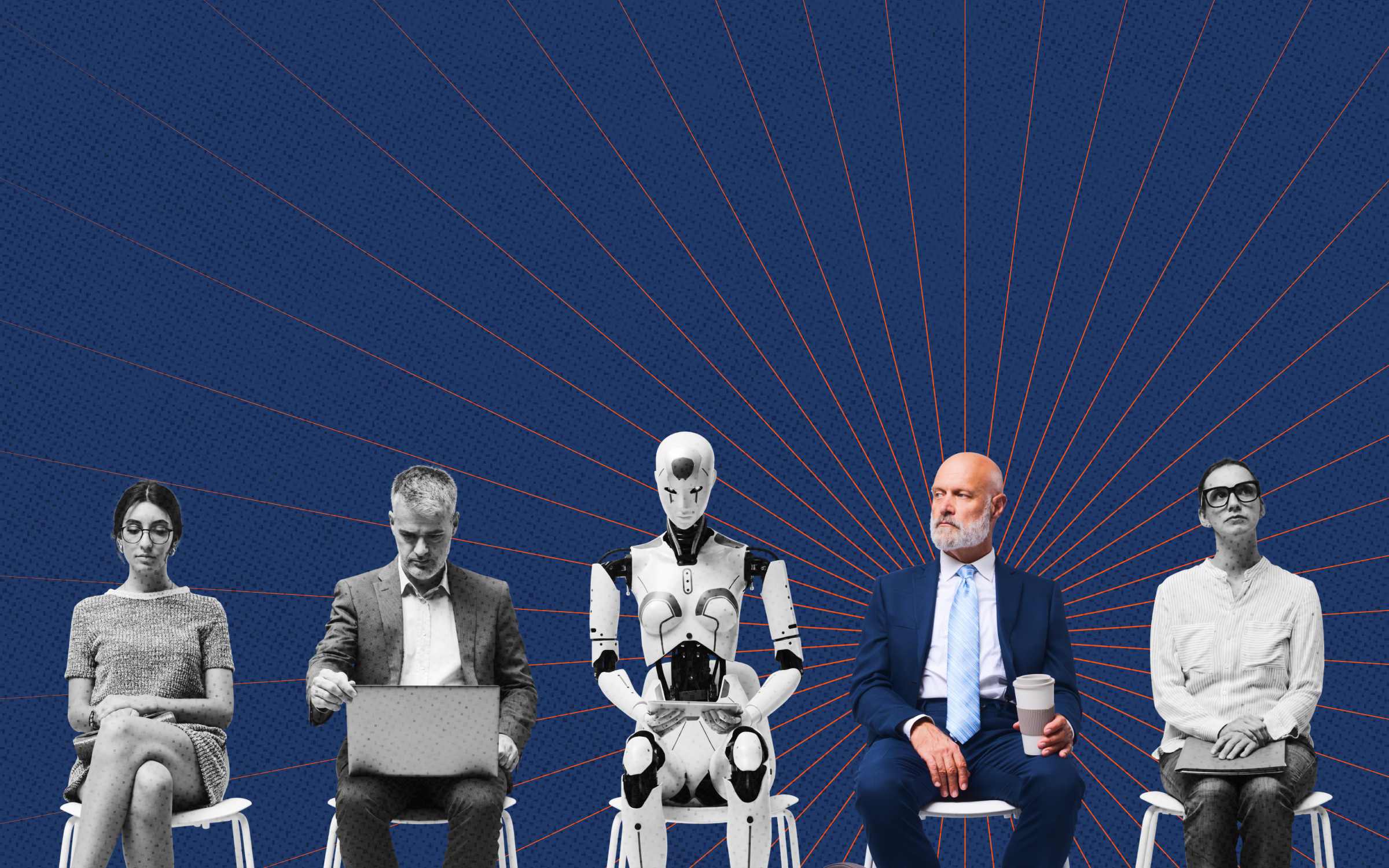
As AI takes on more recruiting tasks, HR leaders must decide where automation should stop, and human accountability should begin. Members of the Senior Executive HR Think Tank explain when candidates deserve human judgment, communication, transparency and a meaningful opportunity to challenge an automated decision.Hiring has always involved a tension between efficiency and humanity, but artificial intelligence is pushing that tension into new territory. AI can now help screen resumes, identify candidates, generate job descriptions and automate communication. According to LinkedIn's 2025 Future of Recruiting report, 37% of recruiting organizations are actively integrating or experimenting with generative AI, while 73% of talent-acquisition professionals say AI will change the way organizations hire.That makes the question less about whether companies should use AI and more about where responsibility belongs when technology affects someone's opportunity. Members of the Senior Executive HR Think Tank bring perspectives spanning talent acquisition, organizational leadership, career coaching, workplace culture and HR technology.Across their responses, one principle emerges: AI can take on more of the process, but companies cannot automate accountability.

expert panel
Job stability can provide more than a paycheck. Members of the Senior Executive HR Think Tank explain how employees can use secure roles to develop portable skills, expertise, relationships and career options before they need them.A stable job can create a false sense of permanence. Employees may have a dependable salary, established responsibilities and a clear place in the organization, yet none of that guarantees the role will exist indefinitely.That makes career development more than a retention strategy. It can also be a form of career risk management.The Senior Executive HR Think Tank offers a consistent message: Employees should use periods of stability to build capabilities that remain valuable even when their current positions do not.The need is becoming more pressing as the skills required to perform many jobs continue to change. The World Economic Forum's Future of Jobs Report 2025 finds that employers expect 39% of workers' core skills to change by 2030, while creative thinking, resilience, flexibility and agility remain among the skills expected to grow in importance.For employees, that means the best time to prepare for a career transition may be long before one becomes necessary.






















Company details
C3 Health
Company bio
C3 Health partners with healthcare organizations to deliver integrated care solutions that improve patient outcomes, strengthen financial performance, and support consistent, high-quality care across the entire care cycle. By combining clinical services, care coordination, and data-driven support, C3 Health helps providers extend care beyond the visit by enhancing patient engagement while reducing operational strain.