Organizations today operate in an environment where trust can erode overnight. Employees compare executive decisions against company values in real time. Customers scrutinize corporate responses to social issues. Investors increasingly evaluate organizations not only on performance but also on transparency, consistency and accountability.
Against this backdrop, many leaders are discovering that trust is no longer built solely through branding. It is built through visible alignment between stated principles and everyday decisions. According to the 2025 Edelman Trust Barometer, institutional trust remains fragile globally, with employees and consumers placing increasing importance on transparency, competence and ethical leadership.
Members of the Senior Executive HR Think Tank, a collective of experienced HR and workplace leaders, say organizations that thrive during periods of uncertainty are those willing to examine whether their values are truly operational—or simply aspirational. Their insights point to a common theme: trust grows when organizations consistently act like the company they claim to be. The challenge for modern organizations is not simply declaring principles. It is proving them repeatedly under pressure.
“When actions align with foundational principles, defense becomes straightforward because the organization is simply being who it said it was.”
Principles Must Outlast Leadership Changes
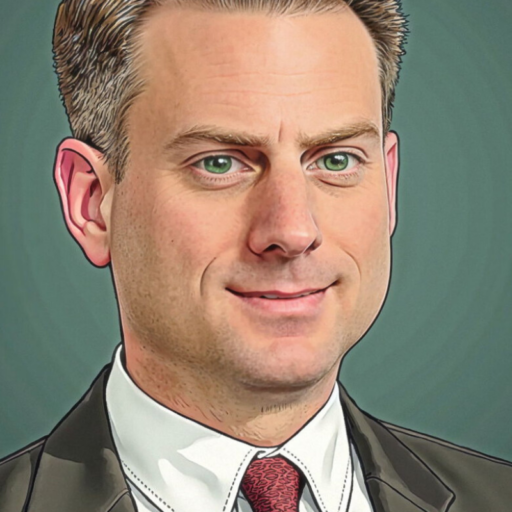
Innovation Unbiased Founder and Principal Strategist Christopher Bylone believes organizations often misunderstand the difference between values and leadership preferences. Through Innovation Unbiased, a consultancy focused on helping organizations create cultures of belonging through data-driven and people-centered strategies, Bylone works with companies seeking long-term cultural clarity rather than temporary positioning.
“Use this moment to examine whether your stated values are truly your values,” Bylone says. “Principles belong to the organization, not to its executives.”
That distinction becomes especially important during leadership transitions or moments of external pressure. Organizations frequently update messaging or strategic priorities when a new executive arrives, but Bylone argues that authentic principles should remain stable regardless of who occupies the corner office.
“Values should remain consistent regardless of who holds the CEO or President position,” he says. “Evaluate candidates for those roles against the organization’s principles, rather than rewriting principles to match a leader’s personality.”
Bylone also warns that organizations often mistake convenience for conviction. “When values change with every leadership transition, they were never values,” he says. “They were preferences dressed as principles.”
In periods of heightened scrutiny, organizations frequently feel pressure to react quickly. But Bylone believes companies that remain anchored in clear principles are better equipped to navigate criticism because their decisions remain consistent and explainable.
“Heightened scrutiny will always come,” he says. “Organizations that stand firm on shared values will weather it. Those values are the shield.” He adds that alignment simplifies communication during difficult moments because organizations do not need to invent new narratives.
“When actions align with foundational principles, defense becomes straightforward because the organization is simply being who it said it was.”
“Stakeholders are paying attention to how leaders act when things are difficult, not when things are easy.”

Trust Is Built Through Everyday Decisions
C3 Health Chief People and Experience Officer Nicole Cable says organizations often overestimate the importance of messaging and underestimate the impact of operational behavior. Through her work leading people and experience strategy across healthcare and customer-centered environments, she focuses on how culture and trust translate into measurable organizational outcomes.
“In this environment, people are not looking for perfect organizations,” Cable says. “They are looking for honest ones.” That honesty becomes most visible during difficult decisions. Employees and stakeholders closely observe how organizations handle tradeoffs, conflict and uncertainty because those moments reveal whether stated values actually guide leadership behavior.
Gallup’s workplace research continues to show that employee engagement and trust are deeply tied to whether workers believe leaders genuinely care about people and follow through on commitments. “The gap between what you say and what you do is where trust is either built or broken,” Cable says.
She believes some organizations typically remain too focused on communication strategy rather than organizational consistency. “Many organizations are still focused on messaging when they should be focused on decisions,” she says. “Stakeholders are paying attention to how leaders act when things are difficult, not when things are easy.”
Cable says that organizational principles only become meaningful when they shape real operational choices. “Staying true to your principles is not about repeating them. It is about using them in how you make tradeoffs and treat people.”
That emphasis on consistency is particularly important in volatile environments where public expectations evolve rapidly. Organizations may not always satisfy every stakeholder group, but they can still maintain trust if their actions remain aligned with clearly communicated principles.
“Consistency matters more than perfection,” Cable says. Over time, those repeated decisions form the foundation of organizational credibility. “Trust is built over time, but it can shift quickly. Organizations that earn it are the ones where values are visible in how the work actually happens every day.”
“What you tell investors, employees and customers should sound like the same company. Today, everyone compares notes.”

Stakeholders Want Proof, Not Performance
Neuropsychologist Aida Figuerola at Lift believes many organizations still misunderstand what stakeholders expect during difficult periods. Her work focuses on human behavior, leadership and organizational dynamics, giving her a close view into how trust forms—and how quickly it breaks.
“Powerful question,” Figuerola says. “And the answer is uncomfortable: stop performing, start proving.” In her view, organizations often respond to scrutiny with polished campaigns, carefully crafted messaging and amplified communications. But stakeholders are increasingly evaluating actions rather than statements.
“In times of heightened scrutiny, stakeholders don’t want louder statements,” she says. “They want smaller gaps between what you say and what you do.”
The growing demand for overall transparency is increasingly reflected in workplace research. For example, Forbes: Why Leadership Transparency Will Define Organizational Success in 2025 reports that many employees believe organizations still struggle to communicate openly about workplace challenges, creating a disconnect between leadership intent and employee perception. The article reinforces Figuerola’s point that stakeholders increasingly evaluate organizations based on honesty, consistency and visible accountability rather than polished messaging alone.
That expectation reflects broader changes in how information spreads. Employees, customers and investors now compare experiences and narratives across platforms instantly, making inconsistencies more visible than ever.
Figuerola says organizations must operationalize principles rather than display them symbolically. “If your values don’t help you say ‘no’ to something profitable, they’re decoration—not principles.” She identifies transparency as another essential component of organizational trust. Leaders often fear admitting mistakes or uncertainty, but Figuerola advises that stakeholders rarely expect perfection.
“Stakeholders don’t expect you to be flawless,” she says. “They expect you to be honest when you’re not. Show the work, not just the wins.”
That level of openness can feel risky, especially in highly visible environments. Yet organizations that communicate transparently during setbacks often emerge with stronger credibility because stakeholders perceive their responses as genuine. Consistency across audiences also matters. Figuerola says organizations can no longer afford to present different versions of themselves to different stakeholder groups.
“What you tell investors, employees and customers should sound like the same company,” she says. “Today, everyone compares notes.” Ultimately, she believes organizations that maintain trust are not necessarily the loudest or most visible. They are the most internally aligned.
“Organizations that thrive won’t be the loudest,” Figuerola says. “They’ll be the most coherent. Say less. Mean more. Deliver always.”
Leadership Practices That Strengthen Trust Every Day
- Build principles into leadership selection. Organizations should evaluate executives against established values rather than reshaping company principles around individual leadership styles. Stable values create continuity and credibility during transitions.
- Reduce the gap between messaging and behavior. Stakeholders increasingly judge organizations by operational decisions, not public statements. Consistency between words and actions strengthens trust over time.
- Treat transparency as a leadership discipline. Honest communication during setbacks often builds more credibility than polished perfection. Showing stakeholders how decisions are made creates stronger alignment.
- Ensure every audience hears the same organization. Employees, investors and customers constantly compare experiences. Organizations build trust when communications remain coherent across stakeholder groups.
- Operationalize values through everyday choices. Trust becomes visible in hiring decisions, workplace policies, customer interactions and leadership tradeoffs—not simply in mission statements or campaigns.
The Future of Organizational Trust
The organizations most likely to sustain trust in today’s environment are not necessarily those with the most polished messaging or strongest public relations strategies. They are the ones capable of aligning leadership behavior, operational decisions and stakeholder communications around clear and enduring principles.
For leaders, the challenge moving forward is not simply defining organizational values but proving them consistently through action. As scrutiny intensifies across industries, stakeholders will continue rewarding organizations that demonstrate coherence, honesty and accountability—even during difficult moments. Trust, ultimately, is more than a simple communications exercise. It is an operational standard.
MOST POPULAR

AI Is Commoditized—Here's What Sets Great Brands Apart

9 Ways to Measure the Success of Your DEI Strategy
Inspiring Ideas. Actionable Insights.
Senior Executive's Email Newsletters Deliver Fresh Solutions to Today's Leadership Challenges.
Subscribe Free
Why AI Companies Need a New Model of Leadership

The Healthcare Trust Crisis: What Leaders Must Rethink Now

The AI Fluency Trap: When Familiarity Looks Like Expertise