Healthcare organizations are investing billions of dollars in artificial intelligence, automation, analytics and digital transformation. Yet many health systems continue to struggle with implementation, workforce shortages and operational complexity. The challenge is no longer simply acquiring technology but finding professionals who can translate emerging technologies into practical improvements for clinicians, staff and patients.
According to the U.S. Bureau of Labor Statistics, healthcare occupations are projected to grow much faster than average over the next decade, creating roughly 1.9 million openings annually. At the same time, healthcare leaders face mounting pressure to improve patient outcomes, reduce administrative burden and integrate rapidly evolving technologies into everyday workflows.
To better understand which roles will be most critical by the end of the decade, members of the Senior Executive Healthcare Think Tank shared their perspectives. While their titles for these future positions differ, a common theme emerges: Healthcare’s most valuable professionals will be those who bridge clinical care, operations, governance, data and technology.
The Healthcare Systems Architect Emerges as a Strategic Necessity
Rajani Kumar Sindavalam, Systems Engineering Leader at HCL America Inc., believes health systems need professionals who can balance innovation with operational reality.
With nearly two decades of experience leading global medical device engineering, regulatory compliance and healthcare technology initiatives, Sindavalam has seen firsthand how organizations often become distracted by technology trends rather than patient-centered outcomes.
“The highest-demand role will be the Healthcare Systems Architect working at the intersection of technology, AI and clinical needs,” Sindavalam says.
He argues that health systems increasingly face a paradox: While new technologies promise transformation, excessive adoption without strategic alignment can create confusion and inefficiency.
“Emerging technology is becoming more about hype than solving real operational problems,” he says. “Unnecessary tools create noise and dilute actual clinical needs.”
In Sindavalam’s view, the Healthcare Systems Architect becomes the balancing force between competing priorities, ensuring organizations deploy technology that directly supports care delivery, patient safety and operational performance.
AI Governance Moves From Nice-to-Have to Mission Critical
Jordan Henry, Founder and Chief AI Ethicist at Veritas AI Consulting, sees growing demand for leaders who can manage the intersection of AI, compliance and healthcare operations.
Drawing on experience spanning federal public health operations, healthcare administration and AI governance, Henry believes organizations will increasingly require specialists who understand both technology and accountability.
“By 2030, the highest-demand roles will likely be health informatics and clinical data leaders, AI governance and compliance leads, and healthcare interoperability and automation managers,” Henry says.
These positions, he argues, sit precisely where healthcare’s biggest challenges converge.
“They operate at the point where workflow redesign, EHR and data quality, privacy and AI adoption intersect,” he says. “That intersection is where systems are struggling most.”
As healthcare organizations accelerate AI adoption, governance professionals will become essential for ensuring that innovation remains ethical, compliant and aligned with patient interests.
“In the age of AI, hybrid care and the proliferation of technology, conditions are such for the creation of another new role.”

A New Executive Role Is Waiting to Be Created
Mark Francis, Founder and CEO of CaregiverZone, Inc., believes healthcare may be on the verge of creating an entirely new executive function.
Francis points to previous healthcare workforce innovations, such as hospitalists and intensivists, which emerged to address evolving care delivery needs.
“Healthcare has done an outstanding job over the years responding to gaps that impact clinical care to create new roles,” Francis says.
Today’s environment presents a similar opportunity, he argues.
“In the age of AI, hybrid care and the proliferation of technology, conditions are such for the creation of another new role,” he says.
Rather than operating exclusively within IT, operations or clinical departments, this future leader would evaluate priorities across all three domains while maintaining focus on patient outcomes.
“This individual will serve as the lynchpin between healthcare operations, emerging technologies, clinical care and patient needs,” Francis says.
His prediction highlights a broader trend throughout the Think Tank’s responses: Healthcare increasingly needs integrators rather than specialists.
The Translator Gap Is Healthcare’s Biggest Challenge
Sriharsha Chavali, Enterprise Technology Leader at The Aspen Group, identifies a persistent problem that technology alone cannot solve.
“The role healthcare keeps missing isn’t just a technologist or a clinician—it’s the person who can translate between operational reality and technical design,” Chavali says.
Over 15 years working across surveillance, infection prevention and revenue cycle operations, Chavali has observed that implementation failures typically stem from misunderstanding requirements rather than technology limitations.
“The hard part isn’t building the system,” he says. “It’s understanding what pharmacists, billers and leaders actually mean, then turning that into something data, workflows and automation can handle.”
According to Chavali, successful transformation depends on professionals who understand both operational nuance and technical execution.
“Most projects stall because the gap isn’t technology; it’s execution,” he says.
“The most valuable leaders will be those who can bring clinical, operational and technology teams together to solve real problems while maintaining trust and accountability.”

Operational Fluency Will Become a Competitive Advantage
Tirumala Ashish Kumar Manne, Principal Cloud Architect at Optum, believes future healthcare leaders must understand workflows as deeply as technology.
“Health systems do not just need more tools,” Manne says. “They need people who understand real workflows, patient access, care coordination, prior authorization, revenue cycle, data sharing, privacy and compliance.”
His experience leading cloud modernization, interoperability and AI initiatives has convinced him that technology adoption succeeds only when operational realities remain central.
“Roles in healthcare AI, interoperability, automation and governance will become more important because they directly impact cost, patient experience and staff workload,” he says.
Perhaps most importantly, Manne emphasizes leadership’s role in fostering collaboration.
“The most valuable leaders will be those who can bring clinical, operational and technology teams together to solve real problems while maintaining trust and accountability.”
Data Strategy and Cybersecurity Become Core Clinical Functions
Dr. Dmitriy Schwarzburg, Founder and Medical Director of Skinly Aesthetics and Founder of telemedicine platform Health Source Online, sees growing demand for professionals focused on data, informatics and security.
“I expect healthcare data strategists, clinical informatics leaders and healthcare cybersecurity professionals to be highest in demand by the end of the decade,” Schwarzburg says.
As telehealth, digital engagement and consumer-facing healthcare continue expanding, organizations face increasing complexity around data management and privacy.
“Health systems need people who can bridge healthcare operations, technology, compliance and patient experience simultaneously,” he says.
Like several Think Tank members, Schwarzburg believes the challenge is rarely access to technology itself.
“Most organizations don’t have a problem accessing technology,” he says. “They struggle to integrate it effectively into real-world clinical and operational workflows.”
“What unites these roles is a rare dual fluency: clinical credibility paired with technological expertise.”
Clinical AI Specialists Will Need Dual Fluency
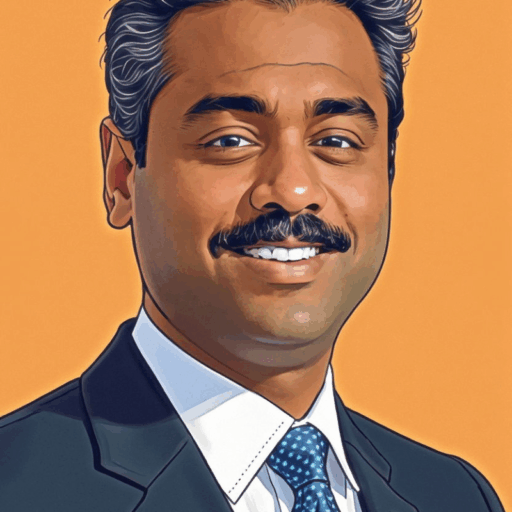
Harikrishnan Muthukrishnan, Principal IT Developer at BCBS Florida, expects demand to surge for professionals who combine clinical understanding with advanced technology expertise.
“Health systems urgently need Clinical AI Integration Specialists who can evaluate diagnostic tools, understand model bias and embed AI without disrupting care,” Muthukrishnan says.
He also predicts growing demand for clinically trained data scientists capable of transforming diverse healthcare data sources into actionable insights.
“These hybrid professionals ask the right medical questions while transforming EHR data, wearables and genomics into actionable insights,” he says.
Cybersecurity remains another critical area.
“Health IT Cybersecurity Officers” will become increasingly important, he says, as organizations confront escalating threats while maintaining regulatory compliance.
“What unites these roles is a rare dual fluency: clinical credibility paired with technological expertise.”
The Clinical AI Architect Will Bridge Innovation and Care
Mahendran Chinnaiah, Digital Healthcare Architect for a major U.S. healthcare and pharmacy services firm, believes the Clinical AI Architect will emerge as healthcare’s defining role.
“Right now, health systems are hitting a wall,” Chinnaiah says. “Tech teams build amazing machine learning models, but when they hit the hospital floor, they fall apart.”
The reason, he argues, is straightforward.
“They don’t fit the messy, high-pressure reality of daily patient care.”
The Clinical AI Architect solves that challenge by combining technical depth with operational awareness.
“This professional understands clinical operations just as well as data pipelines, interoperability and governance,” he says.
“We don’t just need code; we need architects who make tech work for clinicians.”
Adaptability May Matter More Than Any Job Title
Donna Mitchell, CEO of Mitchell Universal Network and author of Pivoting to Technology Adoption: Mind the Gap, offers a different perspective.
“The highest demand will be for a capability, not a title, because titles keep changing,” Mitchell says.
After nearly five decades leading technology transformation initiatives, she believes adaptability will ultimately outweigh any specific credential.
“The professionals in highest demand by 2030 will adapt to change quickly,” she says. “They connect legacy systems and labor-intensive operations to AI and emerging technologies while continuing to learn as tools evolve.”
Mitchell also challenges organizations to rethink talent strategies.
“Health systems struggle to recruit because they hire for static titles instead of enabling adaptive people,” she says.
Her conclusion is both simple and powerful: “The highest-demand role is the adaptive learner. The scarcest is the educator who enables them.”
Preparing for Healthcare’s Workforce Future
- Prioritize systems architecture over technology accumulation. Focus investments on professionals who can evaluate whether technology solves genuine operational problems.
- Build AI governance capabilities now. Governance, compliance and interoperability expertise will become essential as AI adoption accelerates.
- Create cross-functional leadership pathways. Emerging healthcare challenges require leaders who can simultaneously understand operations, technology and patient care.
- Hire translators, not just specialists. Seek professionals capable of converting operational realities into technical solutions.
- Reward operational fluency. Technology leaders who understand care delivery workflows create significantly greater organizational value.
- Treat cybersecurity and data strategy as clinical priorities. Digital healthcare expansion increases the importance of trusted data management and security.
- Develop dual-fluency talent. Encourage clinicians to build technology skills and technologists to deepen healthcare knowledge.
- Focus AI investments on workflow integration. Successful AI programs require architects who understand clinical realities.
- Build adaptability into workforce development. Continuous learning may become more valuable than any single technical competency.
The Next Evolution of Healthcare Talent
While the Think Tank members use different titles to describe the future healthcare workforce, their message is remarkably consistent. The highest-demand professionals by 2030 will not be defined solely by clinical expertise or technical knowledge. Instead, they will be distinguished by their ability to connect disciplines that have historically operated in silos.
Whether organizations call them Healthcare Systems Architects, Clinical AI Architects, AI Governance Leaders or something entirely new, these professionals will serve as translators between technology, operations and patient care. As healthcare transformation accelerates, the institutions that successfully develop and retain these hybrid leaders will be best positioned to improve outcomes, control costs and navigate an increasingly complex future.
MOST POPULAR

9 Great New Ideas for a Better Annual Company Meeting

9 Ways to Measure the Success of Your DEI Strategy
Inspiring Ideas. Actionable Insights.
Senior Executive's Email Newsletters Deliver Fresh Solutions to Today's Leadership Challenges.
Subscribe Free
AI Is Commoditized—Here's What Sets Great Brands Apart

How to Offer Employee Recognition Strategies That Go Beyond Awards

How to Stay Relevant in AI: 10 Experts Share Career Advice