For years, cybersecurity strategy revolved around keeping attackers out. Build higher walls. Add more tools. Block more threats. But according to Scott Alldridge, that mindset no longer reflects reality.
Today’s leaders need to operate with a very different assumption: breach is inevitable.
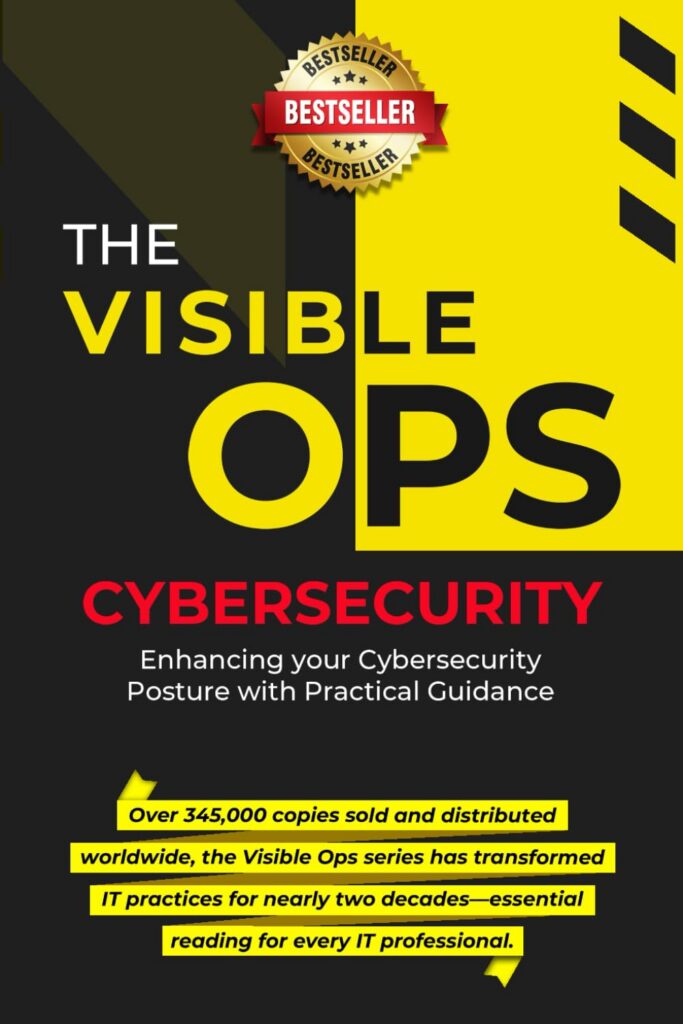
Alldridge, a member of the Senior Executive Cybersecurity Think Tank — a community of cybersecurity leaders and executives sharing practical insights on risk, resilience, and cyber leadership — explores this shift in his book Visible OPS Cybersecurity: Enhancing Your Cybersecurity Posture with Practical Guidance. The book offers executives a more operational, measurable approach to cybersecurity focused less on fear and more on resilience, discipline, and recoverability.
After decades leading IT operations, governance, and cybersecurity programs through his company IP Services, Alldridge believes many organizations still misunderstand the real purpose of cybersecurity.
“Assume compromise, minimize blast radius, and measure how fast you detect, contain, and restore operations,” he explains.
That philosophy shapes everything in Visible OPS Cybersecurity.
Why The “Assume Breach” Mindset Changes Everything
Many organizations still treat cybersecurity as a prevention problem. If enough tools are installed and enough alerts are monitored, leaders assume they can avoid compromise entirely.
Alldridge says that belief creates dangerous blind spots.
“Prevention feels measurable; resilience requires discipline,” he says.
The problem is that attackers rarely need sophisticated methods when operational discipline is weak. According to Alldridge, more than 70% of outages, failures, and downtime events can be traced back to unauthorized or poorly managed changes.
That is why his framework focuses heavily on operational controls like:
- Configuration management
- Change management
- Release management
- Integrity monitoring
- Segmentation
- Identity governance
The goal is not perfection. The goal is reducing chaos.
For executives, that means cybersecurity can no longer sit solely inside the IT department. It has become a core business continuity issue tied directly to revenue assurance, operational continuity, and organizational resilience.
“Cybersecurity is enterprise resilience,” Alldridge says. “Think about cybersecurity as revenue assurance, not just another expense.”
Why Zero Trust Is Often Implemented Incorrectly
Few cybersecurity concepts have generated more buzz than Zero Trust. But Alldridge argues many organizations misunderstand it from the start.
“Zero Trust is not a product,” he explains. “It’s a program and methodology.”
Too often, companies buy a tool labeled “Zero Trust” without addressing the operational behaviors required to make the model effective.
Instead, Alldridge recommends focusing first on foundational controls:
- MFA everywhere
- Reducing standing administrator privileges
- Identifying crown-jewel systems
- Segmenting critical infrastructure first
He also stresses that modern environments require more than traditional MFA alone. Organizations increasingly need continuously verified credentialed access models that validate trust in real time.
One of the biggest advantages of mature Zero Trust architecture is limiting blast radius.
“One compromised device should not equal full network compromise,” Alldridge says.
That shift toward containment is one of the defining themes throughout the book.
The Most Overlooked Security Control? Change Management
While executives often focus on endpoint tools, AI-driven monitoring, or threat intelligence, Alldridge repeatedly returns to a far less glamorous topic: change management.
Attackers thrive in environments where systems drift, documentation breaks down, and unauthorized changes happen constantly.
“Attackers exploit chaos,” he says. “Weak change control creates silent exposure.”
In Visible OPS Cybersecurity, Alldridge argues that effective cybersecurity programs are fundamentally operational programs. Strong change management reduces instability, improves recoverability, and creates the visibility needed to respond quickly when incidents occur.
He recommends practical controls organizations can implement immediately, including:
- “No ticket, no change” enforcement on high-risk systems
- Automated alerts for unauthorized configuration drift
- Configuration baselines for known-good states
- Rollback readiness for every major deployment
These operational disciplines may not feel flashy, but Alldridge believes they form the backbone of resilient organizations.
Why Compliance Alone Creates False Confidence
Many organizations assume compliance frameworks equal security maturity. Alldridge strongly disagrees.
“Compliance is the floor,” he says. “Operational discipline delivers real security.”
The danger is that compliance is often treated as a point-in-time achievement while attackers exploit the operational drift that happens between audits.
That is why organizations pursuing frameworks like SOC 2, CMMC, HIPAA, ISO 27001, or NIST must first stabilize foundational operational controls:
- Asset management
- Configuration management
- Change discipline
- Release processes
- Backup validation
- Monitoring and response
Without those fundamentals, compliance can create the illusion of security without actual resilience.
“Cybersecurity should be framed as enterprise risk, not just IT risk.”

Technology Alone Will Not Save You
Throughout the book, Alldridge repeatedly emphasizes that cybersecurity failures are rarely just technology failures.
“Without disciplined people and process, tools create noise… not security.”
That philosophy shapes how he defines a true security-aware culture. Employees must understand not only the tools, but also the operational behaviors that strengthen resilience under pressure.
Strong cybersecurity cultures are built when:
- Employees report issues quickly
- Leadership rewards transparency
- Operational discipline is reinforced consistently
- Executives avoid bypassing controls for convenience
- Teams understand why controls exist in the first place
Alldridge warns that executive behavior itself often unintentionally weakens security posture when leaders prioritize speed over operational discipline.
The Future Of Cybersecurity Will Be Operational
As organizations race toward AI adoption, Alldridge believes many are repeating familiar mistakes by overestimating what tools alone can accomplish.
“Tools create illusion of control without operational discipline,” he says.
He expects the next wave of cybersecurity challenges to combine:
- AI-accelerated attacks
- Supply chain vulnerabilities
- Identity-based threats
- Increasing operational complexity
For leaders feeling overwhelmed, Alldridge recommends simplifying the focus.
Start with operational control.
His recommended first step for CEOs?
“Control unauthorized change to reduce chaos and exposure quickly.”
That may not sound as exciting as the latest AI-powered cybersecurity platform. But in Alldridge’s view, resilience is rarely built through hype. It is built through disciplined, repeatable execution.
About The Author

Scott Alldridge is the Founder, President, and CEO of IP Services, a managed IT and cybersecurity solutions company focused on operational resilience, governance, and enterprise cybersecurity management. He is also a contributor to the VisibleOps methodology and has spent decades helping organizations stabilize complex IT environments through disciplined operational controls.
His book Visible OPS Cybersecurity: Enhancing Your Cybersecurity Posture with Practical Guidance is available on Amazon. Leaders interested in deeper operational guidance can also explore related titles in the series, including Visible Ops A.I.: Artificial Intelligence Governance with Best Practices and VisibleOps Cybersecurity Companion Guide: Cybersecurity in Plain Speak—for Executives and the Business Side of the House.