Running a small or mid-size business has never felt more like a contact sport. Owners are trying to grow, keep customers happy, adapt to AI, and still get home in time for dinner. All of that depends on one thing: having the right people in the right seats.
According to Rob Levin, founder of WorkBetterNow and author of The New Talent Playbook, most SMBs are trying to play today’s talent game with yesterday’s rules. His message is blunt: this is not a passing hiring headache. It is a full talent crisis for small and mid-size businesses, and it will decide which companies thrive and which ones stall out.
Levin has spent more than 30 years supporting small and mid-size businesses — first as a CPA, then as an advisor, later as publisher of the New York Enterprise Report, and now as founder of a fast-growing talent company sourcing top professionals from Latin America. His own turning point came in 2013 when he hired his first assistant and realized how much of his time and energy had been tied up in low-value work.
“I finally stopped building a business around myself and started building a business around a team,” he says. The New Talent Playbook distills what he learned the hard way into a practical framework any SMB owner can use.
Below, we break down the core ideas from his book and how they help business owners navigate the current talent crisis.
Why The Talent Crisis Is Different For SMBs

Levin argues that small and mid-size businesses are facing three forces at the same time, and that combination makes this moment different from any past hiring cycle.
First, the labor market has been tight for years and shows no signs of truly loosening. Unemployment is low, job openings remain high, and skilled workers have options.
Second, the mindset of many workers has shifted. Levin hears it from owners constantly: more candidates are comfortable doing the bare minimum, disengaging quietly, or treating jobs as temporary stepping stones. There are plenty of exceptions, but the work ethic and loyalty that once felt “standard” can no longer be assumed.
Third, and most important for SMBs, every single seat matters. A Fortune 500 company can hide a mediocre performer or leave a role open for months. A 25-person firm cannot. One bad hire or a key vacancy for a quarter can derail growth, damage client relationships, and burn out the people who are still engaged.
That is why Levin calls it a crisis. Owners who treat the talent problem as temporary make temporary moves: they lower the bar just to fill the job, tolerate underperformance, or keep pushing hiring decisions to “later.” In his view, “later” is how you lose.
From Functional Teams To Dream Teams
Most owners technically have a team. The question is whether that team is functional or transformational.
A functional team keeps the lights on. The owner still drives almost everything. They set all the priorities, solve the problems, and make the decisions. It works, but it is exhausting and creates a hard ceiling on growth.
“I finally stopped building a business around myself and started building a business around a team.”

A dream team looks very different. Levin describes dream team members as people who think and act like owners. They spot issues early, solve them without being asked, bring ideas forward, and challenge assumptions respectfully. They ask “How can we do this better?” instead of “Tell me what to do.”
At WorkBetterNow, that shows up in how closely the team lives the company’s six core values, starting with “put our talent first.” Values are not poster words. They are the lens for hiring, feedback, and promotion. Levin’s payoff: a business that hit number 114 on the Inc. 5000 list with nearly 3,000% three-year growth, while giving him space to operate in his “zone of genius” instead of chasing tasks.
For SMB owners, that is the real distinction. A dream team gives you your time back and pushes the company forward without you in every conversation.
Build Culture By Design, Not By Default
Levin learned the hard way that culture forms whether you design it or not. When he launched the New York Enterprise Report, he wrote down the culture he wanted, then got busy and assumed it would happen on its own. It did not. The result was a decent environment, but nothing that helped attract or retain exceptional people.
With WorkBetterNow, he reversed the order. He and cofounder Andrew Cohen started with values, then built hiring, performance management, and recognition around them. Culture became an operating system, not a tagline.
For owners who want to know whether their current culture is helping or hurting, Levin suggests a few quick tests:
- Are your best people staying and growing, or quietly leaving for “better opportunities”?
- When you post roles, do strong candidates seek you out, or are you sorting through resumes from people who seem desperate for any job?
- Do team members reference your values in everyday language, or only leadership talks about them?
Online reviews and engagement surveys add another reality check. If there are no reviews, or the ones that exist do not reflect the culture you think you have, that is useful data.
The first fix is simple but not easy: define three to five non-negotiable values and then live them. Screen for them in interviews, coach to them in one-on-ones, and be willing to help people move on if they cannot align. Over time, those values become a magnet for the right people and a filter for the wrong ones.
Unlocking The Remote And Offshore Talent Advantage
One of the biggest missed opportunities Levin sees is how slowly many SMBs have embraced remote and offshore talent.
Expanding beyond a 30-mile hiring radius changes the game. Remote roles can be filled from anywhere in the country. Offshore roles, especially in Latin America, add another powerful layer: high-caliber professionals, strong English skills, aligned time zones, and compensation levels that reflect lower local costs of living.
Levin is clear that this is not about “cheap labor.” At WorkBetterNow, thousands of people apply every month from more than 18 countries. Fewer than 2% meet their benchmark to become WBN Certified Professionals. That vetting includes communication assessments, skills testing, problem-solving exercises, and background checks.
He also pushes back on the three most common myths:
- Communication will be too hard. Many offshore professionals have excellent written and verbal English. Clear KPIs, weekly check-ins, and results-based management matter more than physical proximity.
- Culture will not translate. Values alignment matters more than geography. A professional in Colombia who shares your values can be a stronger culture fit than someone who lives ten miles from your office.
- Quality will be lower. Levin’s own team and client examples tell a different story: construction firms that dramatically increased estimating capacity, logistics companies that reduced accidents and insurance costs, and assistants who grew into operations leaders.
For many SMBs, offshore talent is quickly moving from “interesting idea” to baseline requirement. It is how they access capabilities that would otherwise be unaffordable and how they staff fully instead of living perpetually understaffed.
Use AI To Elevate People, Not Replace Them
Levin is bullish on AI, but not as a replacement for people. He sees AI as a force multiplier for human talent.
When tools like ChatGPT arrived, he and his cofounder did not try to control every experiment. Instead, they invited the team to play, learn, and share what worked. That mindset turned curiosity into capability. AI became something exciting rather than threatening.
His rule of thumb is straightforward: automate tasks, not relationships. Use AI and automation to handle repetitive work such as data entry, document drafting, scheduling, and routine reporting. Then redirect people’s time to judgment, creativity, coaching, and client connection.
At WorkBetterNow, department heads are expected to ask how AI and automation might support a function before they lobby for a new hire. The goal is not fewer people. The goal is people doing higher-value work.
Retain And Develop The People You Already Have
Hiring is only half the playbook. Levin argues that almost every persistent business problem eventually comes back to people, and retention is where many owners stumble.
Common missteps include:
- Believing compensation is either the only answer or a minor factor. In reality, competitive pay is the starting line, not the finish. Paying top performers slightly above market can be smart “insurance” once you consider the true cost of losing them.
- Failing to show employees a future with the company. Many owners never talk about career paths, even though most employees would stay longer if they saw growth opportunities.
- Tolerating underperformers because “at least they show up.” A-players do not want to work alongside C-players. Keeping the wrong people sends the signal that mediocrity is acceptable.
- Ignoring flexibility and modern work expectations. In a post-pandemic market, rigid policies with no clear rationale are a fast way to lose strong performers.
On the positive side, Levin highlights three high-ROI ways to develop talent internally:
- Upskilling. Train existing team members on emerging capabilities like AI, new marketing channels, or systems. At WorkBetterNow, several team members have grown from assistant roles into leadership positions because the company invested in their development.
- Coaching and mentoring. Make one-on-ones about growth, not just status updates. Use real situations as teaching moments. Pair less experienced staff with your best people so knowledge spreads.
- Assistant leverage. Many ambitious assistants do not want to stay in pure admin roles. As they earn trust, they can grow into project managers, operations leads, or other key positions. That path is good for the business and for retention.
Retention, in Levin’s view, is a system. Competitive pay, intentional culture, growth paths, flexibility, and solid management frameworks all work together.
Your First Move: Hire Strategic Help, Not Just Another Pair Of Hands
For leaders who feel short-staffed and overwhelmed, Levin’s advice is surprisingly simple: start by hiring an assistant.
Most owners spend a staggering percentage of their week on tasks that someone else could handle: managing email, scheduling, basic reporting, logistics, and follow-ups. If your strategic time is worth a few hundred dollars an hour, doing that work yourself is an expensive habit.
A strong assistant, especially one hired offshore at a sustainable rate, gives you back ten to fifteen hours a week. That time becomes the foundation for everything else in The New Talent Playbook: designing culture, recruiting intentionally, coaching your team, and thinking ahead instead of firefighting.
Levin suggests a practical exercise. For three days, write down everything you do. Then highlight anything that does not require your specific expertise. Those tasks become the first wave of work you hand to an assistant. From there, momentum builds. One smart hire leads to the next, and the business gradually shifts from “founder-centric” to “team-powered.”
About The Book
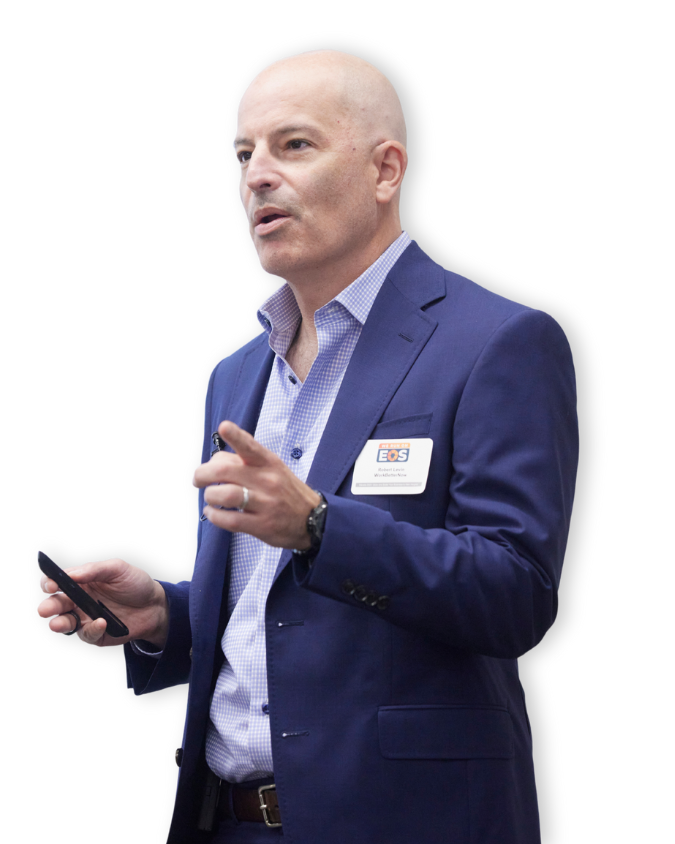
The New Talent Playbook is written for owners who feel stretched thin and frustrated by hiring, but who still believe their business can grow much bigger than it is today. The book walks through how to:
- Compete for high-performing talent who think and act like owners
- Build a culture by design that attracts the right people
- Use remote and offshore talent to expand capacity and improve margins
- Integrate AI and automation to keep the team focused on meaningful work
- Create a company where people, not just the owner, fuel daily growth
A companion workbook helps readers build their own tailored talent playbook as they go, so insights turn into concrete steps right away.
For SMB leaders who are ready to stop settling for “good enough” hires and start building the kind of team that can win in today’s market, Levin’s playbook offers both a reality check and a path forward.