A rising conversion rate is the kind of metric that can make a leadership team feel good about growth. Customers are moving through the funnel more efficiently, acquisition costs may be improving and marketing can point to a clear return on investment. But there’s a critical question hiding behind those results: Is the business actually creating more demand, or simply getting better at converting the demand that was already there?
That distinction matters because efficiency can improve even as a company’s future growth potential weakens. A business can become highly effective at reaching people who already know the brand, have an existing need or are close to making a purchase without expanding the pool of potential customers. Research from the Institute of Practitioners in Advertising reinforces the importance of balancing short-term sales activation with longer-term brand building, noting that sustained investment can contribute to growth over time.
For marketing leaders, the challenge is to make that distinction visible inside the organization. Members of the Senior Executive CMO Think Tank bring deep experience in brand storytelling, digital advertising and customer engagement to this challenge. Here, these marketing leaders explore how to tell if a business that is turning interest into revenue today is also creating the conditions for more customers to enter the market tomorrow.
Stop Mistaking Efficiency for Growth
Conversion efficiency can be an important measure of marketing performance, but it can also create a misleading sense of momentum when viewed on its own.
Amber Brown, Senior Vice President of Product and Marketing for Clario, says, “A funnel can become more efficient as the business becomes less relevant. Leadership teams mistake better conversion of known buyers for healthy growth when they may simply be harvesting demand faster than they replenish it.”
For Brown, the distinction comes down to whether the business is expanding its audience or simply becoming more effective with people already in the market.
“The better question is: Are we expanding the number of customers who consider us, or converting the same pool more efficiently?” she says. “If conversion rises while new-customer penetration, consideration and previously unengaged pipeline remain flat, the business is capturing demand, not creating it.”
“If capture metrics improve while creation metrics remain flat, it’s a signal the business is optimizing the bottom of the funnel rather than expanding the top.”

Separate Demand Creation From Demand Capture
Kurt Allen, Vice President, Enrollment, Marketing and Communications at Notre Dame de Namur University, encourages leadership teams to look beyond a single definition of marketing performance. “One big mistake is assuming better conversion rates automatically mean stronger marketing,” he says. “In reality, high conversion often reflects improved capture of existing demand, not the creation of new demand.”
Allen recommends separating the measures used to evaluate each side of the growth equation. “Marketing leaders should reframe the conversation by separating demand creation from demand capture,” he says. “Demand capture metrics include conversion rate, cost per acquisition and lead-to-enrollment or lead-to-sale rates. Demand creation metrics include brand awareness, share of search, organic traffic growth, audience engagement, referral activity and increases in qualified inbound interest over time.”
That distinction matters because the two sets of metrics answer different questions. “Sustainable growth requires both,” Allen says. “If capture metrics improve while creation metrics remain flat, it’s a signal the business is optimizing the bottom of the funnel rather than expanding the top. The healthiest organizations invest in both—creating future demand while efficiently converting today’s opportunities.”
Nielsen research similarly points to the importance of balancing upper- and lower-funnel activity, finding that a one-point gain in brand metrics such as awareness and consideration can drive a 1% increase in sales.
Measure the Demand Behind the Conversion
Jessica Hawthorne, CEO of Hawthorne Advertising, says conversion performance should be evaluated in the context of the broader demand picture. “Strong conversion rates are an important indicator of performance, but they don’t tell the whole growth story,” she says. “Leadership teams should evaluate both the volume and quality of demand, while also considering whether growth is sustainable over the long term.”
That means marketing leaders need to look beyond what happened at the point of purchase and consider whether the business is consistently generating new opportunities. “True success comes from consistently generating new demand—not just converting existing interest,” Hawthorne says. “Monitoring long-term trends in customer acquisition, brand awareness and demand generation helps ensure the business is building a healthy pipeline for continued growth.”
The goal isn’t to diminish conversion as a metric. It’s to put it in the right context so a strong result at the bottom of the funnel doesn’t obscure weakness elsewhere.
“Conversion metrics identify the last click. Healthy growth requires understanding and supporting the earlier moments that helped create it.”

Look Beyond the Last Touchpoint
For Erin Lentz, Executive Director of Design at ArtVersion, conversion is only one part of the customer journey.
“Strong conversion performance is valuable, but it often reflects how effectively a business is serving people who already have a need,” she says. “It does not reveal everything that helped those people understand, trust and ultimately choose the company.”
Lentz recommends a measurement framework that accounts for the work happening before a customer is ready to act. “A more appropriate measurement framework separates demand capture from demand creation while showing how both contribute to growth,” she says. “The question becomes not only, ‘Which channel completed the conversion?’ but also, ‘Which experiences built the understanding and confidence that made the conversion possible?’”
She also points to the types of activity that can help leadership teams distinguish existing demand from newly generated interest. “A business may be capturing existing demand when results are concentrated in branded search, direct visits, returning audiences, referrals and other high-intent activity, while discovery among new audiences remains relatively flat,” Lentz says.
“Demand creation becomes more visible when qualified reach expands, nonbranded discovery grows and more prospective customers begin exploring the company before they are ready to make contact,” she says. In Lentz’s view, “Conversion metrics identify the last click. Healthy growth requires understanding and supporting the earlier moments that helped create it.”
Ask Whether the Pool of Future Customers Is Growing
Magda Paslaru, Founder and CEO of THE RAINBOWIDEA, says leadership teams can get caught up in metrics that look efficient without asking what those metrics reveal about the future.
“Efficient conversion can hide an unhealthy reality: You may simply be getting better at harvesting people who already intended to buy,” she says. “Leadership teams often celebrate lower CAC or higher ROAS without asking whether the pool of future customers is growing.”
That calls for a broader set of indicators. “Marketing should separate demand capture from demand creation,” Paslaru says. “Look beyond last-click metrics to branded search growth, direct traffic, new-category buyers, share of search, consideration and organic demand over time.”
The warning sign is a widening gap between immediate efficiency and future demand. “If conversion improves while awareness and future demand stay flat, you may be optimizing the bottom of a shrinking funnel,” she says.
Watch for Growth That Isn’t Expanding the Market
Andrew Faridani, President and CEO of BreezeMaxWeb, puts the issue in straightforward terms.
“One of the biggest mistakes we see in leadership teams is assuming that higher conversion rates automatically mean the business is growing or doing great,” he says. “In reality, you may just be getting better at converting people who were already looking for you.”
Faridani says CMOs can help change the internal conversation by making demand creation a distinct part of the growth discussion. “As CMOs, we need to shift the conversation from conversion alone to demand creation,” he says. “If your branded searches, direct traffic and overall market awareness aren’t growing, you’re likely capturing existing demand instead of creating new opportunities for the business.”
That shift can make marketing’s role easier to explain to other members of the leadership team. Conversion shows how effectively the business responds to existing interest. Demand creation is about whether marketing is helping increase the amount of interest available to convert.
Put Demand Growth Beside Conversion on the Dashboard
Lee Salisbury, Founder of UnitOneNine, says conversion efficiency needs a companion metric that shows whether the overall opportunity is expanding.
“Conversion efficiency tells you how well you’re capturing demand that already showed up,” he says. “It says less than people think about whether new demand is being generated in the first place.”
Salisbury recommends putting those measures side by side rather than evaluating conversion in isolation. “A rising conversion rate can just as easily mean the top of the funnel shrank and the team got sharper at squeezing what’s left, so put category demand growth (new-to-brand traffic, share of voice) next to conversion on the same dashboard rather than celebrating one in isolation.”
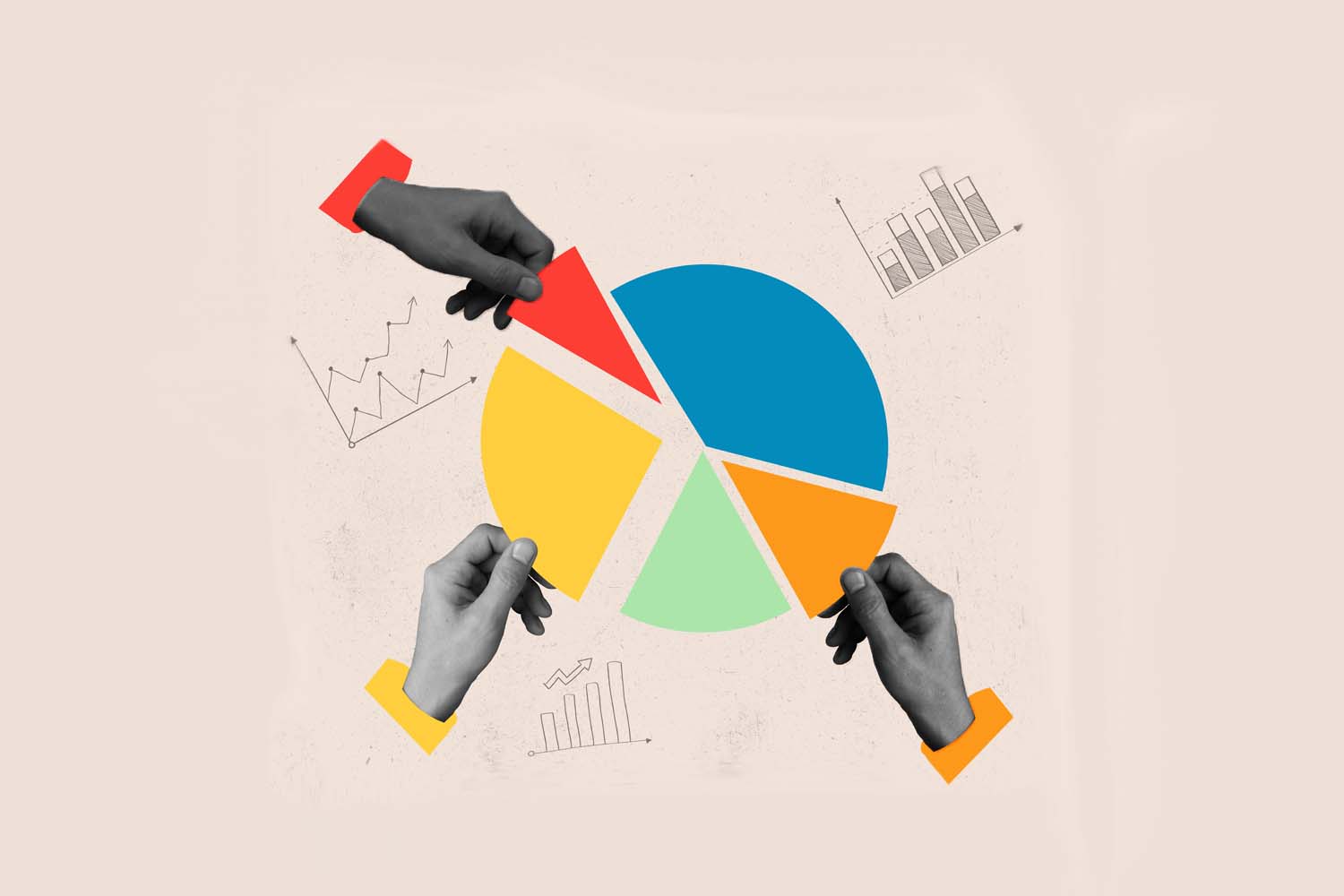
For Salisbury, the most important signal is what happens to the qualified pipeline as conversion improves. “The signal to watch: If conversion is climbing while the total qualified pipeline is flat or shrinking, you’re not growing; you’re just getting better at splitting a smaller pie.”
Know Whether You’re Planting or Harvesting
Hastimal Jangid, Cofounder of Coozmoo Digital Solutions, frames the distinction in terms of what conversion can and cannot tell leadership teams.
Jangid says marketing leaders should change the question they bring to the executive table. “The reframe is to stop asking ‘How efficiently did we convert?’ and start asking ‘Would this demand exist without our last touchpoint?’ Efficient conversion is a harvesting metric. Healthy growth needs a planting metric too—awareness and preference built before anyone hits the funnel.”
He also identifies several patterns that can help leaders determine which side of the equation they’re seeing. “Signals you’re capturing demand, not creating it include conversion rises while top-of-funnel volume stalls; branded search outpaces non-branded growth; CAC looks great, but deal size or cycle length quietly erodes; and wins cluster in a shrinking set of lookalike accounts,” Jangid says.
“When those show up together, you’re not growing the market—you’re just getting better at squeezing the same one.”
Trace Where Each Conversion Was Born
Boris Dzhingarov, CEO at ESBO Ltd., says the source of a conversion can reveal more than the conversion itself.
“The mistake is reading conversion efficiency as a growth signal when it is a harvesting signal,” he says. “Conversion tells you how well you drain the pond, not whether anything refills it.”
Dzhingarov says he has seen the consequences when businesses prioritize the channels that appear most efficient in the short term. “I have watched clients cut PR and brand budgets because paid search looked so efficient; then acquisition costs climb a year later, and nobody can explain why,” he says. “They stopped creating the demand they were capturing.”
His recommendation is to trace conversions back to their origins and reframe the conversation around where each was born. “If branded search and retargeting drive the most wins, you are collecting old demand,” Dzhingarov says. “Creation looks different: branded search volume growing, cold audiences converting and buyers who cannot say where they first heard of you.”
In Dzhingarov’s view, “When conversion rates rise while traffic falls, that is not health. That is a shrinking pond.”
“Healthy growth isn’t measured solely by how efficiently you capture demand today, but by whether you’re strengthening the confidence that creates demand tomorrow.”

Build Confidence Before the Buyer Arrives
Paul L. Gunn Jr., Founder of Signal & Anomaly and KUOG Corporation, says leadership teams should be careful about treating dashboard improvements as proof that the underlying market position is strengthening.
“Leadership teams often mistake conversion as proof of healthy growth rather than evidence of effective demand capture,” he says. “That’s what I call a ‘demand timing distortion,’ when dashboards improve by consuming demand created months or even years earlier.”
Gunn recommends giving leadership teams another way to think about the health of future demand. “Instead, executives should monitor confidence momentum: the rate at which market awareness, trust, credibility and buying confidence are compounding,” he says.
The distinction becomes especially important when conversion remains strong even as the conditions that support future demand begin to weaken. “When confidence momentum is strong, conversion becomes a lagging confirmation of healthy growth,” Gunn says. “When it weakens, conversion is often the last metric to reveal that the market has already started moving elsewhere.”
For Gunn, the long-term question is whether the business is strengthening the conditions that make future conversion possible. “Many organizations become exceptionally good at converting buyers already in the market while underinvesting in the conditions that create future demand,” he says. “Healthy growth isn’t measured solely by how efficiently you capture demand today, but by whether you’re strengthening the confidence that creates demand tomorrow.”
How to Measure What Actually Drives Growth
- Don’t confuse a more efficient funnel with a growing business. A rising conversion rate can reflect stronger demand capture even when the pool of potential customers is shrinking.
- Separate demand capture from demand creation. Evaluate conversion, CAC and lead-to-sale rates alongside awareness, consideration, organic growth and qualified inbound interest.
- Measure the volume and quality of demand. Strong conversion results are more meaningful when customer acquisition, brand awareness and demand generation are also trending upward.
- Consider the moments that created the demand. Examine the experiences that build understanding and confidence before a prospect is ready to convert.
- Ask whether future demand is growing. Lower CAC or higher ROAS shouldn’t be treated as evidence of healthy growth if awareness and the pool of potential customers remain flat.
- Put demand growth alongside conversion metrics. Tracking measures such as new-to-brand traffic and share of voice next to conversion can reveal whether efficiency is masking weaker demand.
- Give demand creation its own success measures. Awareness and preference metrics can show whether marketing is building the future opportunities that today’s conversion metrics can’t capture.
- Trace conversions back to their origins. A heavy concentration of wins from branded search or retargeting can signal that marketing is harvesting existing intent rather than creating new demand.
- Monitor confidence as an early growth signal. Changes in awareness, trust, credibility and buying confidence can reveal shifts in future demand before conversion rates do.
- Balance harvesting with planting. Sustainable growth requires businesses to convert existing opportunities efficiently while continually creating new demand for the future.
Build a Healthier Definition of Growth
A strong conversion rate is valuable, but it isn’t proof that a business is generating healthy, sustainable growth. Leadership teams need to distinguish demand capture from demand creation and evaluate both sides of the equation, using conversion and acquisition metrics alongside indicators such as awareness, consideration, new-customer activity, qualified pipeline and market demand.
That broader approach will become increasingly important as marketing teams face pressure to prove immediate results while also building long-term value. The companies best positioned for sustained growth will be those that don’t simply optimize how efficiently they capture today’s demand, but also invest in creating the awareness, preference and confidence that bring tomorrow’s customers into the market.
MOST POPULAR

AI Is Commoditized—Here's What Sets Great Brands Apart

9 Great New Ideas for a Better Annual Company Meeting
Inspiring Ideas. Actionable Insights.
Senior Executive's Email Newsletters Deliver Fresh Solutions to Today's Leadership Challenges.
Subscribe Free
Why Clinicians Stay: How to Improve Retention Beyond Compensation
9 Ways to Measure the Success of Your DEI Strategy

How to Balance Human Judgment and AI Decision-Making