Healthcare executives are navigating one of the most complex economic environments in modern history. Margins are tight, reimbursement models are shifting and technology is evolving at unprecedented speed. According to the American Medical Association, U.S. healthcare spending reached nearly $4.9 trillion in recent years—an amount that underscores both the scale of opportunity and the urgency for transformation.
Members of the Senior Executive Healthcare Think Tank—a curated group of experts in patient experience, workforce strategy, policy, quality, equity and thoughtful technology use—argue that the next generation of healthcare leaders must move beyond incremental improvement. They must integrate financial rigor with AI literacy, systems thinking and cultural leadership.
A recent Forbes analysis on how AI is transforming healthcare notes that AI-driven efficiencies in diagnostics, administration and predictive analytics are no longer experimental—they are becoming operational imperatives. But technology alone will not distinguish high-performing executives. Execution, ethics and culture will.
Here, Think Tank members outline the capabilities that will define successful healthcare execs in this next stage of the economy—and how leaders can develop them.
AI Literacy as a Cost-Reduction Strategy
Somnath Banerjee, Engineer Lead Senior at a Fortune 50 health insurance company, brings more than 20 years of experience managing global delivery teams and modernizing healthcare data systems. With expertise in AI-driven tools and machine learning rooted in large-scale operational execution, Banerjee says the next era of leadership demands pragmatic AI literacy.
“Successful healthcare executives will master AI literacy not as technology enthusiasts, but as strategic leaders, reducing the cost of care,” he says. “AI offers concrete solutions: preventing costly readmissions, automating administrative overhead and enhancing preventive care.”
As healthcare expenditures rise, placing sustained pressure on payers and providers alike, Banerjee argues that the differentiator is not awareness but disciplined implementation.
“The distinction lies in execution,” he says. “Successful leaders will identify specific cost drivers in their organizations and match them to proven AI applications with documented ROI.”
He outlines a methodical path forward: “Pilot AI tools in controlled settings, measure actual cost impacts and build from there. The key is to move beyond buzzwords to measurable outcomes.”
With the potential for automation and AI to generate hundreds of billions in annual healthcare savings, according to McKinsey, particularly in administrative simplification and care management, healthcare leaders must improve their AI literacy if they want to succeed in this new economy.
“Leaders must understand how decisions ripple through enterprise systems and manage data governance within complex, regulated environments.”
Digital and Financial Systems Thinking in a Regulated Era
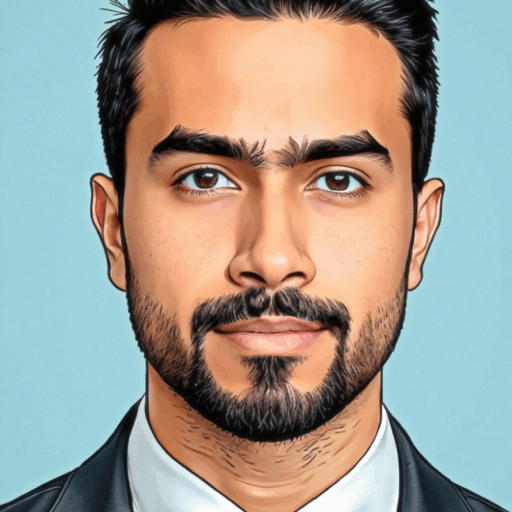
Md Akram Hossain, Product and Digital Transformation Leader, has led complex ERP, EPM and EHR initiatives across pharmaceuticals and healthcare enterprises. With credentials including MBA, A-CSPO and CBAP, he specializes in aligning digital transformation with financial performance.
“In an AI-driven era, successful healthcare executives will be distinguished by their ability to merge digital literacy with financial and operational systems thinking, grounded in strong cultural and ethical stewardship,” Hossain says.
From value-based care models to interoperability mandates, leaders must operate with policy literacy.
“Leaders must understand how decisions ripple through enterprise systems and manage data governance within complex, regulated environments,” he says. “As competition deepens and margin pressure intensifies, good economic acumen must be paired with strong ethical change leadership in a high-risk, policy-shifting industry.”
Hossain notes that this matters because many companies fail due to cultural resistance, not poor technology.
“Clear communication and shared vision across clinical and non-clinical stakeholders will become more important than ever for sustainable transformations,” he says.
“While you cannot remove the human from healthcare, the future of healthcare will be significantly driven by technology.”
Elevating Technology From Tool to Care Partner
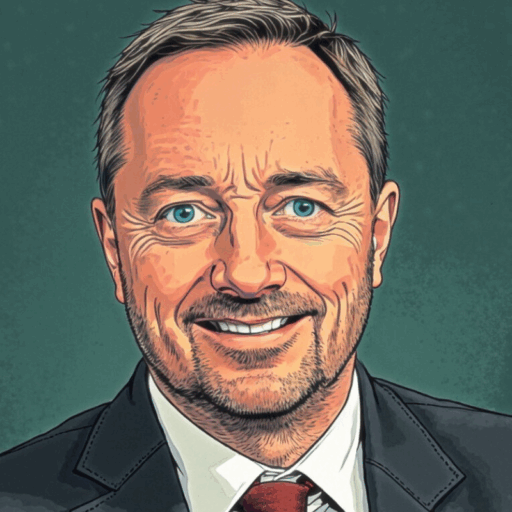
Mark Francis, Founder and CEO of CaregiverZone, Inc., has led ventures at Amazon Web Services, Intel and Health Hero Network. His company provides information and resources that support independent living and aging in place—placing him at the intersection of aging, technology and patient-centered care.
“While you cannot remove the human from healthcare, the future of healthcare will be significantly driven by technology,” Francis says.
He points to hybrid models of care spanning hospital to home, robotic-assisted diagnostics and continuous patient data streaming. “It will be incumbent for healthcare executives to have high levels of digital literacy and to create a culture whereby technology shifts from being seen merely as a tool to more of a partner in care.”
While remote monitoring and virtual care models are expanding rapidly for many companies, Francis emphasizes design over deployment.
“It will be critical to create systems, algorithms and AI which sift through all the data to present curated, personalized and actionable intelligence to clinicians,” he says.
The goal is liberation, not overload.
“The result must be to enhance the capabilities of clinicians—enabling them to be unchained from the EHR to sit with patients to provide care at the top of their licenses.”
“Future leaders must understand how clinical, financial and operational decisions interact as a single system.”
Systems Thinking, Data Integrity and Ethical AI
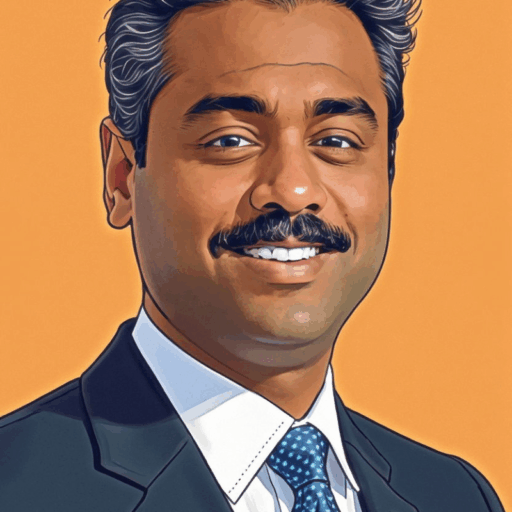
Harikrishnan Muthukrishnan, Principal IT Developer at BCBS Florida—part of Florida Blue’s 80-year mission-driven model serving nearly 6 million members—has worked across India, the UK and the U.S. on complex enterprise modernization efforts.
“The next generation of healthcare executives will be distinguished by systems thinking, digital fluency and the ability to lead with data, transparency and trust,” he says.
Healthcare is now anything but simple. Rather, it’s “an interconnected ecosystem of platforms, partners and information flows” leaders must learn to properly navigate.
“Future leaders must understand how clinical, financial and operational decisions interact as a single system, cultivated through scenario planning, decision frameworks and direct engagement with AI, cloud and interoperability initiatives,” Muthukrishnan says.
AI tools are proliferating—but differentiation will hinge on data quality.
“As AI tools become widely available, true differentiation will come from the quality of data and the integrity of decisions built upon it,” Muthukrishnan says. “Future leaders will be defined by their commitment to creating high-quality data pipelines, evidence-based decision-making and the ethical use of AI.”
Without reliable data pipelines, predictive models can amplify bias or inefficiency. For executives, this means investing not only in analytics dashboards but also in governance, stewardship and auditability.
Cross-Disciplinary Leadership and Cultural Agility
Eugene Zabolotsky, CEO of Health Helper and inventor of the award-winning Bite Helper®, has spent 27 years bringing technology-based therapeutic solutions to market. His company develops nature-inspired medical devices that serve as safe alternatives to over-the-counter medications.
“Successful healthcare executives will stand out by combining traditional clinical, regulatory and financial expertise with digital fluency in AI and consumer-facing health technologies,” Zabolotsky says.
This wide scope is essential in an era where consumers expect transparency, personalization and convenience.
“This cross-disciplinary expertise enables leaders to modernize care while maintaining trust and operational discipline,” he says.
Yet technical capability is insufficient without cultural leadership.
“Equally critical is cultural leadership—guiding teams through constant change while aligning innovation with patient outcomes and sustainability,” Zabolotsky says. “These capabilities are built by staying cross-functional and hands-on with technology and continuously learning across healthcare, policy and digital innovation.”
As workforce burnout persists, leaders who cultivate adaptability and shared purpose will retain talent and sustain innovation.
How to Grow as a Healthcare Leader
- Master AI as a financial lever. Identify cost drivers and pilot AI solutions tied to measurable ROI before scaling.
- Integrate digital and financial systems thinking. Evaluate how policy, reimbursement and operational decisions ripple across enterprise systems.
- Elevate technology into a clinical partner. Design AI and analytics that enhance clinician capacity rather than increase documentation burden.
- Invest in data integrity and ethical governance. Build high-quality pipelines and transparent AI oversight frameworks.
- Lead culture as deliberately as strategy. Stay cross-functional, communicate a shared vision and align innovation with patient outcomes and sustainability.
Leading Beyond Incremental Change
Healthcare is no longer operating on the margins of transformation—it is at the center of it. Economic pressure, workforce strain and accelerating technological change are converging to redefine what executive leadership demands. Incrementalism will not be enough.
Executives must not simply adopt AI, digitize workflows or respond to policy shifts. They must integrate financial discipline, systems thinking and ethical governance into a cohesive operating model. They must treat data as infrastructure, culture as strategy and technology as a clinical and economic force multiplier. Most importantly, they must execute with rigor—piloting deliberately, measuring impact and scaling what works.
Success in healthcare will not be led by tools alone, but by leaders capable of aligning economics, empathy and execution. Those who can convert complexity into clarity—and strategy into sustainable results—will not just navigate the next phase of the healthcare economy. They will shape it.