Skills-based hiring is rapidly becoming a core talent strategy as employers seek agility, speed and access to broader candidate pools in an era defined by AI, automation and constant reskilling. Yet despite this shift, formal degree requirements remain embedded in many job descriptions, often by default rather than design.
A Harvard Business School study on degree requirements and middle-skill jobs found that employers frequently require degrees for roles that previously did not need them, limiting access to capable workers without improving performance outcomes. Meanwhile, LinkedIn research reports that skills-based hiring can expand candidate pools by as much as 10 times while improving diversity and retention when implemented thoughtfully.
The question facing leaders is not whether skills matter—they do—but whether degrees still serve a meaningful screening purpose, and what happens when organizations overcorrect in either direction.
Members of the Senior Executive HR Think Tank—a curated group of senior HR leaders and practitioners—are grappling with this tension firsthand. Their collective experience spans talent acquisition, employee experience, DEI, workforce transformation and the application of AI in HR, giving them a front-row view into how hiring practices shape organizational performance and opportunity. Below, they weigh in on this debate and provide actionable tips for leaders working to find the best talent.
Degrees as Developmental Signals, Not Absolute Gates
Omokunbi Adeoti brings a nuanced perspective to the debate, emphasizing that degrees represent more than technical knowledge. While she does not advocate mandating degrees across the board, she cautions against dismissing them entirely.
“The process of getting a degree is not only about competence but also character,” Adeoti says.
She points to the interpersonal skills, research capability and resilience required to complete a formal education, noting that these experiences shape both technical and relational maturity.
“Formal degrees are like a pruning process,” she says, helping individuals develop discipline and adaptability over time.
Degrees as One Data Point in a Broader Skills Equation
For Heide Abelli, CEO and Co-Founder of SageX Inc., the answer depends largely on the nature of the role. As a leader in AI-powered coaching and workforce training, Abelli sees daily evidence that capability can be built through many paths beyond higher education.
“For many jobs, the requirement for a college degree should no longer be a barrier,” Abelli says.
She emphasizes that degrees can still serve as a useful data point but should not outweigh demonstrable skills gained through experience, certifications or alternative learning pathways.
“Employers can find evidence of required skills in experience other than higher education,” she adds.
Precision Hiring Over Binary Thinking
Amy Douglas, Chief of Culture and Connection at Levata Human Performance, reframes the debate entirely: “The future of hiring isn’t about choosing between degrees or skills—it’s about precision.”
Degrees, in her view, should be treated as purposeful signals rather than automatic filters. Skills, meanwhile, must be assessed intentionally, not assumed based on credentials.
Douglas also notes that education should be valued for the capabilities it develops, and not merely the credentials it offers. College, she says, helps build transferable strengths, including critical thinking, creativity and collaboration.
“Organizations that balance skills-based hiring with what education uniquely provides will build workforces that are not only capable but also resilient, curious and collaborative,” she says.
“A degree can signal foundational skills and follow-through, but it rarely tells the full story.”
Performance, Learning Agility and the Complete Picture
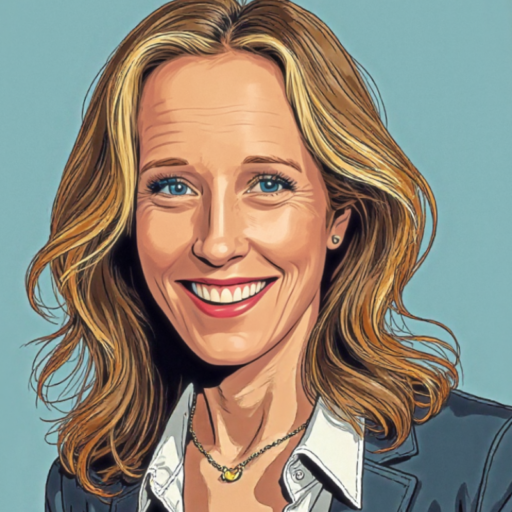
Michelle Arieta, Chief People Officer and Consultant at Polaris Pathways, brings a business-first lens shaped by years of leading HR through hypergrowth.
“A degree can signal foundational skills and follow-through, but it rarely tells the full story,” Arieta says. She notes that many top performers today have followed non-linear learning paths, especially as AI and online education accelerate skill acquisition.
From an employer perspective, Arieta argues that performance and learning agility matter most.
“The strongest hiring decisions look at the complete picture—skills, experience, learning agility and context—rather than relying on any single credential,” she says.
“Degrees establish credibility and context; skills ensure relevance and resilience.”

Integrating Degrees and Skills for Future Resilience
Laci Loew, Fellow, HR Analyst and People Scientist at the Global Curiosity Institute, frames the issue through the lens of future work and automation.
“Degrees establish credibility and context; skills ensure relevance and resilience,” Loew says. She emphasizes that future-ready talent strategies integrate both rather than treating them as substitutes.
OECD research cited by Loew suggests that workers with strong upskilling behaviors face lower displacement risk and faster redeployment as roles are automated. In this environment, degrees play a complementary role, grounding workers while continuous learning sustains employability.
Practical Constraints and the Reality of Screening
Steve Degnan, Advisor, Board Member and Former CHRO, adds a pragmatic caution. While he supports prioritizing demonstrated capabilities, he notes a significant operational challenge.
“Recruiters must be able to evaluate portfolios of prior work accomplishments, and candidates must be able to assemble them,” Degnan says. Until those systems mature, degrees will continue to play a screening role, particularly in regulated fields like medicine and engineering.
“As platforms for learning proliferate, expect the reliance on degrees to become more flexible,” he adds.
Degnan encourages continuous education in all formats, arguing that learning must be ongoing as work evolves.
Legal, Equity and Business Necessity Considerations
Dr. Robert Satterwhite of Odgers brings critical legal and equity context to the discussion. He cautions against using degree requirements as default hurdles without clear justification.
Referencing Griggs v. Duke Power Co. (1971), Satterwhite notes that employers must demonstrate credentials are job-related and consistent with business necessity.
“Rigid requirements can exclude capable talent and reduce diversity without improving performance,” he says.
A skills-first approach, combined with role-relevant education criteria, expands applicant pools and strengthens inclusion. This balance protects organizations legally while improving access for workers historically excluded by credential inflation.
“When companies value what people can actually do, not just what they studied, they expand access, improve fit and build stronger, more adaptable teams.”

Skills as the True Measure of Impact
Nicole Cable, Chief People and Experience Officer at Blue Zones Health, distills the issue to impact.
“Degrees still matter because they signal foundational learning and discipline,” she says, “but skills matter more because they show impact.”
She recommends a dual approach but prioritizing skills and real-world experience over formal education alone.
“When companies value what people can actually do, not just what they studied, they expand access, improve fit and build stronger, more adaptable teams,” Cable says.
How Leaders Should Approach the Debate
- Treat degrees as developmental signals, not absolute gates. Use formal education to understand how candidates have built resilience, research capability and interpersonal skills without making degrees a universal requirement.
- Use degrees as one data point within a broader skills equation. Evaluate education alongside demonstrated skills, certifications and lived experience to remove unnecessary barriers while preserving hiring rigor.
- Design hiring for precision rather than binary choices. Apply degree requirements purposefully and assess skills intentionally, ensuring hiring criteria are tightly aligned to role outcomes and future capability needs.
- Evaluate the complete performance picture, not a single credential. Balance skills, experience, learning agility and judgment to identify candidates who can deliver results and grow as roles evolve.
- Integrate degrees and skills to build long-term workforce resilience. Combine education, demonstrable performance and continuous upskilling to future-proof talent strategies in an AI-driven economy.
- Build infrastructure to validate skills at scale. Invest in assessment tools, portfolio evaluation and recruiter capability so skills-based hiring can function effectively without overreliance on degrees.
- Align credential requirements with legal, equity and business necessity standards. Ensure degree requirements are job-related and defensible to expand access, reduce bias and protect organizational performance.
- Prioritize demonstrated impact over educational pedigree. Focus on what candidates can actually do and deliver to improve fit, adaptability and long-term engagement.
The Future of Hiring Is Intentional
The debate over degrees versus skills is ultimately a leadership test. It forces organizations to examine whether their hiring practices are intentional reflections of business needs or inherited habits that no longer serve performance, equity or growth. The insights from the Senior Executive HR Think Tank make one point clear: Neither credentials nor skills alone are sufficient. What matters is how deliberately leaders define, assess and develop talent in a rapidly changing world of work.
Future-ready organizations will move beyond binary thinking and build hiring systems anchored in clarity—clear role requirements, clear skill validation and clear pathways for learning and advancement. Degrees will continue to play a role where they are job-relevant and value-adding, but they will no longer function as blunt instruments of exclusion. Instead, they become one signal within a broader, more accurate picture of capability, potential and readiness.