Consumer-driven healthcare has long been heralded as the industry’s next transformation. Yet for decades, adoption lagged behind the headlines. Today, rising out-of-pocket costs, wearable device proliferation and AI-powered navigation tools are reshaping patient expectations in ways that feel materially different.
According to a recent analysis in Forbes, the rapid expansion of AI in clinical workflows and patient engagement tools signals that healthcare is moving beyond experimentation toward operational integration—particularly as systems confront workforce shortages and cost pressures. Meanwhile, high-deductible health plans and health savings accounts continue to shift financial decision-making to consumers, increasing demand for transparency and measurable value.
Against this backdrop, members of the Senior Executive Healthcare Think Tank—a curated group of healthcare leaders specializing in patient experience, workforce strategy, policy, quality, equity and responsible technology adoption—are watching for early indicators that signal durable change rather than fleeting enthusiasm.
Here are some of the signals they are paying the most attention to, and why healthcare leaders should take notice.
“If it doesn’t alter incentives or behavior at the system level, it’s marketing, not transformation.”

Behavior Over Headlines: Incentives and Outcomes
For Dr. Sunil Kumar, Lifestyle Medicine Physician, Executive Health Coach and Founder of Dr. Sunil Kumar Consulting, the early signals are not found in splashy announcements but in behavioral shifts.
“I watch behavior, not headlines,” he says.
Specifically, Kumar looks for patients “paying out-of-pocket for prevention, not just acute care,” and for “growth in continuous data use—wearables and remote monitoring—influencing clinical decisions.” He also points to “employers demanding measurable well-being ROI,” “shared decision-making becoming standard, not optional,” and “outcome transparency influencing choice of provider.”
But Kumar cautions that not every consumer-facing innovation constitutes disruption.
“To separate disruption from hype, I ask three questions,” he says. “Does it improve outcomes—not just engagement? Does it reduce the total cost of care over three to five years? Does it change clinician workflow sustainably?”
If the answer is no, he is blunt: “If it doesn’t alter incentives or behavior at the system level, it’s marketing, not transformation.”
From Pilots to Practice: Embedded AI
Feri Naseh, Founder and CEO of MeTime Healing LLC, looks for signals that show behavioral adoption and system integration, rather than just technological novelty.
On the consumer side, she sees momentum when patients begin “using AI-enabled tools between clinical encounters—especially for navigation, self-management and decision support.” That shift matters because it moves healthcare engagement beyond episodic visits into daily life.
“On the provider and payer side, the signal is whether AI moves from pilots to embedded workflows,” she says, “when care teams trust AI for risk stratification, outreach prioritization and care coordination—and when those tools measurably reduce clinician burden.”
Naseh adds another filter: equity and adaptability.
“True disruption shows up when systems are designed to learn safely from real-world patient feedback, adapt across diverse populations and demonstrate equitable outcomes—not just higher accuracy in controlled settings.”
For leaders, that means assessing AI tools not just for performance metrics but for governance structures, bias mitigation strategies and demonstrated improvements in clinician workload and patient access.
Wearables and the Long Game: Iterative Adoption
For Mark Francis, Founder and CEO of CaregiverZone, Inc., consumer-driven healthcare is unfolding along a familiar technology arc.
“As innovative tech works through the Gartner Hype Cycle—coupled with Baby Boomers and Gen Xers becoming the predominant segments of the population—meaningful adoption of consumer-driven healthcare is occurring,” Francis says.
He points to the Samsung Galaxy Watch and the Oura Ring as examples: “Both companies released version one of their products about 10 years ago. It took a decade of iterative development to achieve disruption.”
He notes that improved designs drove adoption.
“Algorithms and AI advanced to turn streams of data into curated, personalized and actionable intelligence,” Francis says. “Today, consumers are buying these wearables directly—which is a key signal of market disruption.”
Insurers are responding. John Hancock offers wearables in exchange for shared data to reduce premiums. Major plans such as Blue Cross Blue Shield, Kaiser Permanente and Devoted Health provide discounts on devices, Francis adds.
The key is patience and iteration. Disruption in healthcare rarely happens in a single release cycle. It emerges when consumer purchasing behavior, payer incentives and data analytics capabilities align over time.
“We’ll see a meaningful shift when wearable data automatically populates patient charts and triggers clinical interventions.”
When Data Enters the Chart: Clinical Workflow
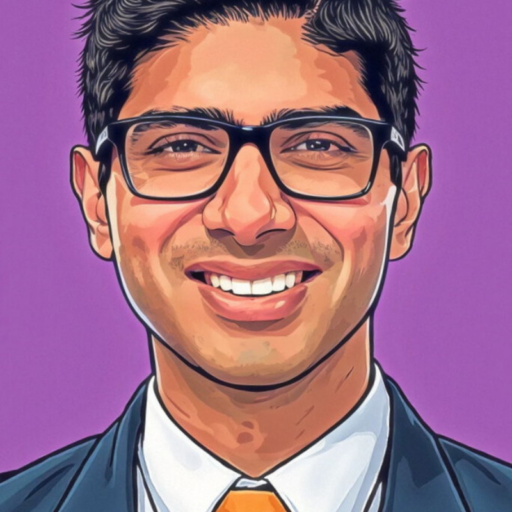
Somnath Banerjee, Engineer Lead Senior at a Fortune 50 health insurance company, believes the defining moment of disruption occurs when consumer data migrates into clinical workflows.
“Health insurance companies already use Apple Watch data or continuous glucose monitors for underwriting,” Banerjee says. “True disruption occurs when these consumer devices migrate from actuarial tables into clinical workflows.”
He offers a vivid benchmark.
“We’ll see a meaningful shift when wearable data automatically populates patient charts and triggers clinical interventions,” Banerjee says. “When a cardiologist’s morning queue includes flagged arrhythmias from patients’ Apple Watches, or endocrinologists adjust medications based on real-time CGM trends without manual uploads, we’ve crossed from hype to transformation.”
For executives, the takeaway is operational: Does consumer-generated data integrate seamlessly into EHRs, claims systems and care management tools? Or does it sit in parallel dashboards that clinicians ignore?
Platform-Level Durability: Regulation and Scale
Md Akram Hossain, Product and Digital Transformation Leader, evaluates disruption through an operational and regulatory lens.
“I look for both platform-level and behavioral signals in distinguishing real shifts from pure hype,” Hossain says. “When a new technology or AI enhancement integrates directly into core payer or provider workflows, it’s a meaningful shift in digital health processes rather than surface-level UX upgrades.”
Adoption willingness also matters, he adds.
“I assess how willing consumers or clinicians are to adapt to the change and if it’s solving an actual friction point in access, cost or care delivery long term,” he says. “Short-term hype in the market fades once early incentives wear off.”
Crucially, durability under regulation becomes a stress test.
“If a new solution can survive compliance scrutiny and influence operational decision-making, it’s far more likely to scale and be sustainable long term than remain short-term noise.”
In an industry shaped by HIPAA, CMS reimbursement rules and FDA oversight, regulatory resilience separates scalable platforms from flashy prototypes.
“Members now demand transparent, rebate-free pharmacy benefits, while platforms like TikTok influence health decisions.”

Scaling to Millions: Measurable Impact
For Harikrishnan Muthukrishnan, Principal IT Developer at BCBS Florida, consumer-driven healthcare is defined by measurable scale.
“We are seeing measurable investment in digital front doors, AI-driven navigation and cost transparency across BCBS plans nationally,” he says. “Reimbursement models are increasingly tied to quality outcomes supported by predictive analytics.”
He adds that the growth in high-deductible health plans and HSAs reflects rising consumer financial engagement.
“Members now demand transparent, rebate-free pharmacy benefits, while platforms like TikTok (#medtok) influence health decisions,” he says.
Yet Muthukrishnan applies strict criteria to separate signal from noise.
“Can this be integrated into core systems—claims, underwriting, billing, care and pharmacy? Does it measurably reduce cost or cycle time? Does it scale reliably to millions? Does it withstand compliance scrutiny?”
His conclusion is clear: “Consumer-driven healthcare is defined by measurable outcomes, trusted architecture and sustained member impact.”
For executives overseeing enterprise systems, that emphasis on integration, cost reduction and compliance at scale offers a pragmatic roadmap.
Next Steps for Healthcare Executives
- Focus on incentive shifts. If prevention spending, shared decision-making and employer ROI expectations are rising, structural change may be underway.
- Demand embedded AI, not perpetual pilots. Evaluate whether tools are trusted in daily workflows and measurably reduce clinician burden.
- Track consumer purchasing behavior over time. Direct-to-consumer wearable adoption sustained over years signals durable demand.
- Integrate data into clinical workflows. True disruption occurs when consumer-generated data populates charts and drives interventions.
- Test regulatory resilience early. Solutions that withstand compliance scrutiny and influence operational decisions are more likely to scale.
- Measure scalability and cost reduction. Innovations must integrate into core systems and deliver measurable impact across millions of members.
When Consumerism Becomes Structural Change
Consumer-driven healthcare is no longer defined by slogans about empowerment; it is measured in prevention spending, workflow redesign, AI embedded in care coordination and wearable data flowing into charts without friction.
For senior leaders, the path forward requires disciplined evaluation. The question is not whether a solution is innovative, but whether it changes incentives, improves outcomes, reduces total cost and scales sustainably under regulatory scrutiny. In a system as complex as healthcare, real disruption is quiet, integrated and durable.