For decades, organizations have modernized technology faster than they have modernized work itself. Many companies now operate with advanced collaboration tools, AI-enabled systems and global talent networks, yet employees still navigate processes and expectations built for a far different era. Meetings dominate calendars. Email drives fragmented communication. Performance reviews often feel disconnected from development. Productivity is frequently measured by visibility rather than outcomes.
That disconnect is becoming harder to ignore as leaders confront burnout, disengagement and shifting workforce expectations. Deloitte’s Global Human Capital Trends report highlights how organizations are increasingly being forced to rethink how work is designed as employees demand greater flexibility, purpose, sustainability and trust in the workplace.
Members of the Senior Executive HR Think Tank, a collective of experienced HR leaders, strategists and workplace experts, realize the future of work will not be shaped merely by adding new tools to old systems. Instead, they believe organizations must eliminate outdated structures that quietly drain performance, trust and creativity. Their insights reveal a common theme: Many of the practices companies defend most aggressively may be the very ones holding people back.
“We have to start finding the reasons we can do things differently instead of instinctively saying, ‘No, we’ve done it this way forever and it works.”

Build Work Around Human Variability
Juanita McClure, Founder and CEO of Nona HR and Risk Consultants LLC, calls on organizations to stop forcing employees into rigid systems that ignore individual needs and energy patterns.
“Stop trying to fit square pegs into round holes with employees,” McClure says. “We are all individuals with different needs.”
Her consulting firm focuses on helping organizations strengthen both workforce and risk strategies, and she believes future-ready employers will rethink rigid scheduling assumptions. “Why can’t we have people working at their peak performance times?” she asks. “Maybe it’s 2 a.m.”
McClure argues that asynchronous workflows and stronger information-sharing systems make these models increasingly possible. “Clear expectations and information transfer bridge the time gap,” she says. “Everyone who needs it has access to the information and work performed.”
She also advocates for larger pools of qualified gig workers to support work-life flexibility and labor shortages. McClure understands that organizations resisting change risk falling behind as labor markets evolve. “We have to start finding the reasons we can do things differently instead of instinctively saying, ‘No, we’ve done it this way forever and it works,’” she says. “Design the future of work now or be left behind.”
Stop Confusing Presence With Productivity
For Jonathan H. Westover, Educational Evangelist, Philanthropist, Angel Investor, Entrepreneur, Academic Researcher, Associate Dean at Western Governors University, and Founder and CEO of Human Capital Innovations, the first thing to eliminate is the assumption that productive work requires synchronized schedules and constant visibility.
Westover, whose consulting and coaching work focuses on leadership, organizational culture and the future of work, says the traditional 9-to-5 structure remains rooted in industrial-era thinking. “The 9-to-5 model is a factory relic that confuses availability with productivity,” he says. “Knowledge work rarely needs everyone online simultaneously.”
He believes many organizations continue to waste time forcing employees into unnecessary real-time interactions that could easily happen asynchronously. “We waste hours in meetings that could be async updates,” he says. Instead, Westover advocates for “recorded updates, threaded discussions, documents” while reserving live collaboration for moments when teams genuinely need to solve problems together.
Westover believes redesigning work around outcomes rather than visible activity would also remove much of the “productivity theater” that dominates modern workplaces. “This enables true flexibility, eliminates commutes and judges output over hours logged,” he says. “The technology exists, so we just need the courage to stop equating work with ‘being there.’”
“Performance reviews should be organic, dynamic and occur naturally over the course of the year.”

Replace Annual Reviews With Continuous Coaching
Lauren Francis, Founder and CEO of Mulberry Talent Partners, thinks organizations should eliminate annual performance reviews and performance improvement plans (PIPs) because they are fundamentally reactive systems that fail employees long before intervention begins.
Francis, who has spent more than 25 years in recruiting and talent acquisition and has facilitated more than 10,000 placements, says performance management should become an ongoing coaching process rather than a once- or twice-a-year evaluation exercise. “Performance reviews should be organic, dynamic and occur naturally over the course of the year,” she says.
She also reports that traditional PIPs often arrive too late to repair the relationship between employee and employer. “Getting to a point of needing to put someone on a PIP signals that things are beyond the point of return,” Francis says. Instead of formal corrective systems that can feel punitive, she recommends direct, transparent conversations earlier in the employee experience.
Francis believes companies should normalize helping employees transition out of roles in a positive way when alignment is nonexistent. “Supporting someone to transition from a company positively is a more direct, mature and kind way to address this issue,” she says. “This signals respect not only for the employee leaving the company but also for the company, customers and the remaining employees.”
Eliminate Informal Power Structures
For Navy Federal Credit Union VP, Global Talent Acquisition Strategy and Head of Recruiting, Britton Bloch, the biggest workplace flaw is not bureaucracy itself but inconsistent governance that leaves advancement dependent on informal relationships and subjective interpretation.
Bloch says that many organizations unintentionally create inequitable systems because expectations and accountability are unevenly applied. “Organizations do not produce the outcomes they intend,” she says. “They produce the outcomes their governance systems are designed to generate.”
Rather than eliminating structure, Bloch advocates for “minimum viable governance.” That includes “clear ownership, transparent advancement criteria, consistent validation and oversight that makes decisions explainable and repeatable.”
Bloch says companies often mistake informal sponsorship and managerial discretion for leadership flexibility when, in reality, those inconsistencies undermine trust. “The goal is not more control,” she says. “It is durable fairness: Capability is visible, opportunity is governed and outcomes are not contingent on who happens to manage you.”
“On every engagement survey where employees rate the company, I’d add one more question after each category: ‘And what have you done about it?”
Remove Communication Noise and Redesign Work Intentionally
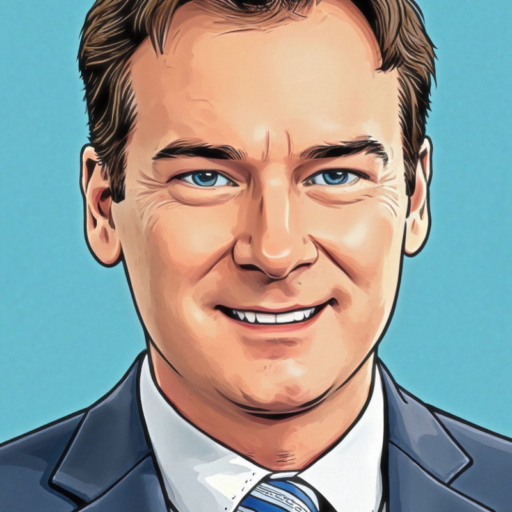
Steve Degnan, Advisor, Board Member and Former CHRO, shares how organizations have created communication systems that generate distraction rather than clarity. His first target would be email.
“Email for anything but sending needed files would be the first to go,” Degnan says. In his opinion, email should function more like an information-transfer system rather than a replacement for meaningful conversation. “No conversation—save that for in person,” he says.
Degnan thinks organizations overemphasize employer responsibility while underemphasizing employee accountability. He points to engagement surveys as one example. “On every engagement survey where employees rate the company, I’d add one more question after each category: ‘And what have you done about it?’” he says. “It takes two—employer and employee—to tango.”
Degnan urges organizations to reframe work design more deliberately, rather than treating office structure and workflows as accidental outcomes. “I’d establish a team that focuses on work design, defining what work is, what outcomes we want and even the physical nature of office work,” he says. That intentional redesign is especially important as organizations continue navigating hybrid and remote environments, he adds.
End Performative Work
Dr. Robert Satterwhite, Partner and Head of the Leadership Advisory Practice at Odgers, says organizations must eliminate performative work that creates the appearance of progress without producing measurable outcomes.
“I’d eliminate performative work such as the meetings, reports and rituals that signal progress but don’t actually create it,” Satterwhite says. He notes that many organizations confuse activity with execution, resulting in teams that remain busy without moving priorities forward.
One of the clearest symptoms, he stresses, is the absence of accountability. “Too often, people leave meetings without clear owners or deadlines, and teams produce reports without knowing if anyone finds them useful,” he says. “That’s activity without accountability.”
Satterwhite’s statement aligns with widespread business conversations being had about meeting overload and workplace inefficiency throughout the years. In a Forbes Business Council article on combating meeting overload, leaders warn that excessive meetings drain productivity, which reduces focus and contributes to burnout across organizations. The article suggests that companies must become far more intentional about when meetings are necessary and when asynchronous communication is more effective.
Satterwhite recommends simplifying organizational priorities and assigning explicit ownership. “Start from scratch and design with fewer priorities, more explicit decision rights and clear commitments with named owners and timelines,” he says.
For Satterwhite, redesigning work ultimately comes down to reducing noise. “Anchoring work in results will drive speed, ownership and a lot less noise,” he says.
Replace Exit Interviews With Stay Interviews
Christopher Bylone, Principal Strategist at Innovation Unbiased, believes organizations spend too much time studying employee departures instead of understanding retention in real time.
“I would eliminate exit interviews and replace them with stay interviews,” Bylone says. His consultancy focuses on building cultures of belonging through data-driven and people-centered strategies, making employee experience central to his work.
Bylone argues that exit interviews are inherently reactive. “By the time someone resigns, the decision is already made and the insight cannot be acted on for that person,” he says. “We are running an autopsy when we should be running a wellness check.”
Instead, he advocates for regular conversations designed to identify frustrations, motivations and workplace conditions while organizations still have time to respond. “Stay interviews flip the design,” he says. “They reveal what makes people want to stay so we can amplify those conditions across the organization.”
For Bylone, these conversations are ultimately about belonging. “That is how culture actually shifts,” he says. “Not by studying why people leave, but by understanding why they choose to stay.”
Let AI Eliminate Bureaucracy
Aida Figuerola, Neuropsychologist at Lift, believes bureaucracy is one of the greatest barriers to productivity and inclusion—and she expects AI to remove much of it.
“Here’s what kills companies from the inside: processes that add cost but zero value,” Figuerola says. “The meetings about meetings.”
Drawing on her experience working across tech environments, Figuerola says administrative overload disproportionately harms neurodivergent employees. “Neurodivergent employees, especially ADHD brains, drown in busywork instead of doing the work they were actually hired for,” she says. “The system wastes their superpowers maintaining itself.”
She sees AI as a potential turning point. “Automating expense reports. Routing approvals. Generating compliance documentation. All the friction that slows down decision-making? Machines will handle it,” she says.
A growing number of executives appear to agree, and according to a McKinsey report on generative AI adoption, organizations increasingly expect AI to automate administrative and operational tasks while allowing employees to focus on strategic and creative work.
Figuerola believes organizations that cling to excessive procedural control will struggle to compete. “The companies that win in the next few years won’t be the ones with the strictest processes,” she says. “Eliminate busywork. Keep the thinking. Let AI do the rest. That’s the future where talented people actually get to be talented.”
What Forward-Looking Leaders Should Do Next
- Measure outcomes instead of visibility. Organizations can reduce burnout and improve flexibility by shifting from presence-based management to asynchronous, results-oriented workflows.
- Replace annual reviews with ongoing coaching. Continuous feedback systems create stronger performance conversations before problems escalate into formal corrective processes.
- Create transparent governance systems. Clearly defined advancement criteria and decision-making structures help reduce inequity and build organizational trust.
- Reduce communication overload. Simplifying email usage and redesigning collaboration practices can improve focus and reduce workplace fatigue.
- Eliminate performative work. Meetings, reports and initiatives should exist only if they directly support measurable outcomes and accountability.
- Design for human variability. Flexible schedules and alternative workforce models can help organizations retain talent and accommodate evolving employee needs.
- Listen before employees leave. Stay interviews offer leaders a proactive way to improve retention, belonging and culture in real time.
- Use AI to remove friction, not humanity. Automating administrative tasks allows employees to focus on strategic thinking, creativity and relationship-building.
The Future of Work Will Belong to Simpler Systems
Although each HR Think Tank member identifies a different workplace problem, their perspectives converge around a larger truth: many modern organizations remain constrained by systems originally designed for predictability rather than adaptability. The future of work will likely depend less on adding new layers of process and more on removing the ones that no longer create value.
The leaders who succeed will not simply digitize outdated habits. They will redesign work around trust, clarity, flexibility and human capability. In many cases, the greatest innovation may not come from what organizations add next, but from what they finally decide to eliminate.
MOST POPULAR

AI Is Commoditized—Here's What Sets Great Brands Apart
9 Ways to Measure the Success of Your DEI Strategy
Inspiring Ideas. Actionable Insights.
Senior Executive's Email Newsletters Deliver Fresh Solutions to Today's Leadership Challenges.
Subscribe Free
Why AI Companies Need a New Model of Leadership
The AI Fluency Trap: When Familiarity Looks Like Expertise

The Healthcare Trust Crisis: What Leaders Must Rethink Now